DSLR to Mirrorless. Why Should I Switch?
Nikon has arguably created some of the best DSLR’s ever made, so we’ll sometimes be asked the question “why should I switch from my DSLR to mirrorless? My DSLR is reliable, proven, and it’s what I’m used to.” The short and easy answer is that all the things you love about your Nikon DSLR, the Z Mirrorless system takes, and elevates to the next level, making it even easier to capture every important moment.
The longer answer means going through some of the specific benefits that the Z system gives you, so let’s get into it.
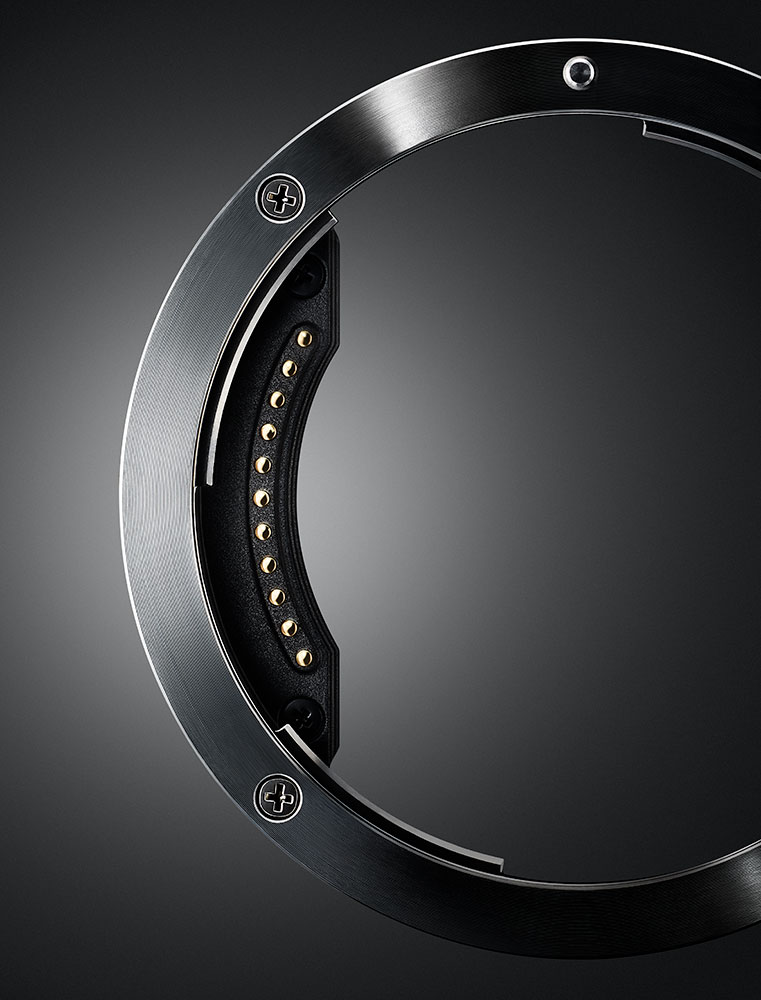
Mirrorless Z lens mount
Probably one of the most common things holding people back from switching from a DSLR to Mirrorless camera is also one of the most compelling reasons to switch, and that’s the Z-Mount. This was the first time Nikon had changed their mount in over 50 years, with it not only being physically wider, but the flange distance between the sensor and the lens has been greatly reduced when compared to the DSLR’s. The combination of these two things allows Nikon engineers to push the limits of modern lens technology creating lenses that in many cases are lighter and smaller, have less chromatic aberration and ghosting, and have significantly increased sharpness, especially shooting wide open, when compared to their DSLR counterparts. Beyond just comparing the Z mirrorless lenses vs the DSLR versions, the new mount allows our engineers to create lenses that were not even possible with the F-mount. For example. the NIKKOR Z 58mm f/0.95 S Noct which has an astonishing, f/0.95, or the NIKKOR Z 800mm f/6.3 VR S which is light enough for a full day of handheld use.
So when you combine having the widest lens mount with the smallest flange distance, you get the most flexible mount. This means you can adapt nearly any lens to a Z body; giving you far more choice than most people realize—with the high image quality benefits that the system provides.
Z series mirrorless lenses
Let’s discuss the size and weight of the NIKKOR Z lenses. While physics will somewhat dictate the size of a lens, our engineers have worked hard to make the Z lenses lighter than their DSLR counterparts. In some cases, the difference in weight can be quite significant; take the workhorse NIKKOR Z 24-70mm f/2.8 II, the Z system’s second version—it weighs almost 40% less than the DSLR version of the lens, while being better weather sealed and more durable, it has significantly faster autofocus and much better image quality too.
Size and weight isn’t the only important factor though when designing new lenses, how quiet they are is a big factor as well. Specifically, the autofocus motors and VR units have all been minimized as well as the sounds they make, so that even in the quietest environments it’s difficult to hear them making any noise, which makes them excellent options to use to capture video.
There are a few other key design choices to ensure lenses are optimized for video use. One is the ability to customize the Focus Speed, letting the user decide if they want a cinematic and slow focus pull, or something that’s a little bit punchier for fast moving scenes. The other design choice is to minimize focus breathing. This ensures that as you pull focus from a very close subject, to a very far subject or visa-versa, that there’s little to no shift in the framing of the scene.
Adapting F-mount lenses to Z mirrorless cameras
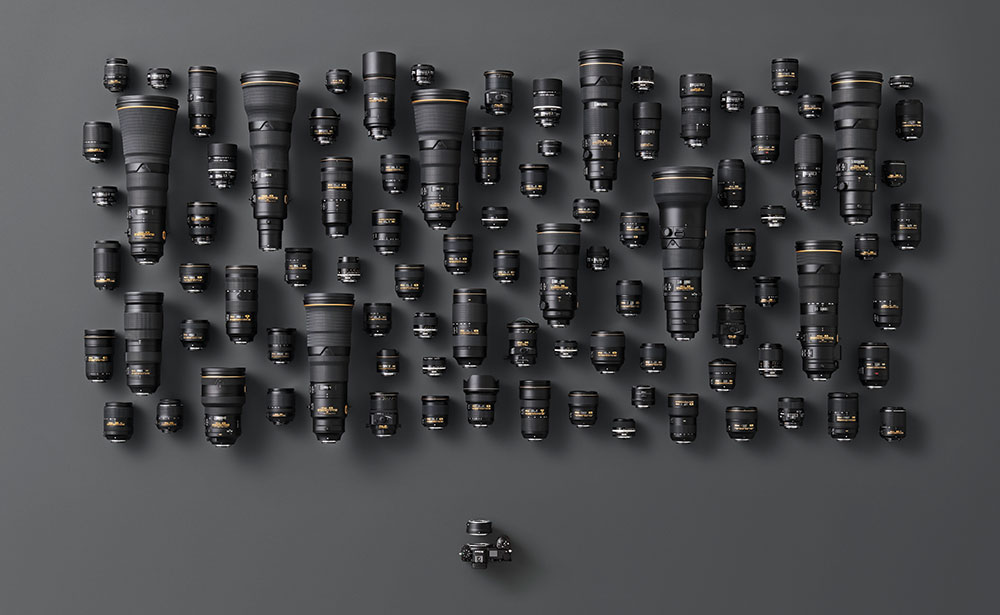
The F-mount was used by every Nikon SLR and DSLR for over 50 years and that has allowed many people to build an impressive collection of lenses. Understandably, you don’t want to leave all that amazing glass sitting on a shelf somewhere collecting dust. It’s also a significant investment in both time and money to transition all your lenses from F-mount to the new Z-mount versions. Fortunately, the Mount Adapter FTZ II allows you to use over 350 F-mount lenses on the Z mirrorless bodies with no change in the quality of the image. This lets you continue to use the lenses you love, while transitioning to the new lenses at a pace you’re comfortable with. In some situations, when using older F mount NIKKOR lenses on full-frame Z series mirrorless cameras you’ll gain VR image stabilization where the original lens wasn’t built with it—and with F mount NIKKOR lenses that incorporate VR, you end up with five axis VR instead of three.
So, while the FTZ II lets you transition to the NIKKOR Z lenses at the pace you want, once you get there, you’ll find lenses that provide better image performance (sharpness, less aberration), less vignetting with superior autofocus from both lens motors and body algorithm that are smaller and lighter, and better at shooting video. It’s safe to say that once you see what the NIKKOR Z lenses are capable of, it’s tough not to want to jump all the way in.
Benefits of mirrorless: smaller size and lighter weight
One of the most common reasons for why people switch from a DSLR to a mirrorless camera is the size and weight savings you get with a mirrorless body. The Z series bodies have shed some weight by removing the large prism and mirrorbox, while at the same time improving the ergonomics, making it easier and more comfortable to carry them around for extended periods of time.
Benefits of mirrorless: electronic viewfinder (EVF)
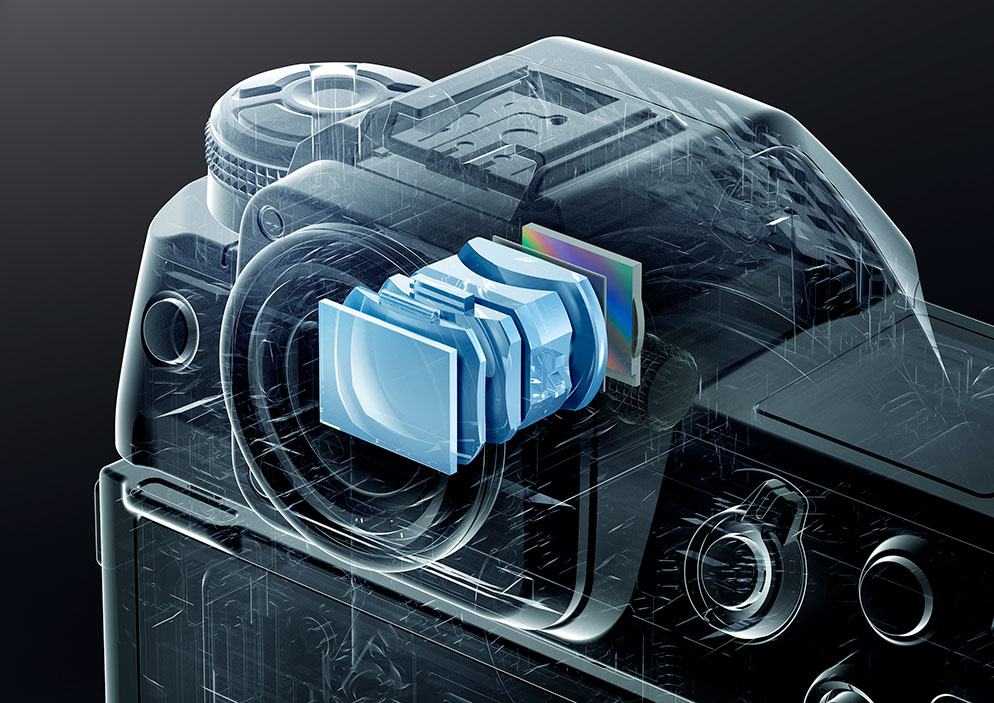
One of the most polarizing features of mirrorless cameras (at least at the beginning) was the Electronic Viewfinder (EVF). Early adopters loved how much easier an EVF made shooting, but many DSLR shooters were unhappy with the quality, wanting something more lifelike that was closer to their optical viewfinder. Not everyone likes change, as there’s comfort in things that we’re familiar with, but since Nikon introduced the Z system, modern EVF’s have minimized any delay in what you see versus what’s happening and they update in real-time with your exposure changes. This allows you to know exactly how your image will look before you’ve even pressed the shutter, saving you from having to double check your exposure or potentially missing an important moment. Additionally, Nikon has tuned the EVF experience to be as natural looking as possible, meaning you’ll quickly forget you’re even looking at a screen.
Benefits of mirrorless: superior autofocus
Nikon’s DSLRs had some of the best autofocus available at the time and the Z series takes this incredible performance even further. The latest generation Z series mirrorless cameras have the AF-Modes you remember and love such as 3D tracking but now integrate deep learning algorithms to allow for advanced subject detection. This subject detection can automatically detect up to 9 different subject types and can focus on the most important part of a subject such as a person or animals’ eye, or the cockpit of a plane! In addition, the autofocus has been improved in low light. Nikon Z series cameras such as the Z5II can focus at -10 EV which is at the limits of what our eyes can even see. No DSLR could do the same.

Photo taken using the Z 8 and NIKKOR Z 800mm f/6.3 VR S lens with the Z-TC 1.4X Teleconverter for a focal length of 1120mm.
Benefits of mirrorless: quieter operation
An often-overlooked feature of a mirrorless camera versus a DSLR is that they’re quieter. Cameras such as the Z8 and Z9 don’t even have a mechanical shutter mechanism; they’re silent unless you turn on a sound to play when you take a photo. And all other Nikon mirrorless bodies have a Silent Mode, which uses an electronic shutter to be as discreet as possible. This means that in quiet environments, such as your kid’s play or dance recital, out on a golf course or in a house of worship, you won’t be distracting anyone else around you as you capture each amazing moment.
Benefits of mirrorless: superior video features
DSLR models like the D850 produce excellent 4K footage, however, in challenging lighting conditions, they offer less flexibility for color grading. They also provided fewer built-in tools designed to simplify a cinematographer’s workflow, and their autofocus systems aren’t optimized for tracking actively moving subjects. In comparison, every Z series camera offers at least 4K/30p recording while some offer 6K/60p or even 8K/60p options. Most Z series cameras offer a much more flexible file type, recording in 10-bit N-Log, while others even provide 12-Bit internal N-RAW recording. With the introduction of the ZR, you can now also capture raw video using RED’s color science and LOG3G10 gamma curve with R3D NE.Beyond the resolution, frame rates and codecs, Nikon mirrorless cameras also provide plenty of visual aids and features to assist in capturing the best video footage. Whether that be internal waveform monitoring, focus peaking, 3D LUT monitoring, Shutter Angle or 32-bit Float audio, these features give cinematographers way more tools when compared to any of the DSLRs Nikon made.

Lastly, when you combine the deep-learning algorithms and subject detection capability of the Z series cameras, with the new autofocus motors found in the NIKKOR Z lenses, we now can trust the autofocus system to smoothly and consistently track moving subjects, or even to switch subjects mid-scene in a way that cinematographers have been waiting for.

All of this is to say that current Z mirrorless bodies make recording high quality video that much easier, with more flexibility than ever before.
The features above are only the tip of the iceberg when it comes to the advantages of a mirrorless camera over a DSLR. If we’re to sum up this entire article into one sentence it would be, ‘it makes capturing your image easier.’ And isn’t that what we hope when we buy a new camera? That this will make capturing our images, our creative vision, easier?