Tips and Techniques for Photographing Wildlife in Antarctica
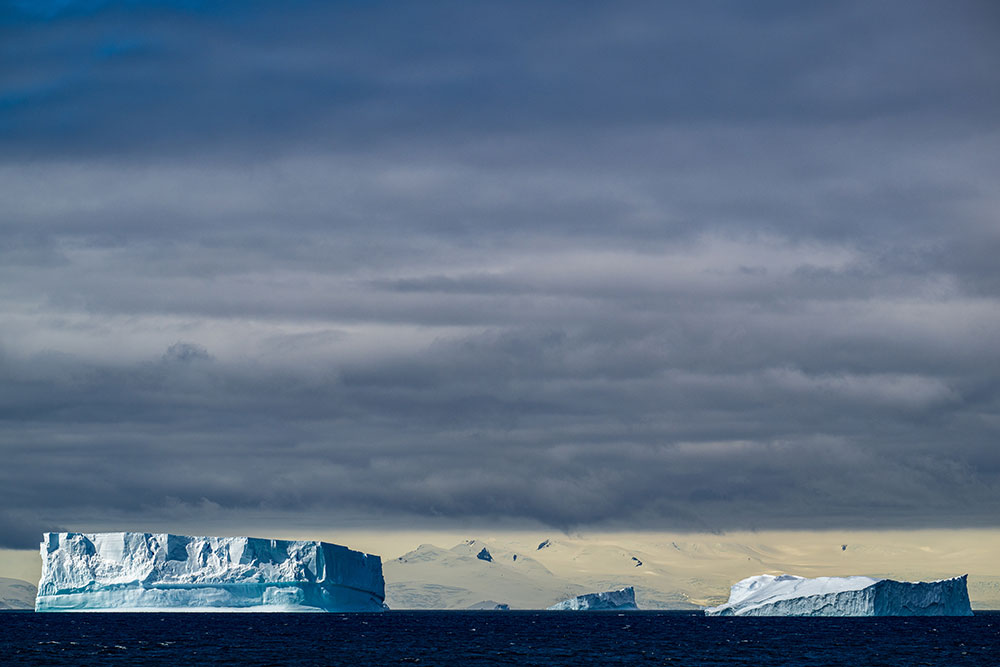
Sunlit icebergs floating against stormy skies and moody clouds in Antarctica. Z9, NIKKOR Z 100-400mm f/4.5-5.6 VR S lens at 1/1250 of a sec., f/8, ISO 100.
Ask any outdoor photographer what locations are on their bucket list, and chances are they’ll say Antarctica. Imagine photographing a mystical white continent larger than the contiguous United States and 98% covered in ice. A place so remote and pristine that wildlife shows no fear of humans, the sun never sets in the summer and thousands of penguins saunter along the beach. In the azure waters humpback whales breach while leopard seals nap on drifting icebergs. This is Antarctica, and it is a dream location for photographers.
Getting to Antarctica is challenging and expensive. For most people, this is a once-in-a-lifetime visit. I’ve been to Antarctica multiple times and have learned some important lessons about photographing in this magical location. Read the tips below and get ready for the photography adventure of a lifetime.
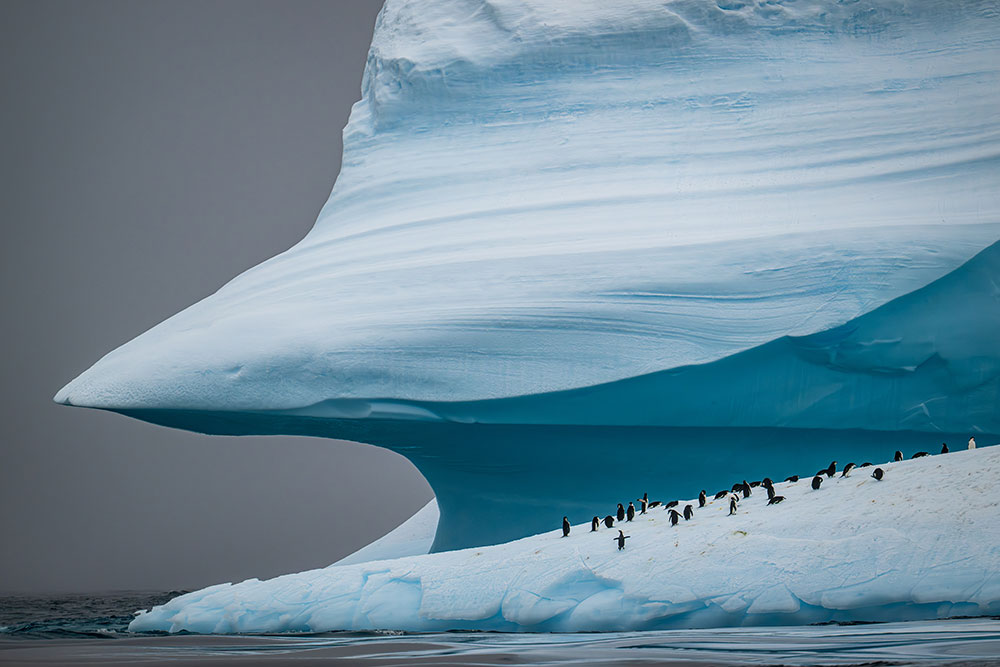
Floating iceberg with chinstrap penguins resting on the ice near Elephant Island, Antarctica. Z9, NIKKOR Z 100-400mm f/4.5-5.6 VR S lens at 1/5000 of a sec., f/7.1, ISO 800.
Planning your route. While there are a few pricey flight options, most travelers take a ship to visit Antarctica. Many journeys begin from Ushuaia or Punta Arenas on the tip of South America. Ships leaving these ports cross over the notoriously stormy seas of the Drake Passage, taking a day and a half to reach Antarctica. The shortest cruises spend about a week in Antarctica and then return to South America.
But for photographers, I recommend taking a longer cruise that explores more of Antarctica, perhaps going south of the Antarctic Circle where very few ships go. You’ll see more penguins, seals, whales and jaw-dropping scenery than you can imagine. The ultimate journey combines Antarctica with South Georgia and the Falkland Islands. While these islands aren’t technically Antarctica, the wildlife photography is stunning. Thousands of king penguins nest on South Georgia, and the beaches have countless fur and elephant seals lounging in the sand. Imagine landing on a beach and seeing 200,000 king penguins. The challenge for photographers is where to focus your camera and not run out of memory card space.
One thing should be pointed out about cruises to Antarctica. While the ship will have a schedule, this is very flexible due to weather and other variables that might affect the trip. Some shore excursions might be cancelled or changed due to bad weather, and your entire route may be changed to avoid rough seas. Prime season is January and February when you normally have the best weather, 24 hours of light and penguin chicks. Early season (November) and late season (March) have lower angle light for better sunrise and sunsets, with cheaper fares, but can also have more inclement weather.
The ship and crew. The ship and crew are critical to a successful photo journey to Antarctica. The important questions to ask are how many passengers are onboard, and how much time you’ll have onshore. Bigger ships will limit the number of shore excursions and you’ll have less time onshore. On my last journey to Antarctica our ship held 135 passengers. We did two zodiac excursions a day, spending two to four hours onshore, plenty of time for photography. Research if your ship has a photographer on board, and if they have a photography focus. The crew will be very important since you will have to coordinate with them to create special photo opportunities.
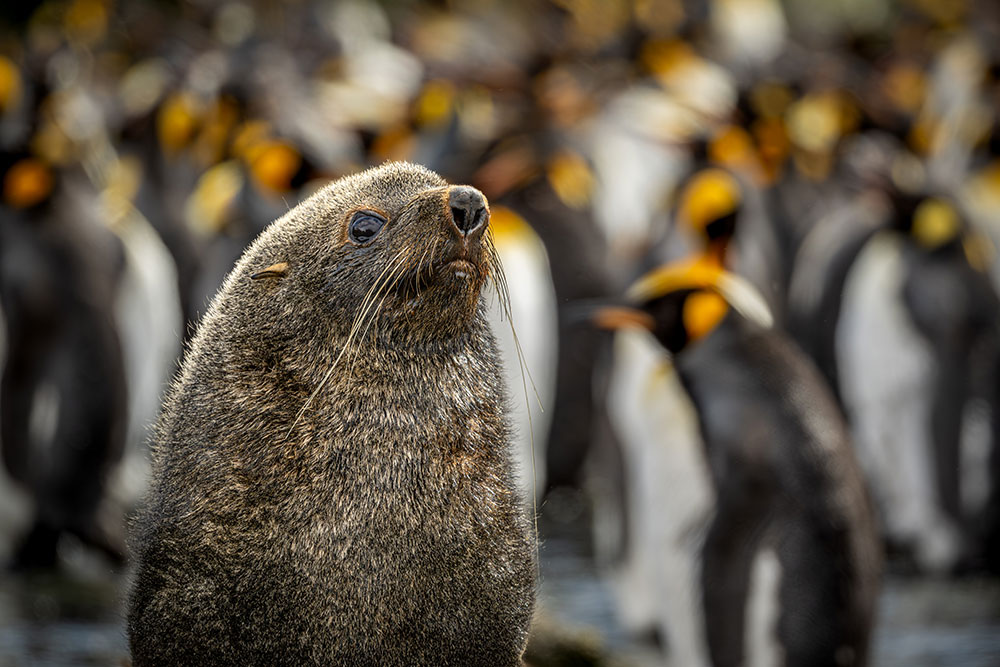
Antarctic fur seal hauled out on the beach near some king penguins. Gold Harbor, South Georgia Island. Z9, NIKKOR Z 600mm f/6.3 VR S lens at 1/800 of a sec., f/6.3, ISO 360.
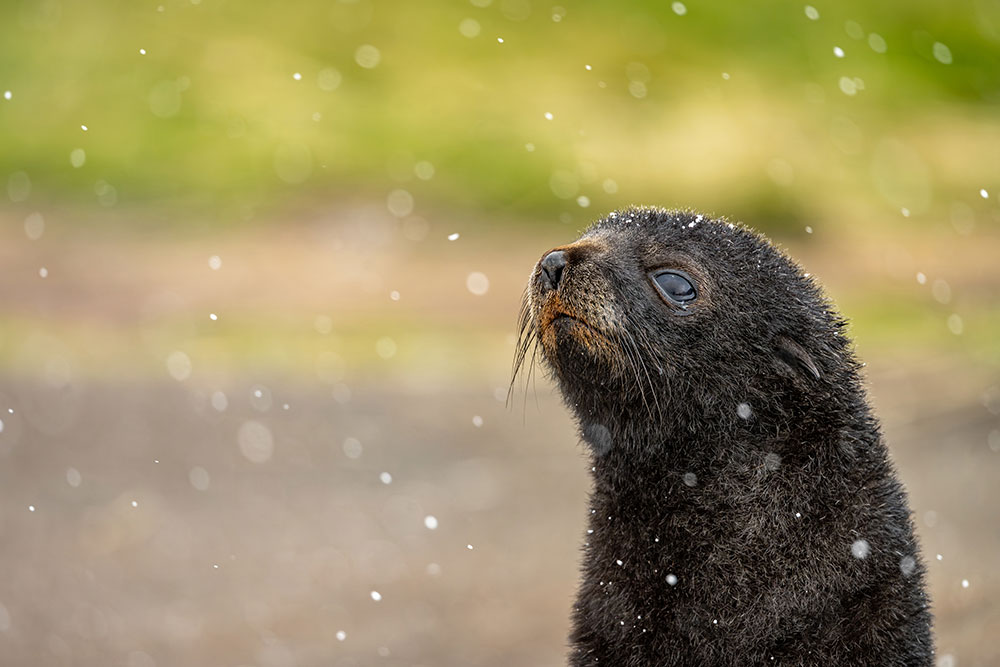
A baby Antarctic fur seal resting on the beach during a snowstorm. Salisbury Plain, South Georgia Island. Z6III, NIKKOR Z 600mm f/6.3 VR S lens at 1/1600 of a sec., f/6.3, ISO 1250.
Camera gear. Photography in Antarctica takes place from a boat or on shore during landings (drones are highly regulated). Shore excursions have some restrictions to protect the wildlife. You’re not allowed to go closer than 5 meters to the penguins, and you can’t sit or squat on the ground in order to prevent cross contamination between shore landings. This means you’re carrying all your gear while walking on the beach. Remember sometimes less is more when it comes to the amount of equipment to bring. You need to be ready to hike on rocky beaches and snowfields in stormy weather and too much gear can slow you down.
The three lenses I used the most on my last trip to Antarctica were my NIKKOR Z 24-70mm f/2.8 S, NIKKOR Z 100-400mm f/4.5-5.6 VR S and NIKKOR Z 600mm f/6.3 VR S. I used these lenses about equally. On shore excursions I loved using the 24-70mm for landscapes and environmental wildlife images. The 100-400mm was perfect for groups of penguins and seals as well as compression landscapes. When I wanted a tight headshot, I used the 600mm.
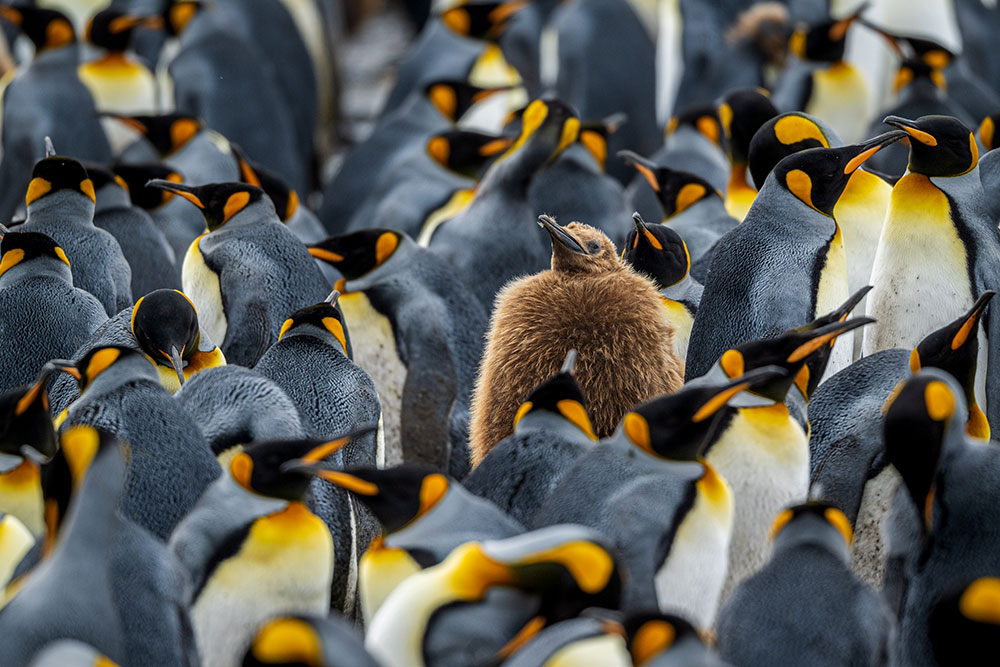
A solitary king penguin chick surrounded by adults. Salisbury Plain, South Georgia Island. Z9, NIKKOR Z 600mm f/6.3 VR S lens at 1/400 of a sec., f/6.3, ISO 180.
I really liked the 600mm for shooting wildlife from the small zodiac boats. This lens is so light and compact, making it perfect for fast moving photography, and it is easy to maneuver. Some photographers in our group used the NIKKOR Z 180-600mm f/5.6-6.3 VR and liked the versatility of the zoom range of that lens.
Another lens to consider would be a super wide-angle like the NIKKOR Z 14-24mm f/2.8 S. There are certainly situations where this lens would be great. Pack it in your bag if you have the space. I left my big telephotos at home to be more mobile on the beach. I also left my tripod at home to reduce weight, but if you want to do long exposures, bring a lightweight one.
Bring two camera bodies. Conditions can be rough in Antarctica, so you want to have a second body as backup. I shot with a Z9, Z8 and a Z6III on my last trip. All three of these cameras have amazing subject tracking and fast frame rates. Also, the tight weather sealing of these cameras handled the wet weather without a hitch.
Note: flash photography of animals is not allowed in Antarctica.
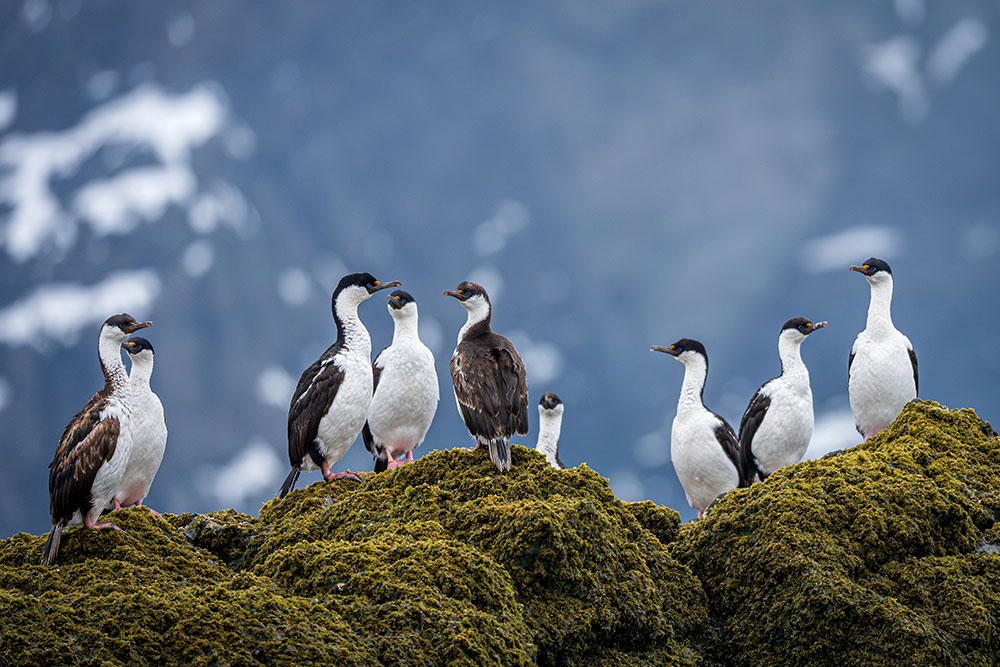
Antarctic shags perched on rocks near Elephant Island, Antarctica. Z6III, NIKKOR Z 600mm f/6.3 VR S lens at 1/6400 of a sec., f/6.3, ISO 5000.
Carrying your gear. Traveling from the ship to the beaches requires a zodiac ride. These small rubber boats are great for getting into small coves, but you and your gear can get very wet on the ride. We often had standing water sloshing around on the floor of the boats, so don’t expect to put your pack down. I chose to bring a 30L waterproof backpack to carry my equipment. I added a soft puffy jacket to pad my camera inside the bag and put spare lenses in padded lens cases. No matter what the weather was doing or how much water was in our zodiac, my gear stayed dry. Another option is to bring your photo backpack and put it in a waterproof bag (or cover) for the zodiac ride. You also need to be able to get gear out of your bag without putting it down on the beach. I just rotated my bag around to my front side to access the pack from the top. Don’t forget to bring a lens cover for your camera for shooting in wet conditions.
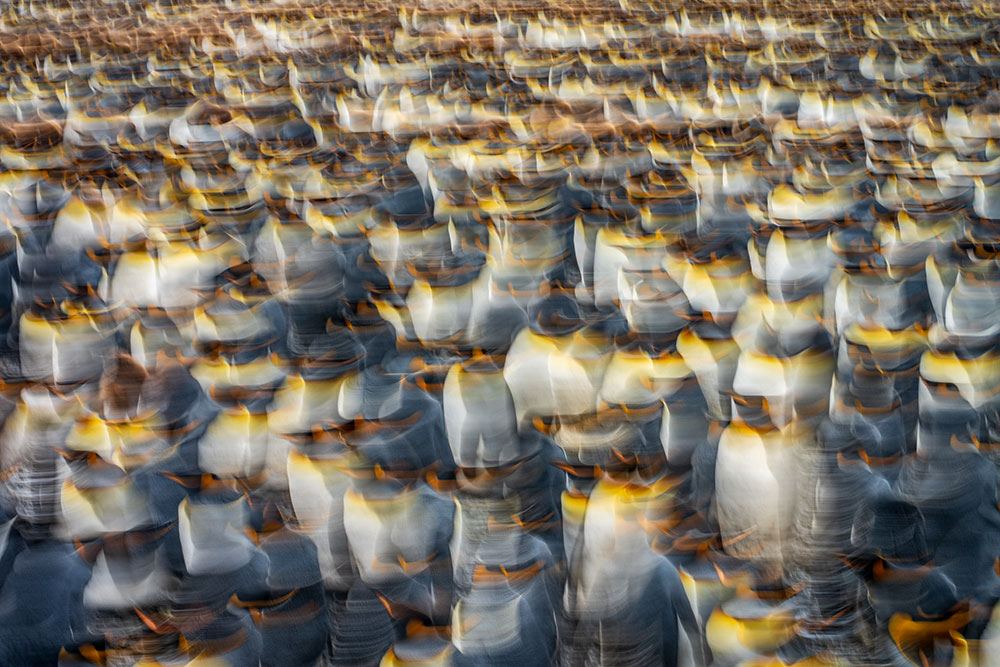
King penguins twisting left and right during a slow exposure at Salisbury Plain, South Georgia Island. Z6III, NIKKOR Z 100-400mm f/4.5-5.6 VR S at 1/5 of a sec., f/36, ISO 100.
Shooting modes. Nikon’s advanced subject tracking and autofocus are a game changer. My default setting for photographing landscapes was Aperture Priority mode, 3D autofocus with subject tracking set to Auto. For wildlife shooting I used Manual Mode with Auto ISO and used 3D or Auto-area focus with subject detection set for my subject (animal or bird). With wildlife I shot at 20 fps so I didn’t miss one fleeting moment of penguin behavior or a whale breaching.
White balance. Antarctica is a continent made up of massive ice sheets and tidewater glaciers, so you’re going to be photographing a lot of icy white landscapes. Getting the proper white balance is key in producing an image that has clean whites. I often set my camera’s white balance to Natural White Auto, which did well in keeping the snow white and not too warm (orange) or cool (blue). We had cloudy skies for most of our trip, so I did use Cloudy white balance as well. Check the color of the snow when post-processing and adjust your white balance as needed for clean white snow.
Exposure. Exposure can be tricky in Antarctica since you’re photographing on white snow much of the time. Camera meters average scenes out for the correct exposure. If you photograph a white snow field with no exposure adjustments, the snow will be underexposed and gray in color. To correct this, you’ll need to add to your exposure. I often added 1-2 stops of light using the exposure compensation dial on my Z9. The amount of light to add will depend on how much snow/ice is in the scene and whether it is cloudy or sunny outside.
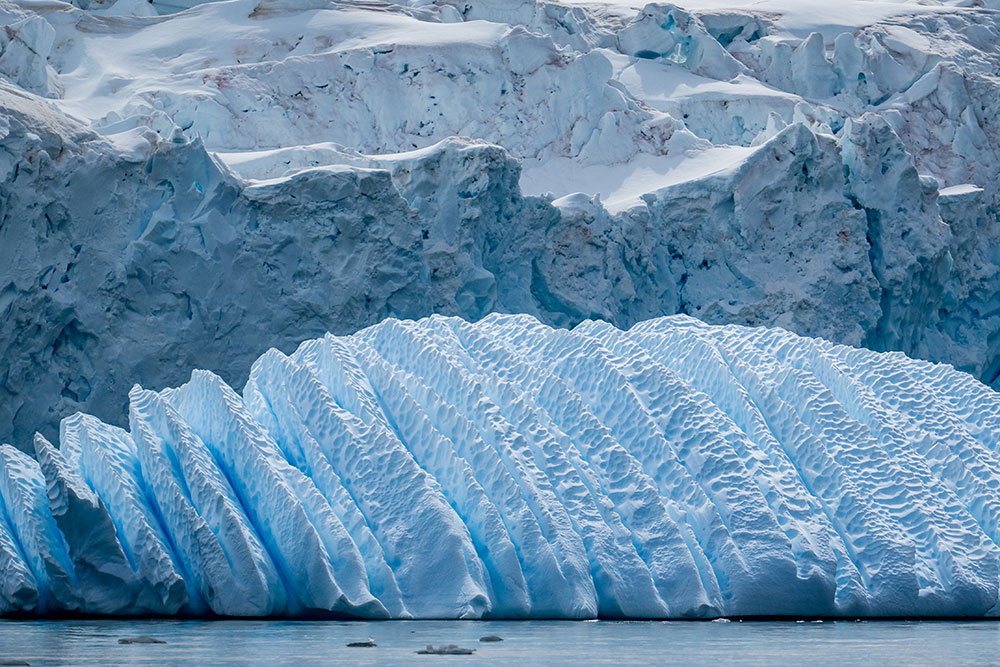
Contrasting iceberg textures. Paradise Bay, Antarctica. Z9, NIKKOR Z 100-400mm f/4.5-5.6 VR S lens at 1/2000 of a sec., f/8, ISO 200.
Shoot from the deck. Some of the best photography in Antarctica occurs shooting right off the deck of your ship. The challenge is being outside enough to get the shot. Starting from Ushuaia, albatross and petrels will be soaring right off the back deck. This is the perfect time to photograph birds in flight. Once you get to Antarctica massive icebergs will drift past, some with penguins on top. Whale sightings are common. There will be constant daylight, so you can shoot all the time. Some of the best light can occur after midnight, but don’t forget to get some sleep! Ships often have a briefing each day detailing the upcoming route, which helps you plan when to be out on deck shooting. I often looked to see what interesting icebergs were in the distance and envisioned where they would line up for a good photograph. Be ready for the shot because the ship won’t stop!
Embrace bad weather. No journey to Antarctica is complete without snowstorms, rainy weather and big waves. But these are fantastic opportunities for photographers. The atmospheric quality of a snowstorm transforms an image into an ethereal moment. Penguins waddling down the beach in a blizzard is an iconic image. Consider your shutter speed. I like to shoot at 1/500 of a second or faster during a snowstorm to create sharp snowflakes in the air. Rain can be challenging but also creates mood in the scene. Look for newly formed reflection pools on the beach. No one likes big waves during the voyage, except the birds. Albatross and petrels get very active flying across the wave tops in stormy seas. If you’re lucky, you might capture a flying albatross with large wave crests in the background.
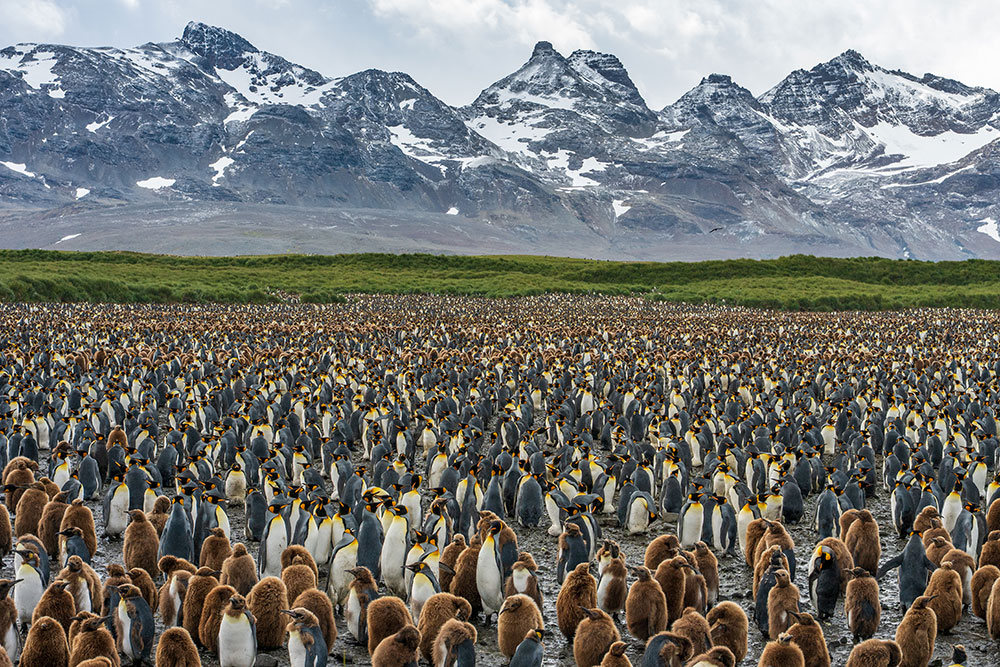
Thousands of chicks (brown) and adult king penguins congregating at Salisbury Plains, South Georgia Island. Z6III, NIKKOR Z 24-70mm f/2.8 S lens at 1/640 of a sec., f/10, ISO 560.
Include the environment. Antarctica is unique. Nowhere else can you find so much snow and ice. Countless glaciers calve into the bays, while distant snowy peaks stretch across the vast ice sheets of the interior. With such a dramatic background, consider including it in your wildlife images. Try using a wide-angle lens and get closer to the penguins and seals to show the delicate balance of life in this harsh environment.
Get low. Getting eye to eye with your subject is a very effective wildlife technique. This allows your viewer to feel connected with the subject, and a lower perspective illustrates how the subject sees the world. But how can you shoot at ground level if you can’t sit on the ground? Try tilting out your LCD screen and using it to compose and shoot the image. This takes some practice. This technique will be very helpful in Antarctica. I recently wrote an article for Learn and Explore which goes into detail on low angle LCD shooting. Read more about LCD shooting here.
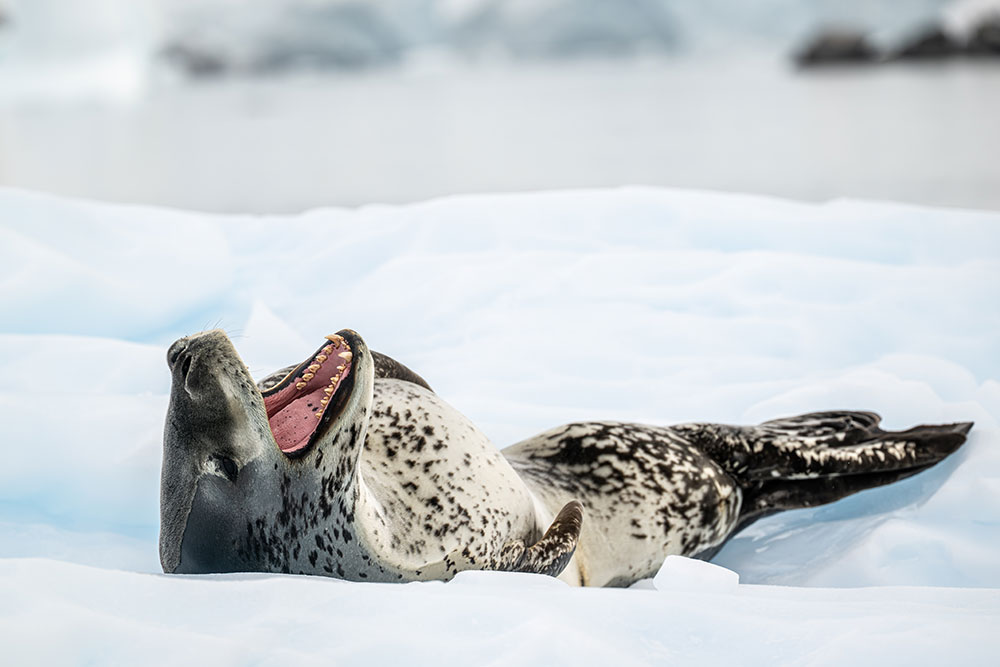
Leopard seal resting on an iceberg. Cuverville Island, Antarctica. Z9, NIKKOR Z 100-400mm f/4.5-5.6 VR S lens at 1/1250 of a sec., f/8, ISO 400.
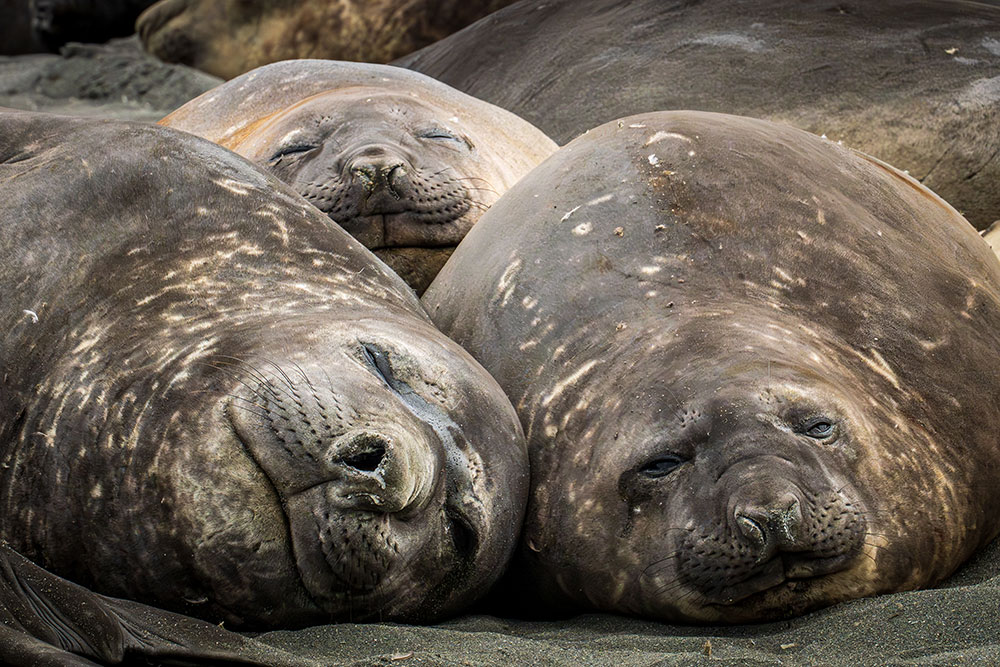
Elephant seals resting on the beach. St. Andrews Bay, South Georgia. Z6III, NIKKOR Z 100-400mm f/4.5-5.6 VR S lens at 1/2000 of a sec., f/16, ISO 8000.
Photographing penguins. Penguins are a photographer favorite, and the main reason many people travel to Antarctica. There are seven species of penguins that live in Antarctica and nearby sub-Antarctic islands. An important part of trip planning is knowing what penguins you might see, and if they have chicks. On my last trip we had lots of chicks and nesting birds. Earlier in the season the snowfields will be cleaner and whiter (before nesting season), which creates beautiful pristine images.
Getting close to penguins is easy, they’re curious and often come right up to you. Remember the five-meter rule, so you may need to back up. I like to photograph penguins from low angles and line up multiple birds in the frame. Look for emotive moments between nesting pairs. I also like large rookery photos where you fill the frame with hundreds of birds. Patterns create interesting images. Try finding a solitary chick in a large group of adults, the chick will break the pattern and create a focal point in the image. Patience is key. Find a good location and watch for interesting behavior.
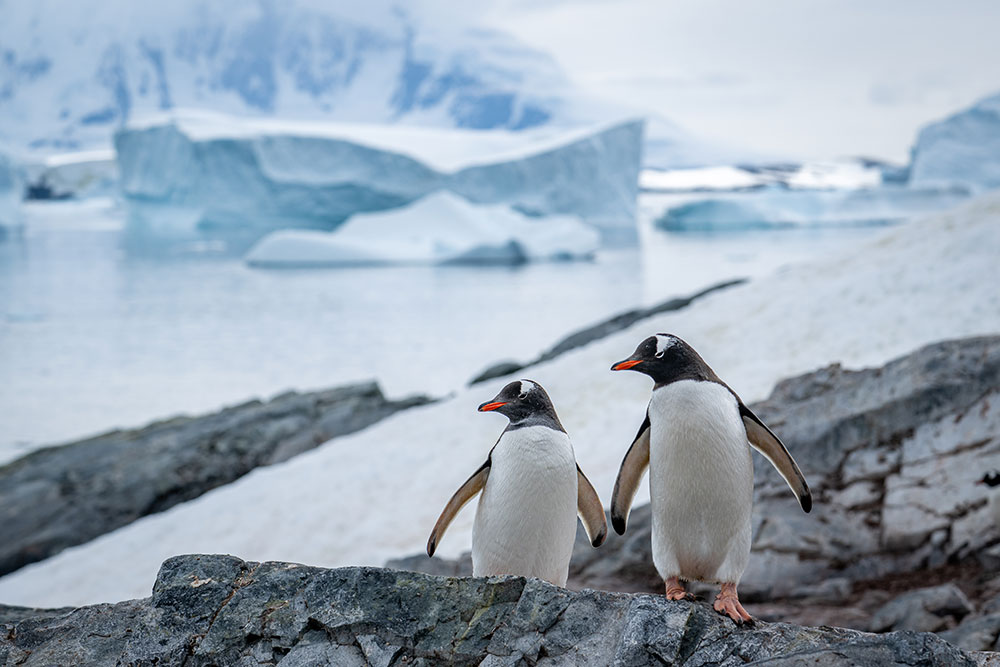
Gentoo penguins in a rookery with icebergs in the background. Cuverville Island, Antarctica. Z9, NIKKOR Z 100-400mm f/4.5-5.6 VR S lens at 1/1000 of a sec., f/8, ISO 160.
Planning a photography trip to Antarctica is a daunting task. Spend plenty of time researching your ship and its itinerary, but the rewards will be well worth it. You’ll come home with hundreds of beautiful images, having been one of the lucky people who has had the opportunity to photograph the White Continent.