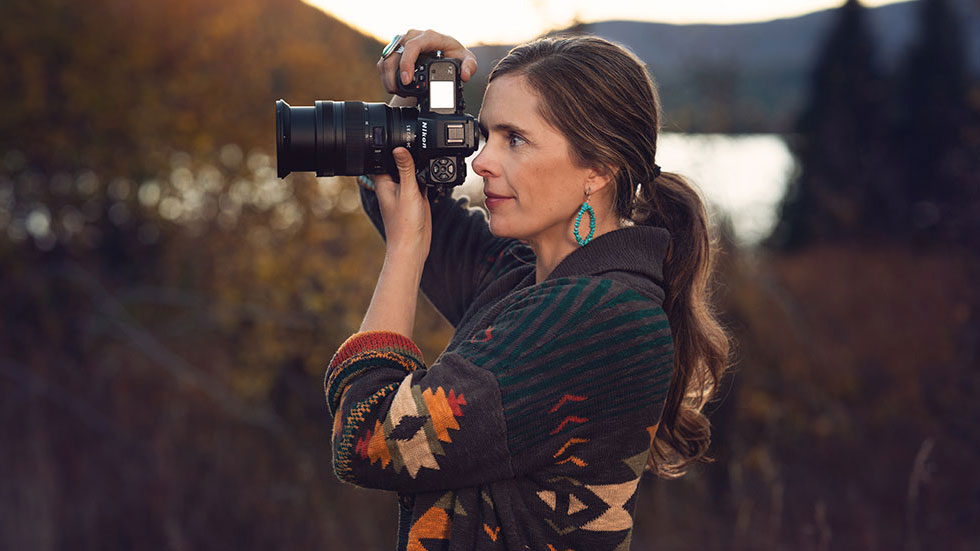
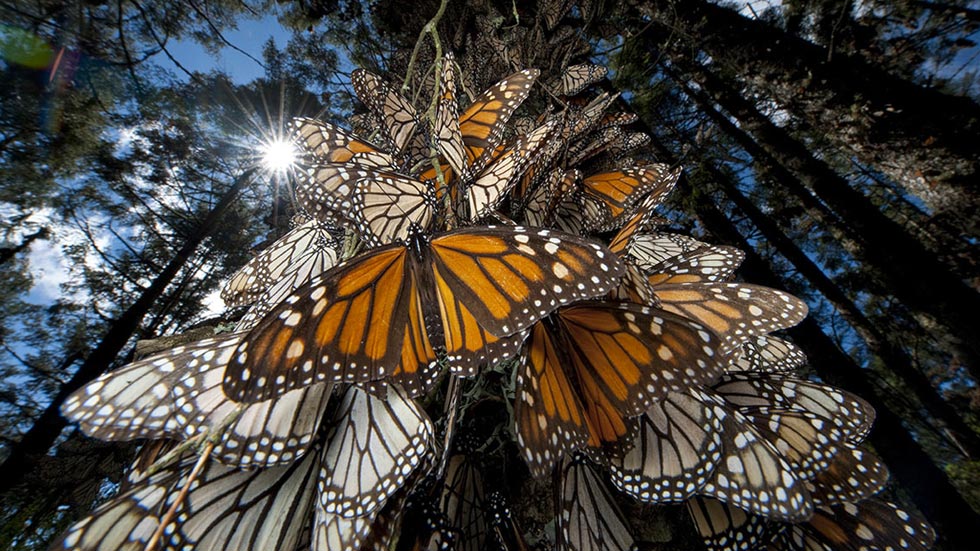
Talking With a Pro Who Says the NIKKOR Z 70-200mm f/2.8 VR S II Is Our Best Ever 70-200mm
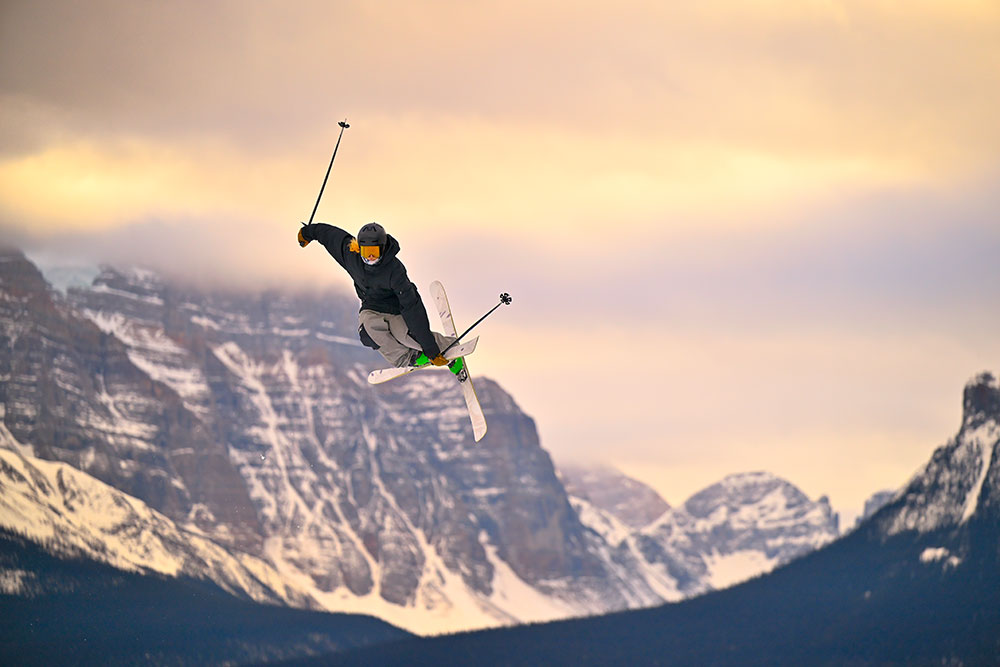
Kristian made this shot—one frame from a 20 fps sequence—in Banff National Park, Alberta, Canada. “He made a huge jump from the lower left, turned in the air and was spinning away from me. I purposely did wide-open-aperture shots to test the precision of the lens in fast-action situations.” Z9, NIKKOR Z 70-200mm f/2.8 VR S II, 1/3200 second, f/2.8, ISO 400, manual exposure.
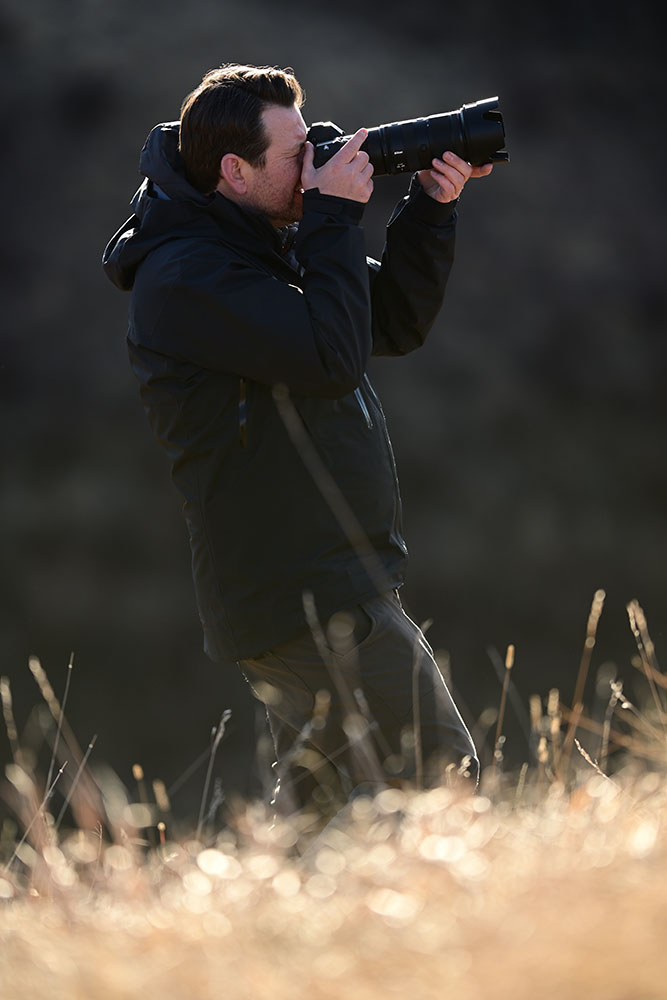
“Imagine being a sports photographer, and then imagine you can focus three times faster.” Kristian Bogner waited until the end of our talk about his photography with the NIKKOR Z 70-200mm f/2.8 VR S II to say that, and it served as an exclamation point to his evaluation of the second generation of that particular focal length for Z cameras. The lens is also the second in the Z lineup of what many pro photographers consider an essential trio.
Kristian began his career at 16, which was neither unusual nor unexpected, as he comes from two generations of photographers. Sports photography was a particular interest, and Nikon was his camera and lens choice. Along the way in his 30-years-and-counting career he’s had “almost every iteration” of the 70-200mm focal length. Also, along the way he’s had the distinction of being Nikon Canada’s first Ambassador.
All the above means he really knows our gear and the advanced technology it delivers; he depends on both no matter what his diverse assignments demand. Still, the Z 70-200mm II surprised and delighted him. “This is the best 70-200mm Nikon’s ever made!” was another exclamation-point statement. Here are some of the reasons for that judgment:
- Compared to the previous version, it’s 26 percent lighter by 13 ounces, and about a half-inch shorter. To be precise, it’s autofocus is 3.5 times faster and offers 40 percent better focus tracking while zooming.
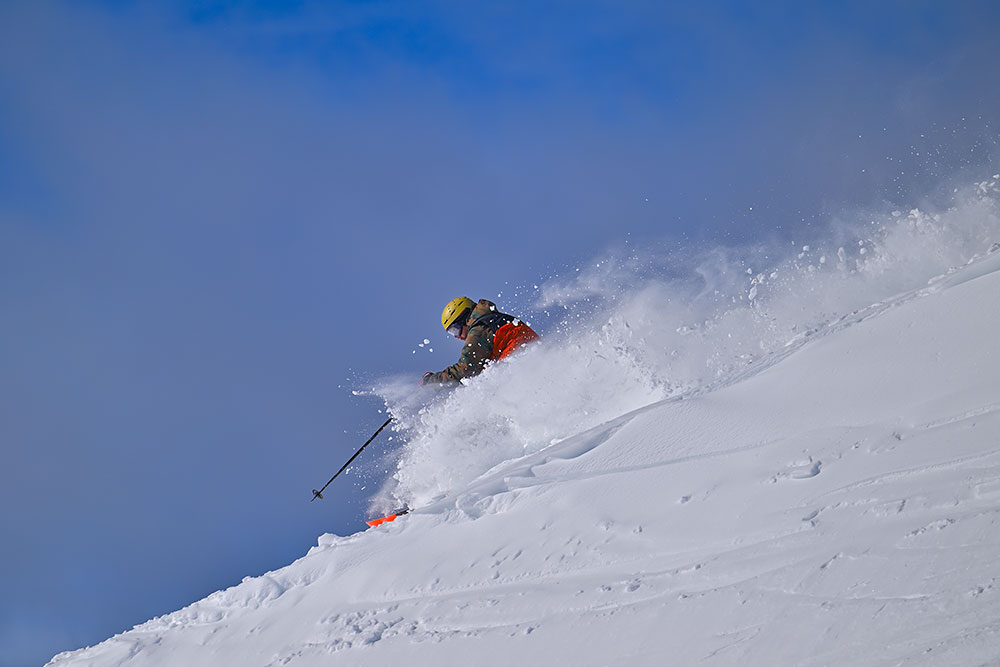
“Even with snow flying all around and the skier wearing goggles, dynamic-area AF allowed me to focus on his eyes as I tracked the downhill run.” Z9, NIKKOR Z 70-200mm f/2.8 VR S II, 1/3200 second, f/4, ISO 100, manual exposure.
- It offers six customizable function buttons that can be programmed for a number of operations, including selecting autofocus and autoexposure modes, focusing to a pre-set distance, and changing to DX crop.
- Minimum focusing distance is just 15 inches at 70mm, rather than the 19.7 of its predecessor.
- Its improved bokeh rivals prime lenses.
- It comes with two removable collars: one is a protective sleeve, the other is the Nikon foot, a 360-degree rotation tripod collar that features an Arca-Swiss connection for quick and easy attachment to a variety of tripods.
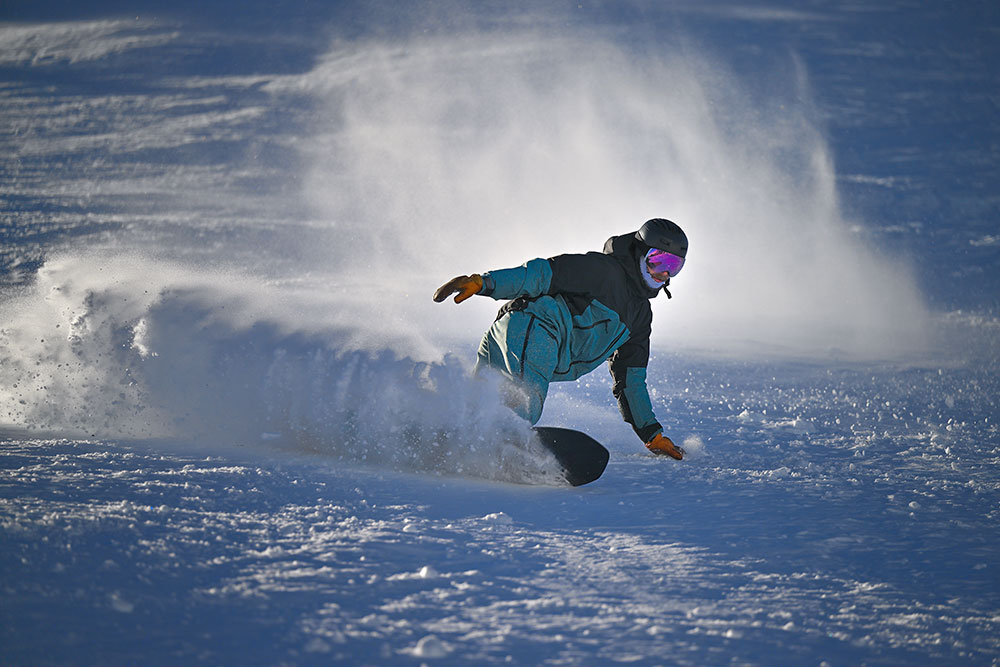
“The fog of snow behind the snowboarder is from his hard-cut slash across the snow, and it created this really cool effect.” Z9, NIKKOR Z 70-200mm f/2.8 VR S II, 1/6400 second, f/3.2, ISO 100, manual exposure.
Versatility Plus
We’re aware that some photographers consider a 70-200mm zoom as primarily a portrait lens, but we believe a category for a lens depends on the job it’s doing at the moment. When we handed Kristian the lens, we knew that because of his experience with the 70-200mm focal length, and considering all the photography he’s done—sports, nature, wildlife, outdoors, studio, weddings, documentary—he was the photographer to prove us right.
“There were discernible differences from the moment I picked it up,” he says. “Most notably the lighter weight, the smaller size, and as soon as I started shooting, the startling speed of the autofocus.”
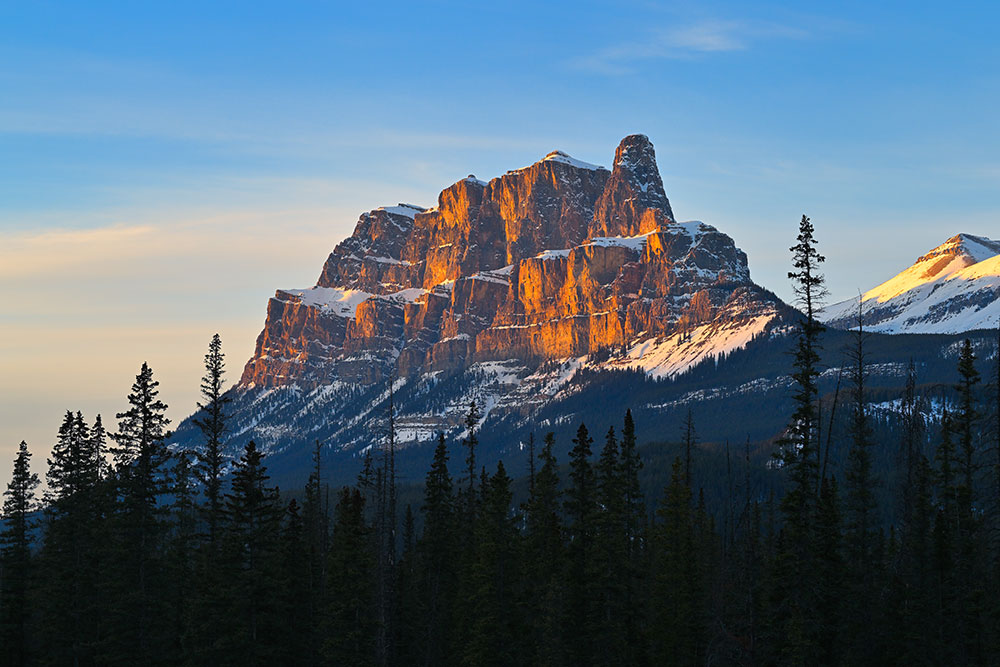
“Castle Mountain, in Alberta, Canada makes for an amazing visual when it gets this sunset glow. I set the camera’s white balance to Cloudy to add a touch of warmth so the snow, which is reflecting the sky, doesn’t tend toward blue.” Z9, NIKKOR Z 70-200mm f/2.8 VR S II, 1/125 second, f/9, ISO 250, manual exposure.
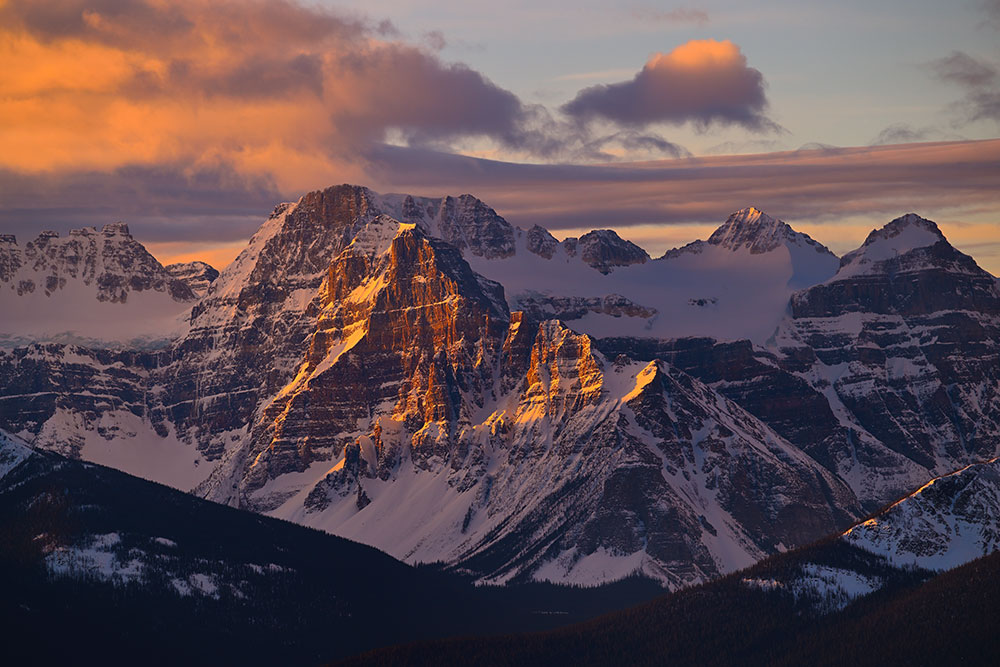
A sunrise view taken from the top of Lake Louise in Banff National Park. “The moody clouds were magic that I wasn’t going to miss.” Z9, NIKKOR Z 70-200mm f/2.8 VR S II, 1/500 second, f/5.6, ISO 100, manual exposure.
This is the best 70-200mm Nikon’s ever made!
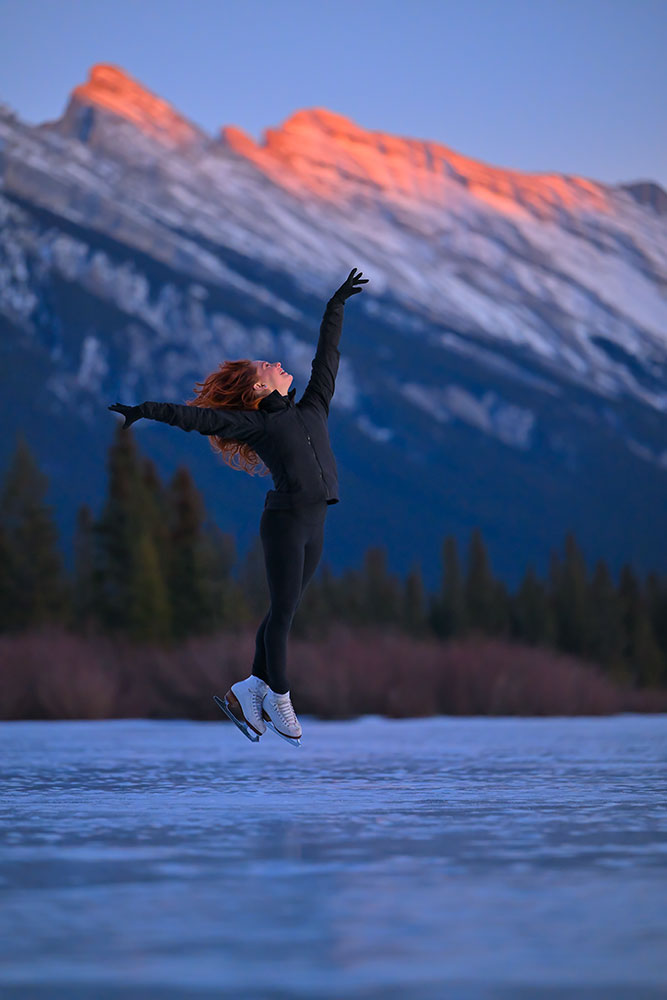
At Vermillion Lake in Banff National Park. “A motion catch in a difficult scenario. With the sunset light I got Alpenglow on the tips of the mountain, but not a lot of light on her, so I shot at a fairly high ISO, and at f/2.8 I got a nice separation from the background.” Z9, NIKKOR Z 70-200mm f/2.8 VR S II, 1/3200 second, f/2.8, ISO 2500, manual exposure.
When we asked Kristian which specific features of the new lens meant the most to his photography, his answer touched on all of his assignments. “It’s the 26 percent lighter and 12 millimeters shorter, of course, but also the removable collar—the Nikon foot. That’s particularly important for me, and I noticed it right away, especially when photographing the athletes.” It was significantly important because on the previous version of the mirrorless 70-200mm you could remove the base plate, but not the collar, and that often made it difficult for him to quickly get the lens out of his camera bag or backpack. “It seemed like it would always stick. Imagine, you’re on location, there’s deep snow, you’ve got a drop-off, a cornice, a cliff, or you’re in an avalanche-prone area, and you have a skier jumping off, coming right at you.” The Z 70-200mm II is a different story. With the Nikon foot off the lens, it’s easier and quicker to get it out of the pack and go to work, while the lighter weight makes a difference on day-long shoots. “Weight-wise it feels more like a 24-70mm,” Kristian says.
Overall, the Z 70-200mm II is a versatile lens for a photographer who values his own versatility for a very practical reason. “I love switching gears from one assignment to the other, and this lens is important because for me, in today’s marketplace, today’s work demands versatility.”
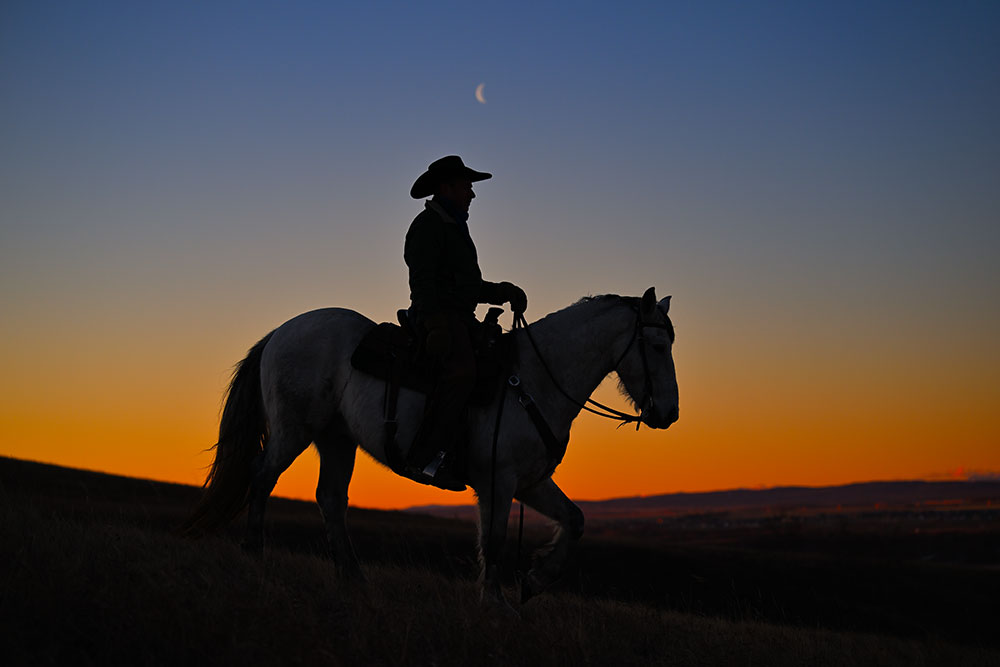
“This is one the first pictures I took with the lens, and it was a ‘Wow, this is so sharp!’ moment. It was also a field test because I needed early morning, with its freezing cold temperature, to get these color transitions.” Z9, NIKKOR Z 70-200mm f/2.8 VR S II, 1/1250 second, f/2.8, ISO 125, manual exposure.
Northern Exposures
Kristian thinks that one of the reasons Nikon chose him to field test the performance of the lens—and its extensive weather sealing and protective front-element coating—was the rugged environment, and his familiarity with it. “Tough terrain, snow flying around and super cold temperatures—it was freezing the day I made the cowboy shot.”
Recently, Kristian has teamed up with conservation authorities and writers working on “nature positive” movements, and he is producing stills and videos that will document and publicize their efforts. “I go to very remote places and high altitudes,” he says, “and I have to bring a gimbal, flash equipment, certainly the 70-200mm and the [Z TC-2.0x] teleconverter and a few other lenses—all of which are reasons for appreciating any decrease in weight as well as the rugged build of the gear.”
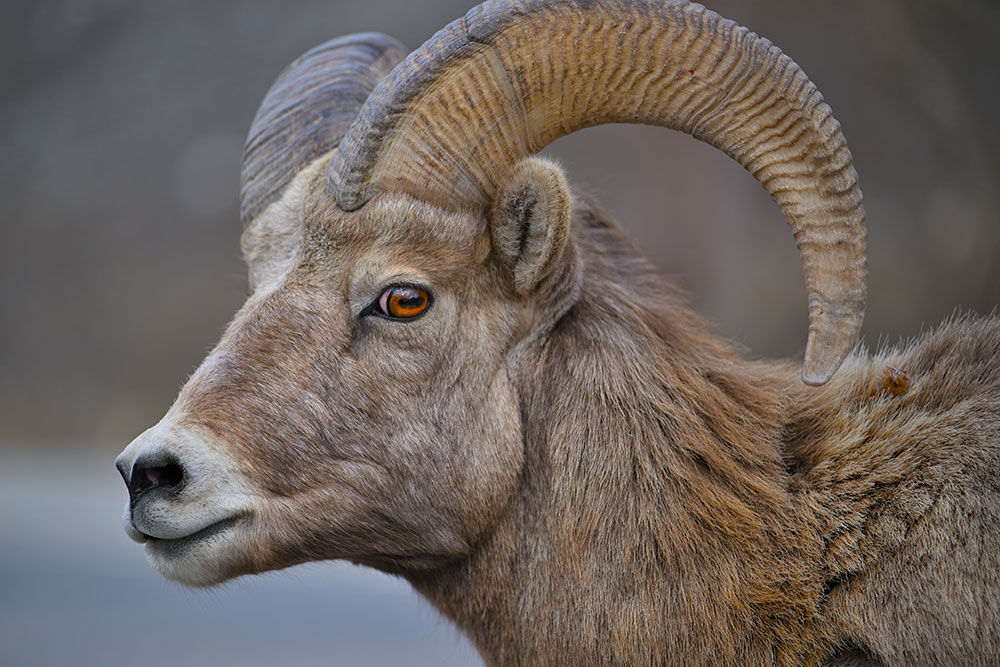
“I went out looking for wildlife in Exshaw, a hamlet in Alberta, Canada. I was too early for bears, but this Bighorn sheep offered beautiful texture. He was moving, and I was zooming in and out to keep him in frame and get different views. With this lens, choices are guaranteed, and if I had to choose one lens for the bag, this is the one.” Z9, NIKKOR Z 70-200mm f/2.8 VR S II, 1/1600 second, f/2.8, ISO 160, manual exposure.
There’s much more at the Nikon USA website about the on-the-job, real-world performance of the NIKKOR Z 70-200mm f/2.8 VR S II, including photos, videos and a comparison chart that lists its features in relation to the first generation of the 70-200mm Z lens.
So, is Kristian correct in saying that the NIKKOR Z 70-200mm f/2.8 VR S II is “the best 70-200mm Nikon’s ever made”? We’ll just say he’s not the only one who thinks so.