“Call of the Dolphins” — Documentary Filmmaker Jonathan Bird on Filming Giant Screen Cinema with the Nikon Z 8
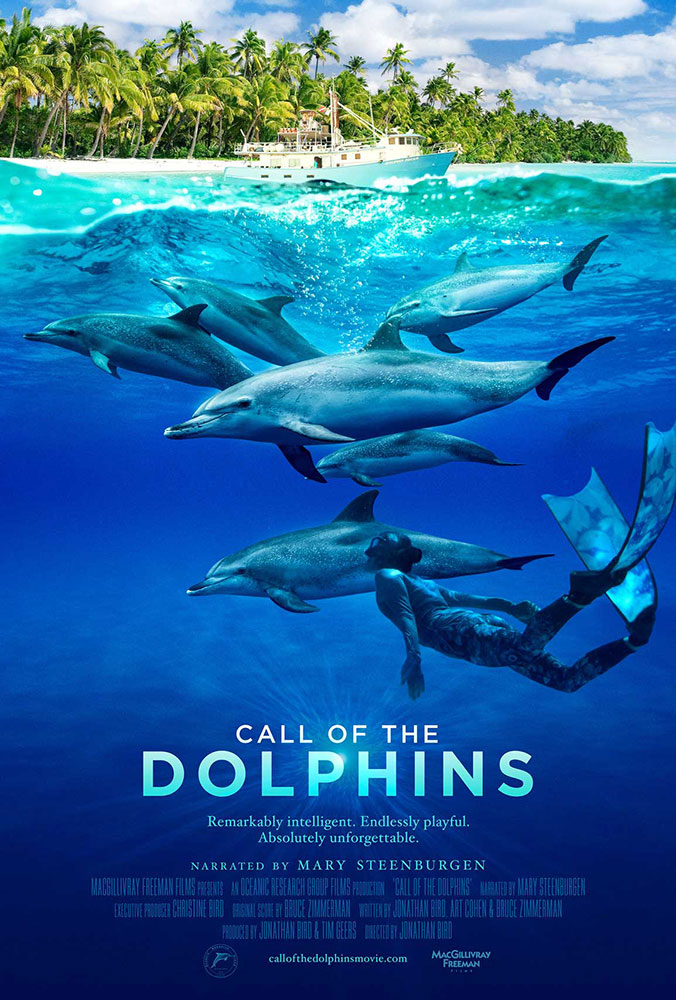
Call of the Dolphins explores the profound connection between humans and dolphins and invites us deep inside their fascinating world, offering an up-close look at their remarkable intelligence, complex social lives, and playful antics.
SUMMARY: Jonathan Bird relied on the Z 8 in making the first large-format feature film shot using Nikon mirrorless cameras
When moviegoers step into giant-screen theaters, they expect to be transported into new worlds.
For documentary filmmaker Jonathan Bird, this mandate means diving hundreds of feet into the depths of the ocean, where each dive is limited by time, oxygen and the tools he carries with him.
For his latest film, Call of the Dolphins, Jonathan relied on the Nikon Z 8 as his most trusted tool, making it in the process, the first large-format feature film shot using Nikon mirrorless cameras.
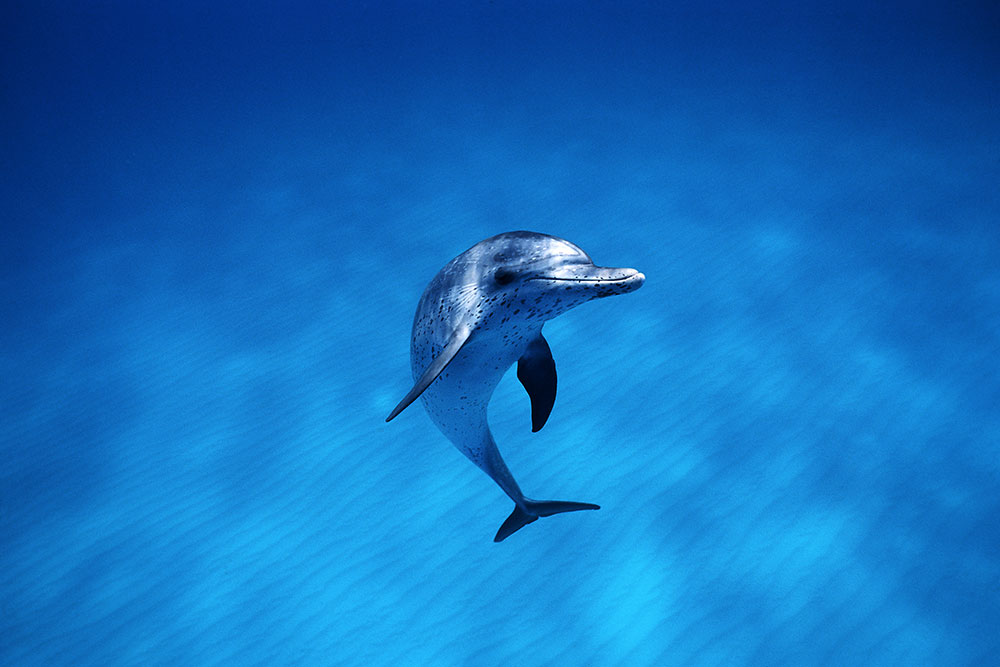
A smile appears to be a constant expression on the face of the Atlantic spotted dolphin.
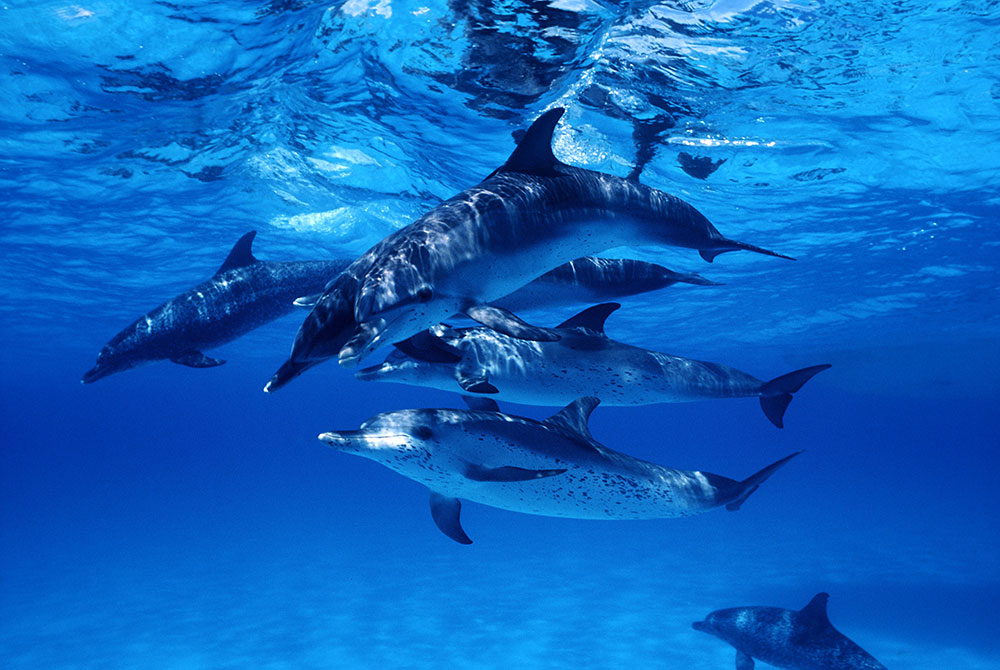
A vibrant pod of Atlantic spotted dolphins moves as if dancing together.
How the Nikon Z 8 Addresses the Challenges of Giant Screen Filmmaking
One of the primary considerations in choosing a camera for giant screen theaters is naturally the size of the screen itself. When the screen that audiences will see the film on measures over 80 feet wide, the image demands exceptional resolution—and the 8K on the Nikon Z 8 delivers.
What drew Jonathan more to the Nikon Z 8 was its cutting-edge internal RAW video capabilities.
When shooting underwater, the sunlight conditions can change rapidly, changing a scene’s color temperature from one moment to the next. With the flexibility of RAW video, the challenge was solvable.
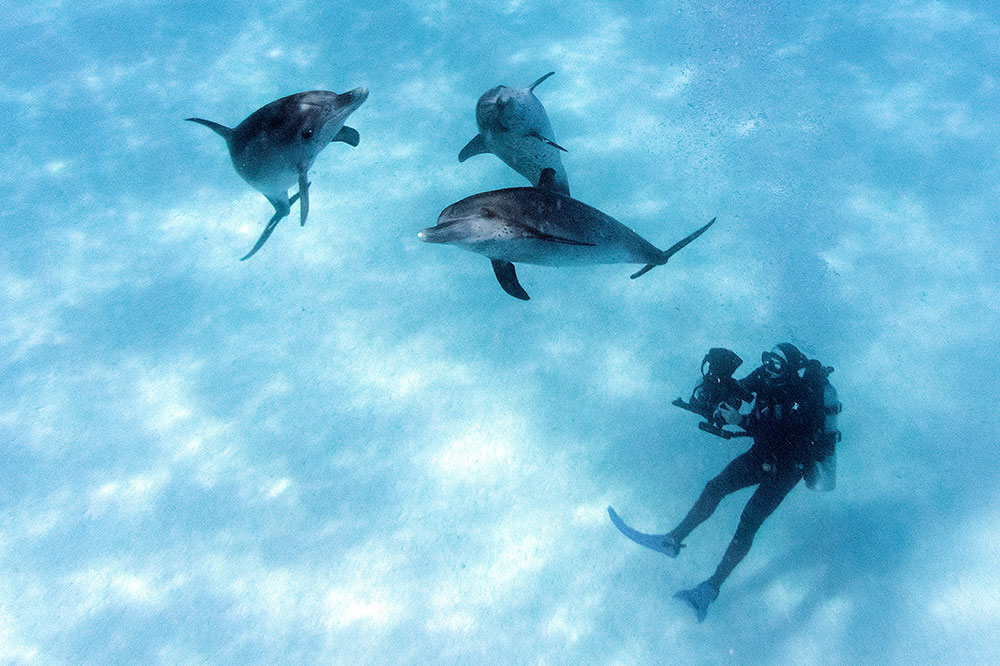
Director/cinematographer Jonathan Bird films three playful dolphins as they swirl around him in a mesmerizing underwater ballet.
The small size of the Nikon cameras allowed us to shoot a documentary for the giant screen with the same techniques as a television documentary—capturing action on the fly, as it happens in real time.
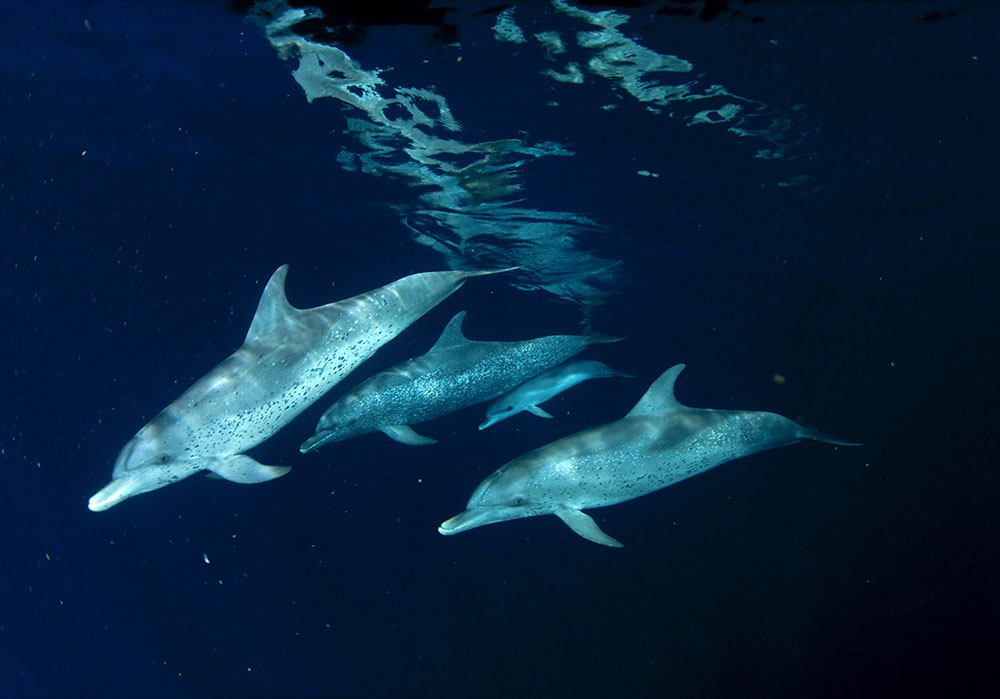
A pod of dolphins glides gracefully through the mysterious darkness of the ocean at night.
Unlike traditional video formats, RAW video files shot in N-RAW on the Nikon Z 8 allow for technical elements in each shot, including color temperature, to be modified in the editing stage.
Where 8K and internal RAW video made the Nikon Z 8 ideal, utilizing subject-tracking autofocus for fast-moving subjects, a compact size for solo gimbal operation on boats, an excellent battery life for long underwater scenes, and renowned ergonomics made it a truly unmatched choice.
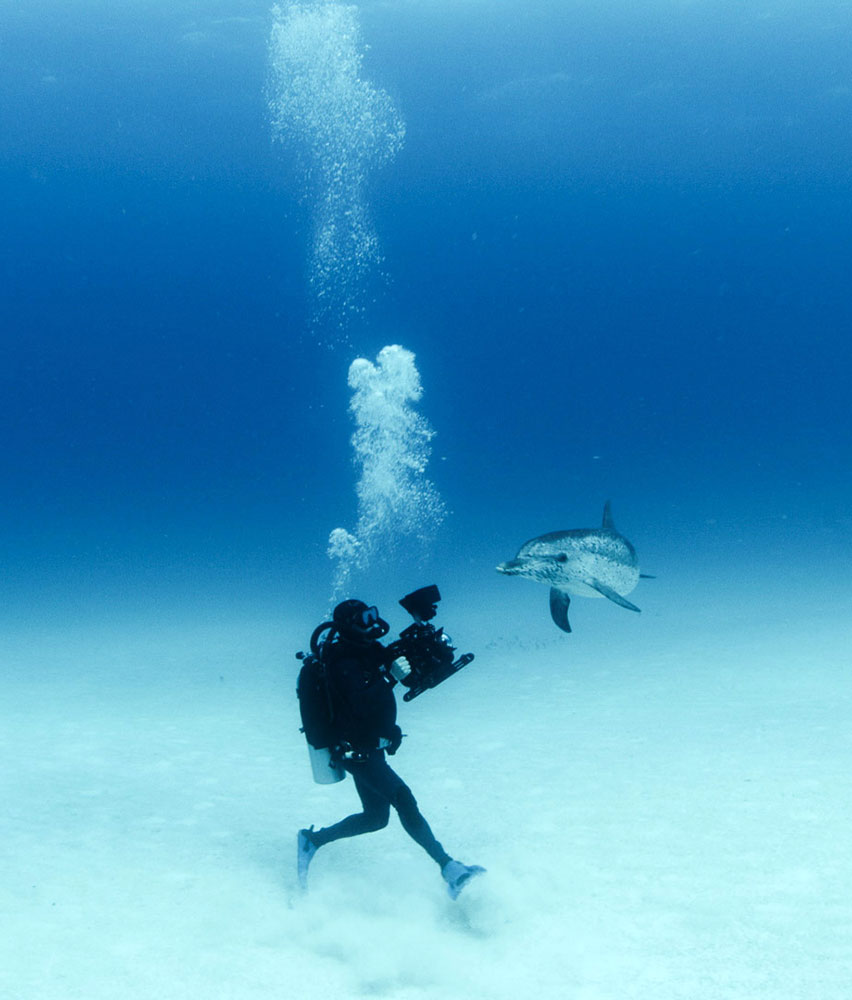
Director/cinematographer Jonathan Bird captures footage of a curious dolphin on the ocean floor.
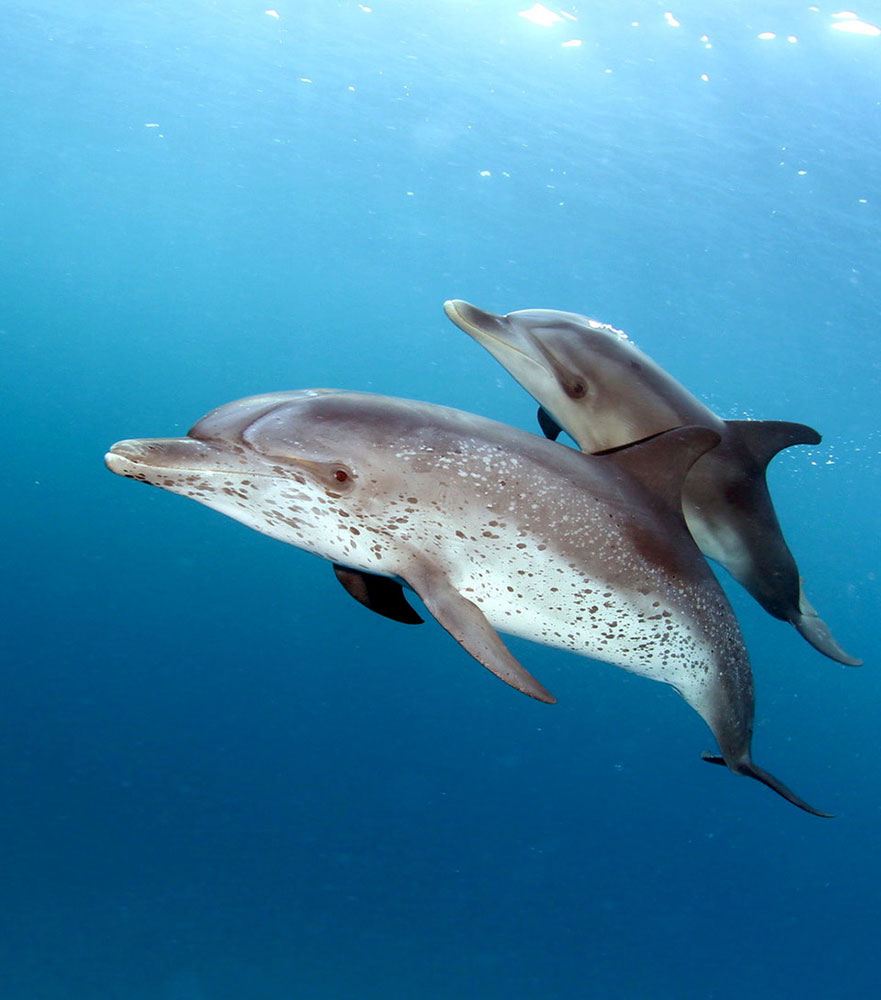
Two Atlantic spotted dolphins swim gracefully through the clear blue waters, showcasing their distinct spots and streamlined bodies.
Searching for Authenticity in Giant Screen Cinema
As Jonathan explains it, giant screen filmmaking traditionally relies on massive 65mm film cameras that tend to be loud, bulky, and expensive. To compensate for the cost and the nature of the process, scenes in giant screen documentaries often require meticulous staging.
In searching for a more authentic storytelling experience, Jonathan wanted a different tool for his project. He was looking to capture real nature and fast action as they unfolded in each moment.
“I wanted to produce a documentary about dolphins that would make full use of the incredible power of giant screen cinema to bring audiences [right] into the world of dolphins,” he explains.
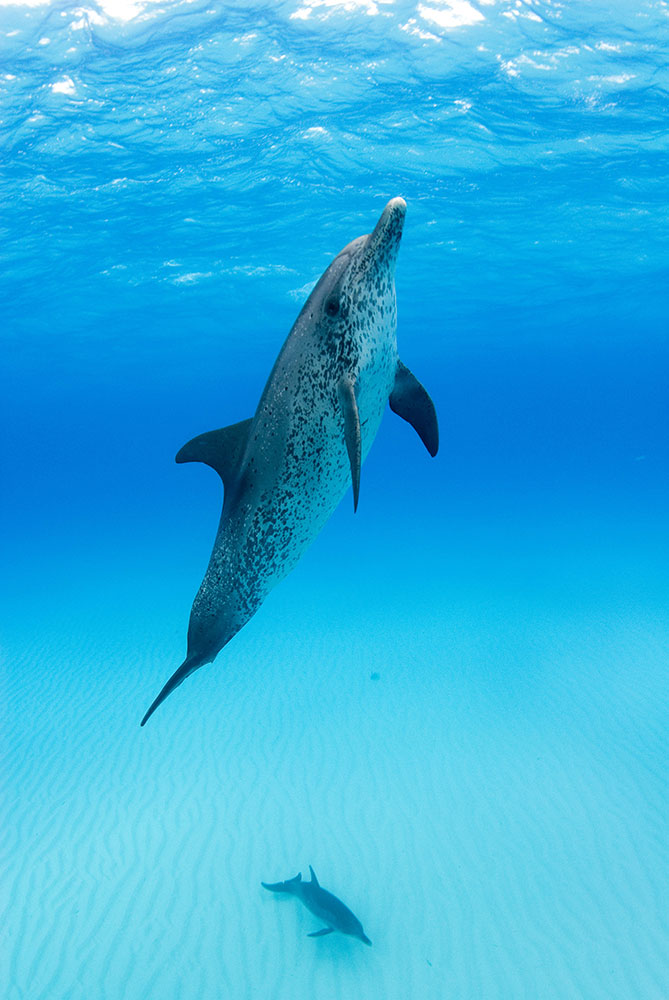
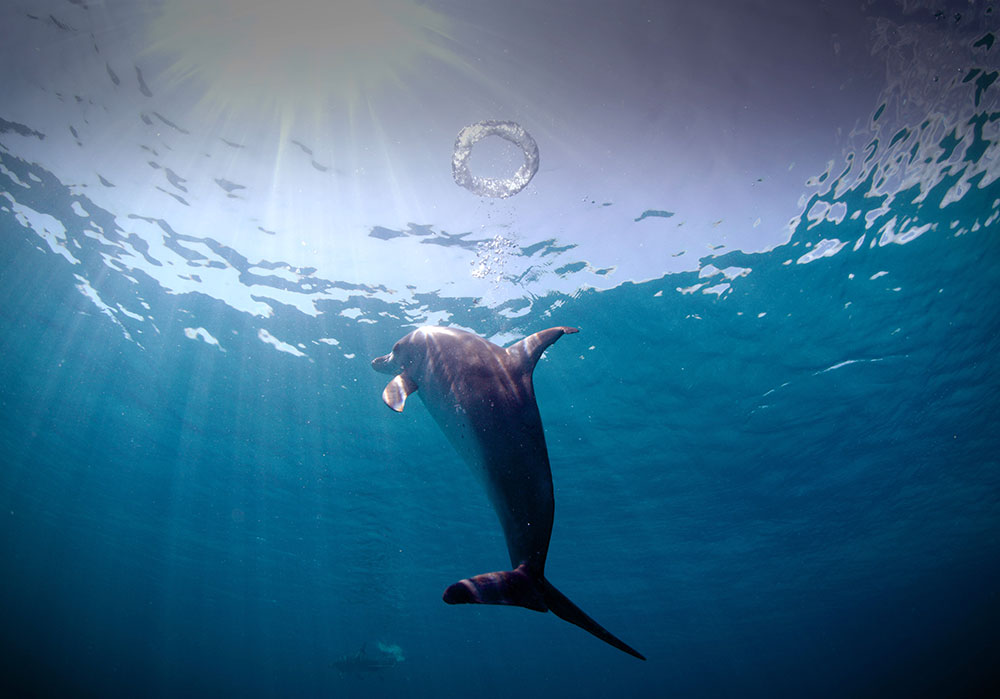
Gracefully heading up toward the surface, this dolphin creates mesmerizing donut-shaped bubbles on its way toward the sky for a brief poke above the waters.
“The small size of the Nikon cameras allowed us to shoot a documentary for the giant screen with the same techniques as a television documentary—capturing action on the fly, as it happens in real time.”
As a longtime RED user, Jonathan had turned to his Nikons primarily for still photography use. But when researching solutions for what would primarily be underwater scenes in his latest film, he found that the Nikon Z 8 met both his requirements and the demands of giant screen filmmaking.
By combining the cutting-edge mirrorless technology of Nikon Z 8 with the artistry of his nature documentary storytelling, Jonathan has opened the door to more agile, more authentic, and more visually stunning productions, bringing audiences closer than ever to the wonders of the ocean.
Jonathan’s Call of the Dolphins was shown in theaters worldwide in 2025 and 2026. To learn more about the film, including screening locations, showtimes and ticketing information, visit the film’s website: https://www.callofthedolphinsmovie.com.
View the trailer for the film Call of the Dolphins

Jonathan Bird is an underwater cinematographer, photographer, director and television host known for his work in marine filmmaking. He is the creator, host and producer of the Emmy Award–winning public television series" Jonathan Bird's Blue World".
More articles by this contributor