Flower Photography: 10 tips for Photographing Dahlias
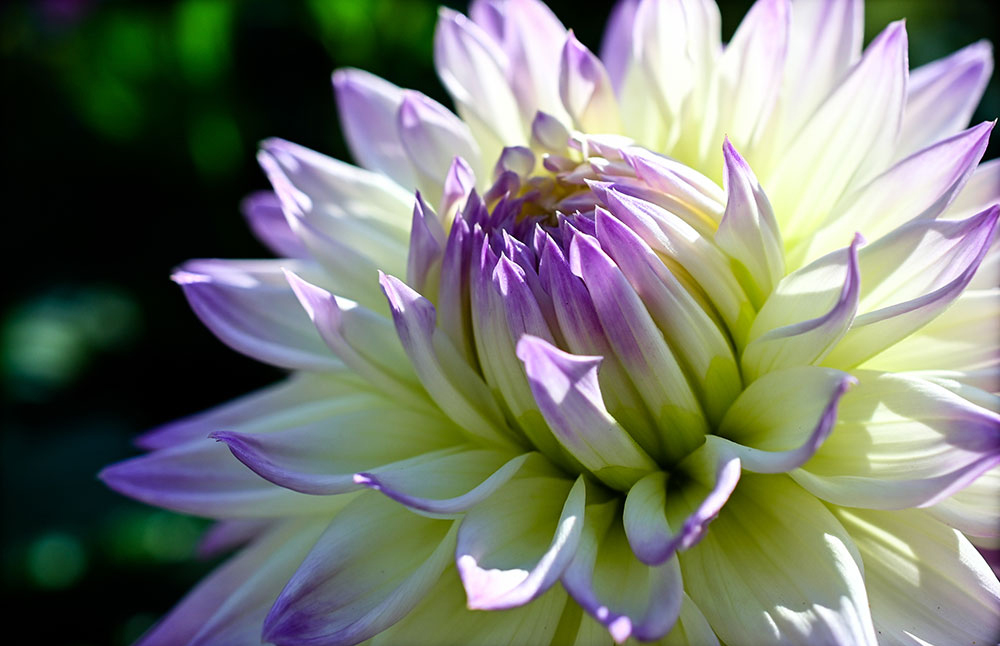
Creative cropping of the flower with an off-center composition works for this image. Z6, with the FTZ Mount Adapter, AF-S DX Micro-NIKKOR 40mm f/2.8G, 1/400 sec., f/8, ISO 200, aperture priority.
Flower gardens are more than just beautiful places to admire, they’re visited by many bugs, bees, butterflies and other beneficial insects on their daily trips for nectar. While you may stumble upon a stunning field of lavender, sunflower field or rose garden, the dahlia garden is an especially wonderful place for photography. These flowers are classified into 15 different groups, which describe the structure of the flower, and a garden full of dahlias will often feature many of these different varieties. So many, in fact, that you can get lost taking photographs of dahlias for hours. Many arboretums and botanical gardens will dedicate an entire garden to these beautiful flowers. They bloom from the middle of the summer through the first frost in fall which gives you plenty of time to visit your local dahlia garden and make great images.
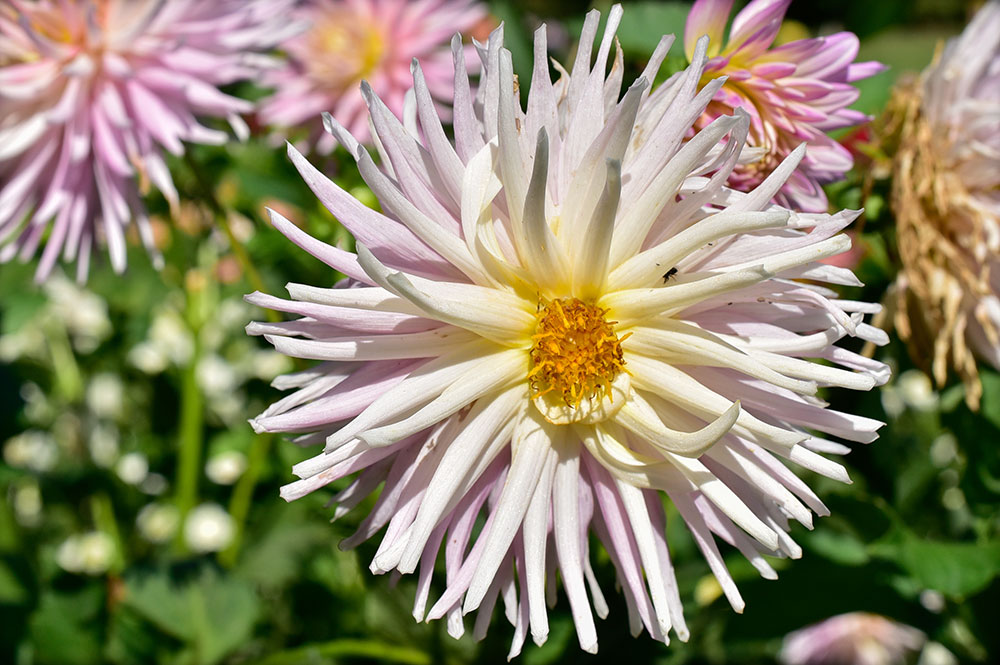
Fill the frame with more than one flower. Take your time walking around the dahlia varieties looking for compositions that are pleasing. D750, AF-S DX Micro-NIKKOR 40mm f/2.8G, 1/1250 sec., f/14, ISO 400, aperture priority.
Any camera you have will work to photograph dahlias—Z series mirrorless, DSLR or COOLPIX. Ideal lenses include fast primes for shallow depth of field and macro lenses to get super close to the flowers and any insects that may be visiting at that moment. You could even use a short telephoto lens if that’s the only lens you own—you may have to stand farther back from the flower or flowers you want to photograph, depending upon the close focus distance of the lens. The lens’ manual will tell you the minimum distance you’ll be able to focus.
A COOLPIX camera is another great option. A large focal length zoom range will let you capture a variety of close up and more normal view compositions and the macro mode will let you get within inches of your subject for super detailed shots.
We’ve put together 10 tips to help you improve your dahlia photography.
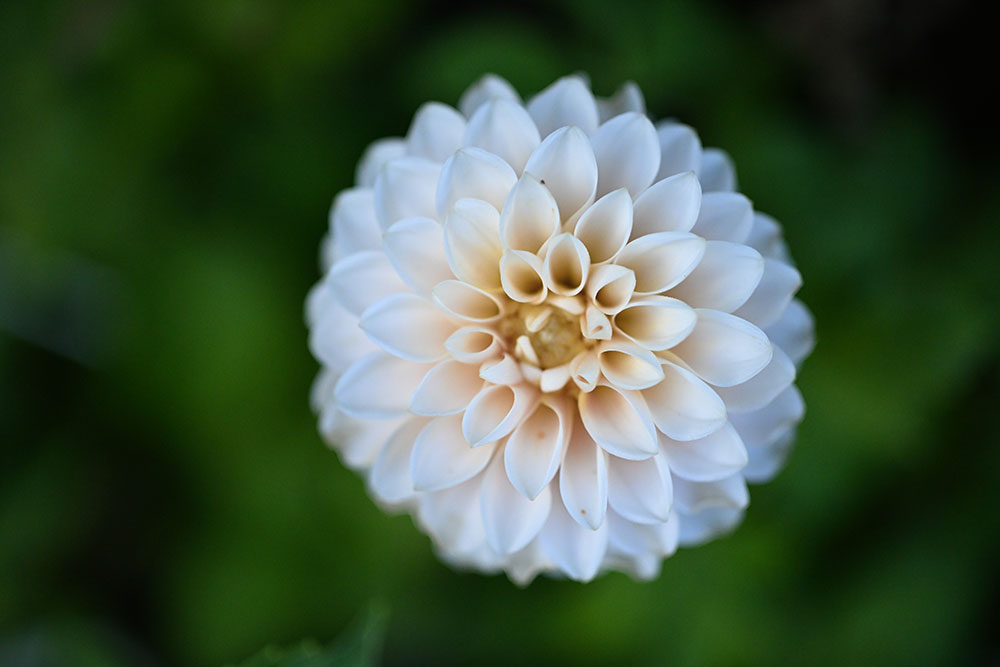
Every petal of every flower doesn’t always have to be tack sharp. In this image, the center of the dahlia is sharp with the sides of the flower falling softly out of focus. Z50II, NIKKOR Z DX MC 35mm f/1.7, 1/3200 sec., f/2.1, ISO 1250, aperture priority.
Golden Hour. Golden hour is the time of day—early morning and late afternoon—where the light is soft, warm toned without harsh shadows. In fact, many nature and landscape photographers will only go out during this time of day when subjects are more beautifully lit as opposed to the midday sun with its harsh shadows and bright light.
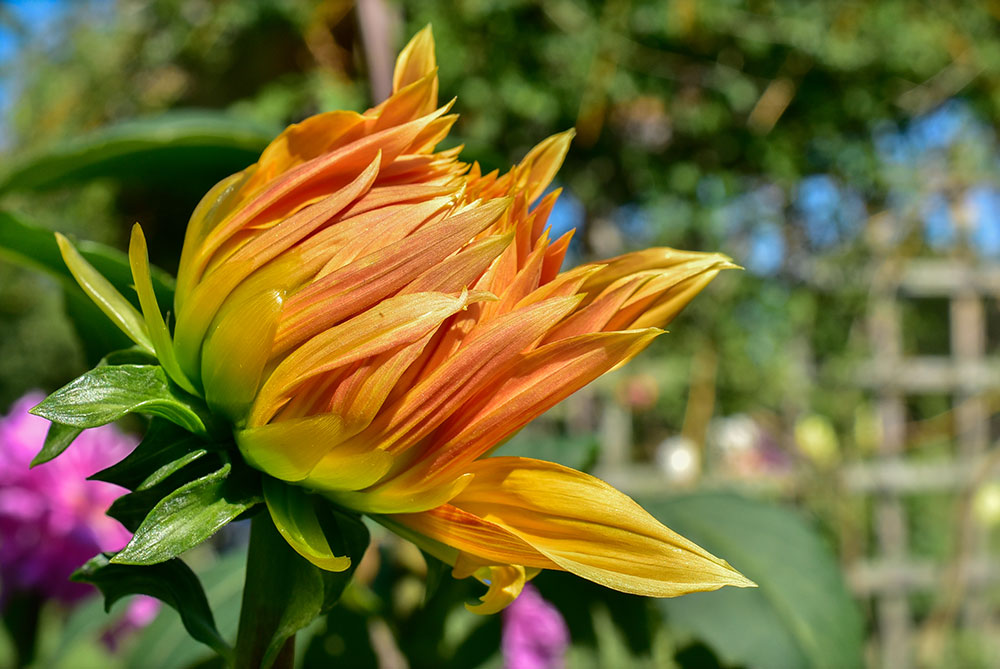
Play around with depth of field. Depending upon how close you are to the flower, and the flower is to its background determines your depth of field. This dahlia was far enough from the trellis in the background to allow the background to fall out of focus, creating separation, even though the aperture is set at f/14. D750, AF-S DX Micro-NIKKOR 40mm f/2.8G, 1/640 sec., f/14, ISO 400, aperture priority.
Use a fast lens. When you’re photographing a subject like an individual flower, you want to have a clean background and often the way to do this is to use a wide aperture like f/1.2 up to f/2.8 to blur the background. Cluttered backgrounds can be distracting and in a garden where you might not have much of a choice as to what your background is, being able to blur it with the beautiful bokeh of a wide aperture is the best way to give the flower a soft blurred background of color, helping it stand out more.
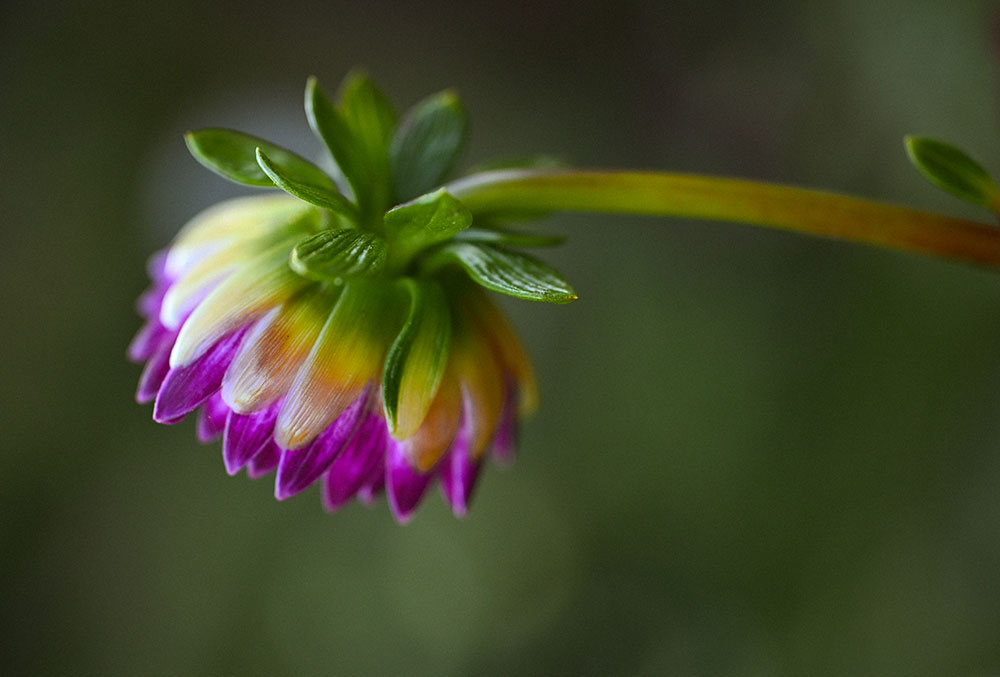
Get creative. Don’t always shoot head on to the flower. There’s more to see when including the stem. Z50II, NIKKOR Z DX MC 35mm f/1.7, 1/1600 sec., f/2.5, ISO 800, aperture priority.
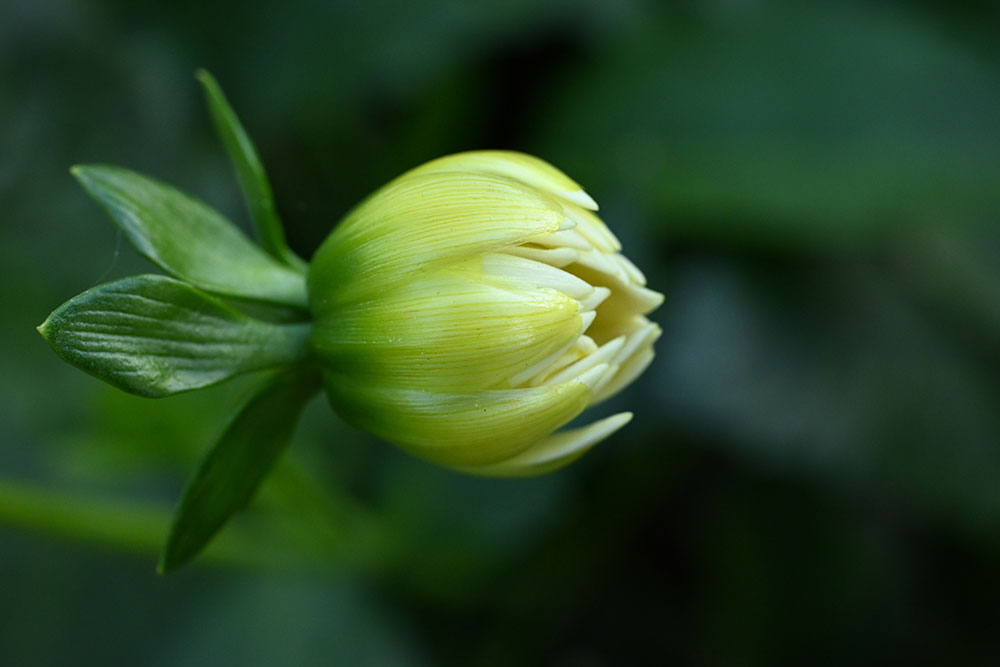
One of the things you’ll notice in a large dahlia garden is the different stages of growth of the flowers, from tight buds, partially opened flowers and full blooms. All make for great photographs. Z50II, NIKKOR Z DX MC 35mm f/1.7, 1/400 sec., f/7.1, ISO 1250, aperture priority.
Expose correctly. Because many dahlias often have colors that softly blend into one another, it's important your exposure is correct. Adjust your white balance to match the type of lighting you’re photographing in. Slight underexposure can deepen the colors of the flowers, making them appear richer and more saturated. More importantly, your camera will be able to capture the textures and minute details of each flower. Photo editing software will allow you to adjust the exposure if you want to lighten the shadows. You can pull the detail out of the shadows, but you can’t add detail back in to blown-out highlights.
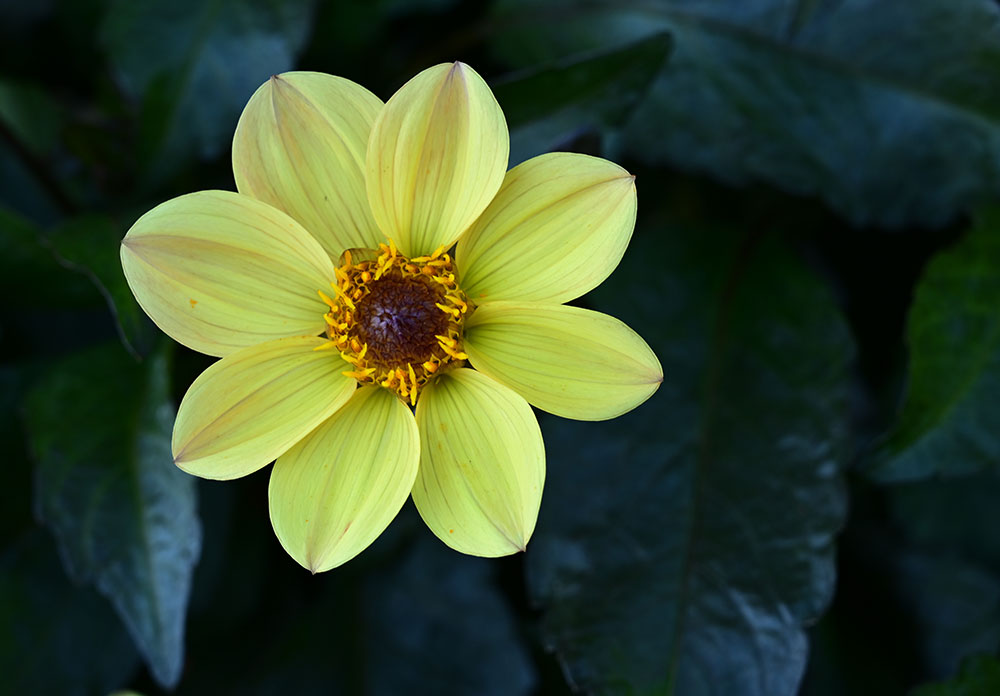
Composing an image so the flower stands out on a background of dark green foliage can work just as well to separate the flower from its background when you don’t have a lens with a super-fast aperture to use. Z6, NIKKOR Z 24-70mm f/4 S at 70mm focal length, 1/100 sec., f/8, ISO 400, aperture priority.
Focus. Because dahlias can be so elaborate and multi-layered, you want to make sure your focus is pleasing to the viewer. Often, focusing on the center of the flower will work best. But you can also compose your image in such a way that focusing off-center will work better. Experiment, take lots of shots and see what works best!
Any camera you have will work to photograph dahlias—Z series mirrorless, DSLR or COOLPIX. Ideal lenses include fast primes for shallow depth of field and macro lenses to get super close to the flowers and any insects that may be visiting at that moment.
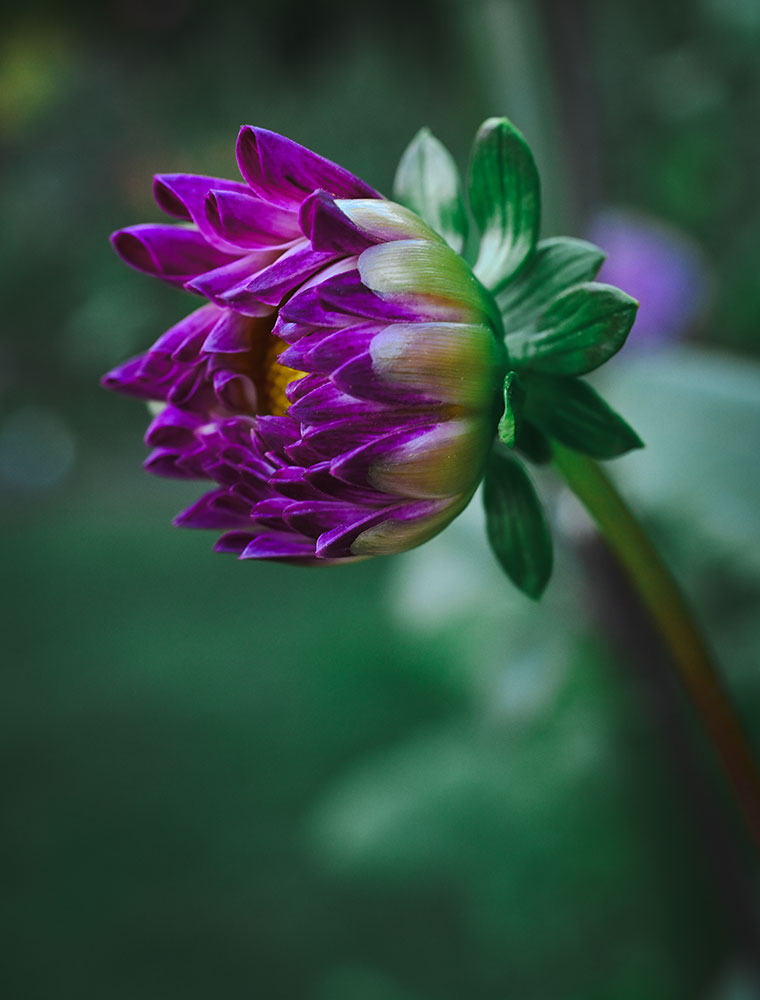
Compose images horizontal, vertical or square. The variety of dahlia’s shapes lend themselves to all sorts of compositions. Z50II, NIKKOR Z DX MC 35mm f/1.7, 1/200 sec., f/7.1, ISO 800, aperture priority.
Fill the frame. Because dahlias have such amazing, detailed patterns, textures and colors you want to get as close as possible and fill the frame. This is what makes taking photographs with a camera—whether mirrorless or DSLR or even point & shoot—so much better than with a smartphone. Use a macro lens to reveal details that may be difficult to see with the naked eye. Nikon Z-mount macro lenses carry the MC designation, while the Nikon F-mount macro lenses use the Micro-NIKKOR name.
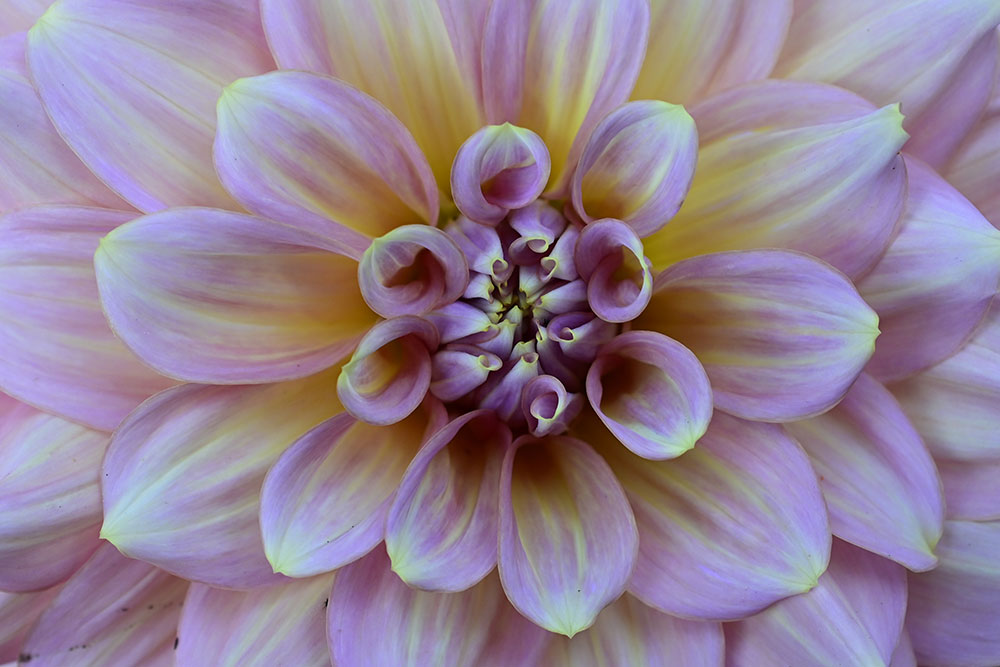
A macro lens allows you to get within inches of your subject and for flowers, especially dahlias, that means you can get so close you’re photographing only a portion of the flower filling the entire frame. Z6, with the FTZ Mount Adapter, AF-S DX Micro-NIKKOR 40mm f/2.8G, 1/100 sec., f/8, ISO 400, aperture priority.
Include visitors. Bugs make a great addition to a photograph of a flower, especially dahlias. And they’re going to be in abundance. Bees and butterflies in particular with flit from flower to flower collecting nectar. This is when your macro lens will come in really handy—as you can capture these small subjects in impressive detail. If you don’t have a macro lens, you can try using a telephoto lens and zoom in. Just know that you may have to take a few steps back for the lens to achieve focus.
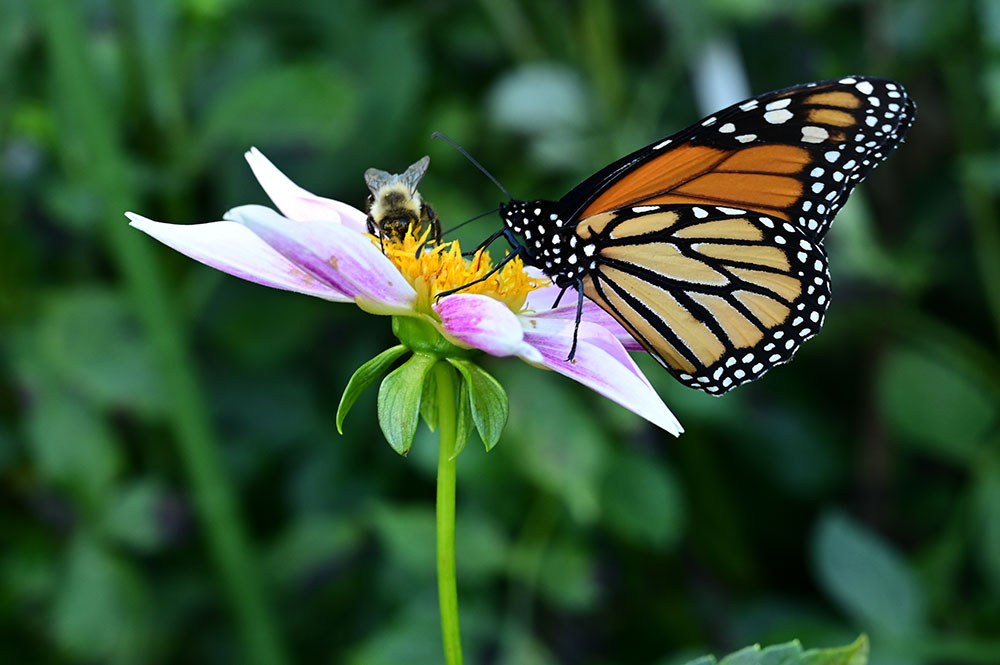
All kinds of butterflies can be found in a flower garden including this Monarch. Z6, NIKKOR Z 24-70mm f/4 S at 70mm focal length, 1/100 sec., f/8, ISO 400, aperture priority.
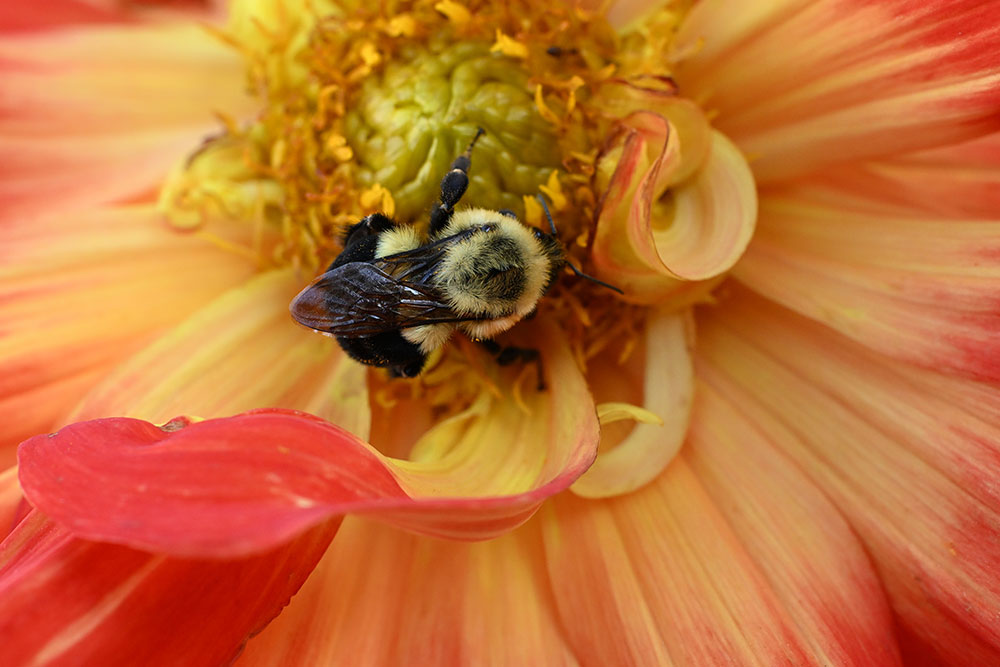
Insects of all kinds—like this bumblebee—will collect nectar or pollen from dahlias. Z50II, NIKKOR Z DX MC 35mm f/1.7, 1/250 sec., f/6.3, ISO 1250, aperture priority.
Increase depth of field. There are times though, that you might want deeper depth of field – if you’re photographing multiple blooms at once or a particularly large flower. Use a narrower aperture, such as f/16 or f/22 and review the image to make sure the important areas are in focus. Keep in mind that depth of field will also depend on your focal length, focusing distance and the distance between the flowers.
...
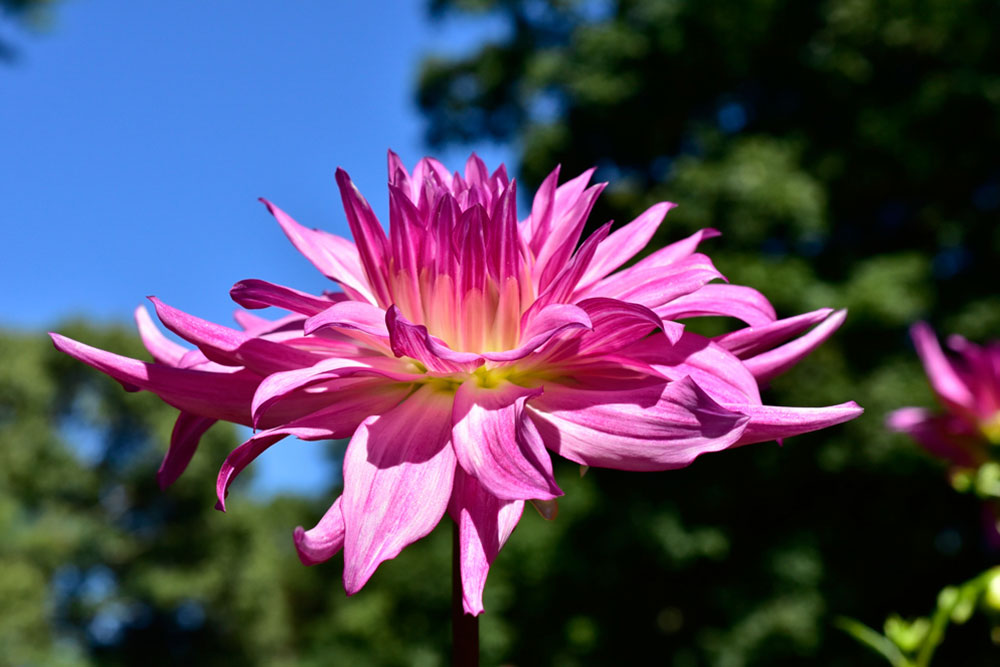
The bright vibrant pink color of this dahlia stands out against bright green foliage and a deep blue sky. D750, AF-S DX Micro-NIKKOR 40mm f/2.8G, 1/800 sec., f/14, ISO 400, aperture priority.
Try a creative composition. Look for ways to photograph the dahlia blooms in a different way. A great idea is photographing the back of the flower or even get so close that the flower fills the entire frame, with no visible background. You’ll find dahlias in every stage from young buds to full blooms in a dahlia garden. Make the most of your time and explore how each stage can create a distinctive image.
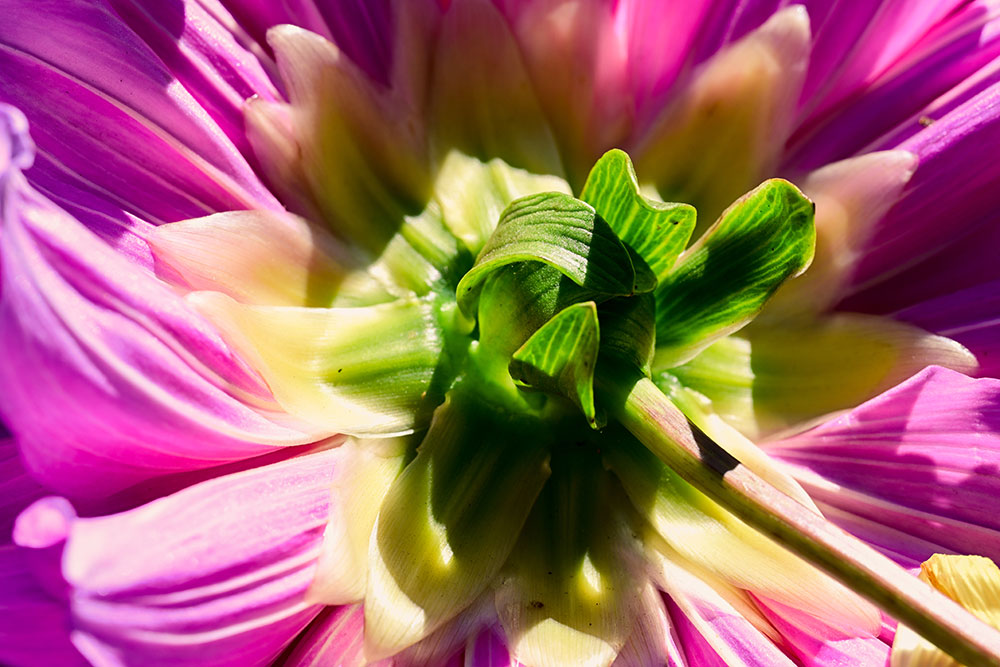
Different varieties of dahlias can be more intricate and layered than others. Even photographing the back of the flower where it meets the stem can make for interesting photographs. Filling the frame completely is another way to showcase only one part of the flower. Z8, NIKKOR Z MC 105mm f/2.8 VR S, 1/250 sec., f/11, ISO 220, aperture priority.
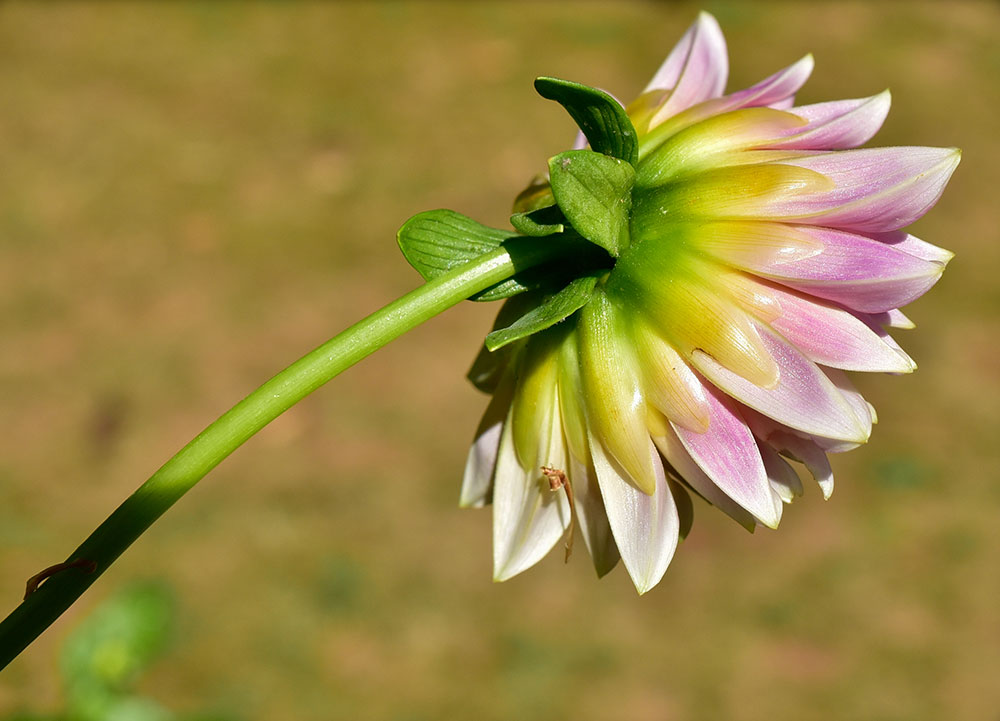
The back of the flower can be really interesting to photograph. This image is an example ow how even a narrow aperture/high f-stop can have a softly blurred background if the flower and the background are far apart. D750, AF-S DX Micro-NIKKOR 40mm f/2.8G, 1/1000 sec., f/14, ISO 400, aperture priority.
Lighting. Side lighting or backlighting can show off the textures in the flowers. Even though one of the earlier tips in this article mentioned shooting in the warm light of golden hour, shooting under the bright midday sun will give you harsh shadows that may work for the story you want to tell. On the flip side, you can also use a small reflector to fill in shadows or a Speedlight for fill-flash.
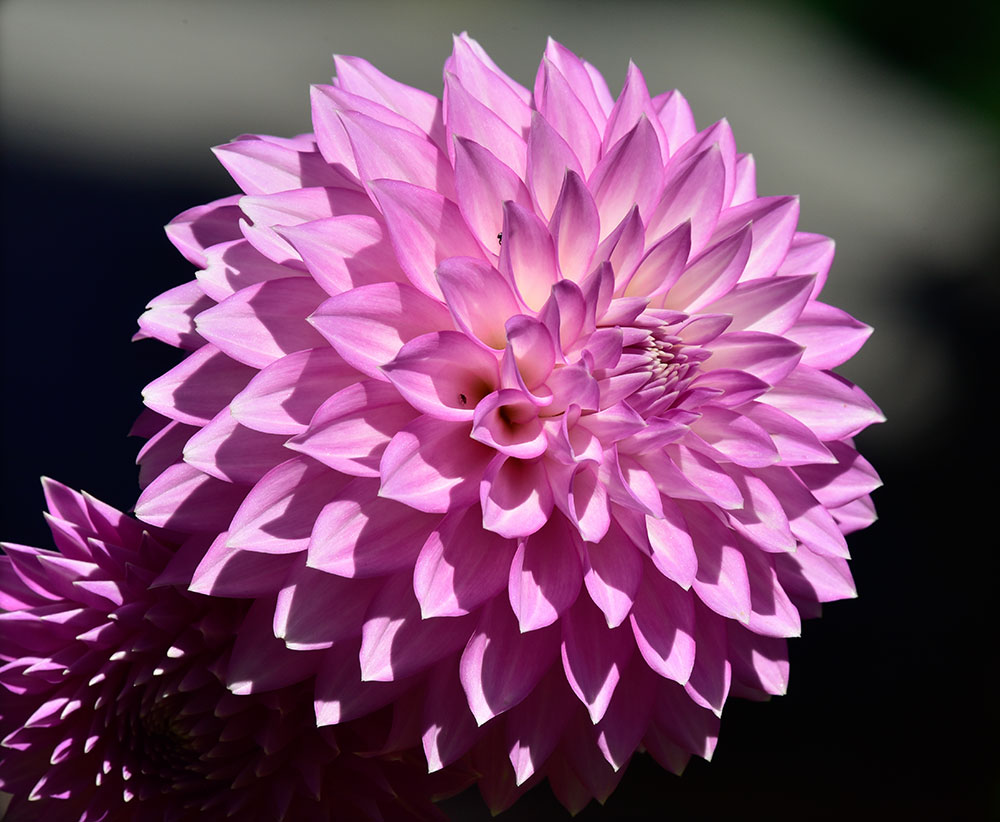
Walk around the gardens, find flowers that aren’t always lit directly by the sun or are partially lit as well as those that are brightly illuminated. The interaction between light and shadow can create a more dynamic image. D750, AF-S NIKKOR 300mm f/4E PF ED VR, 1/640 sec., f/18, ISO 400, aperture priority.
Think beyond the traditional snapshot. Shoot in monochrome, experiment with Picture Controls & color shifts with white balance adjustments.
Black & White (monochrome) is an unusual option to create a truly unique image of a colorful flower. With a garden full of vibrant color you might not think of shooting in monochrome, but with the right subject and lighting, it can work well. Within the Picture Controls of Nikon mirrorless cameras and DSLRs you can choose true B&W or more of a sepia tone.
Certain Picture Controls are designed to help you photograph subjects in a natural or faithful color palette but you can also use many of the more creative Picture Controls like Toy, Dream or Dramatic for a really different look.
Deliberate color shifts made by adjusting the white balance to a setting that differs from the actual lighting of the scene can lend a warmer or cooler feel to your images. Experiment and see what works best for the images you're making.
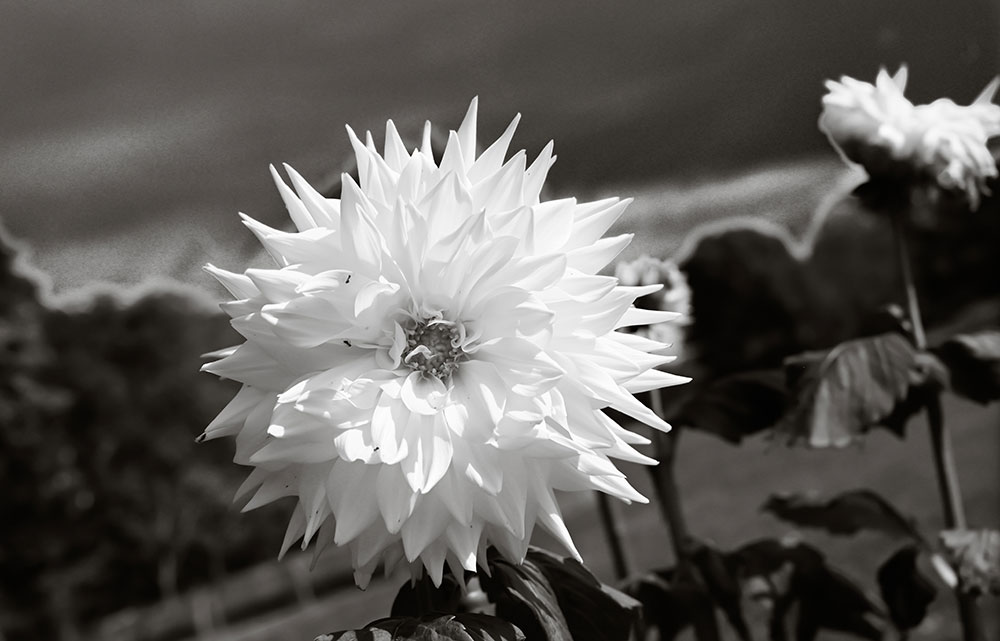
B&W might not be your first thought when you’re surrounded by vibrant, saturated colorful flowers but the lack of color can work for certain images too, putting more focus (pun intended) on the subject and composition. Z7, NIKKOR Z 24-70mm f/4 S at 41mm focal length, 1/2500 sec., f/5.6, ISO 320, aperture priority.
Dahlia societies are dedicated to growing and promoting dahlias around the world. A little searching on the internet may find one near you, if you’d like to learn more about these beautiful blooms or grow the flowers in your own garden to photograph.