Dragon-Slayer: Why The Z6III Is The Wedding Photographer’s Camera
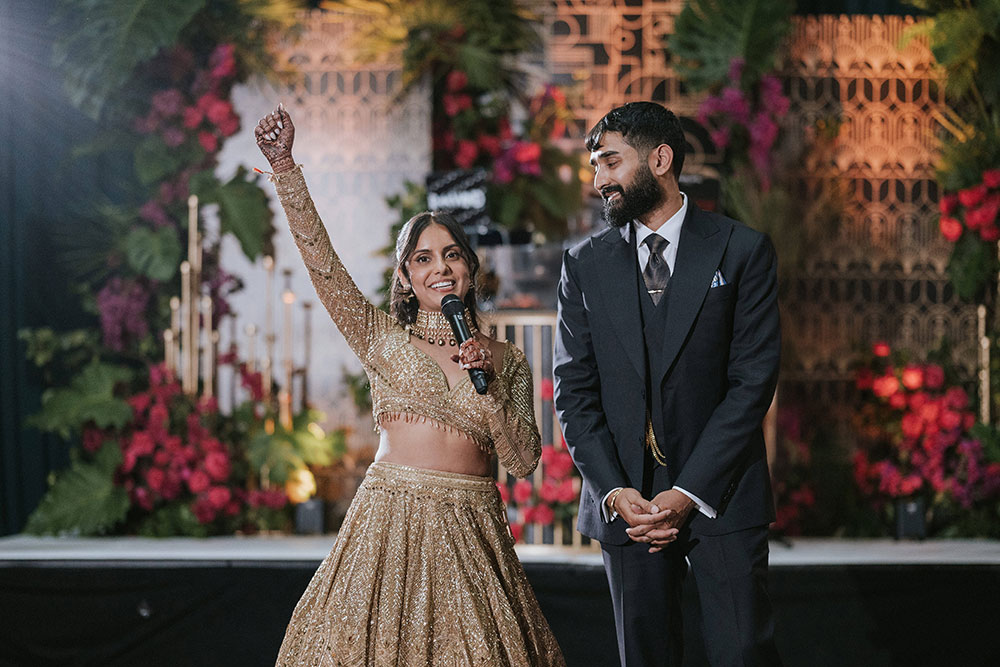
“There were really well-lit flowers, tables and walls, and poorly-lit people. The quality of the light on their faces wasn’t there, so I used flash and cross lit them—one flash to the left, behind them, another to the right of me.” Z6III, NIKKOR Z 85mm f/1.8 S, 1/200 sec., f/2, ISO 2000, manual exposure.
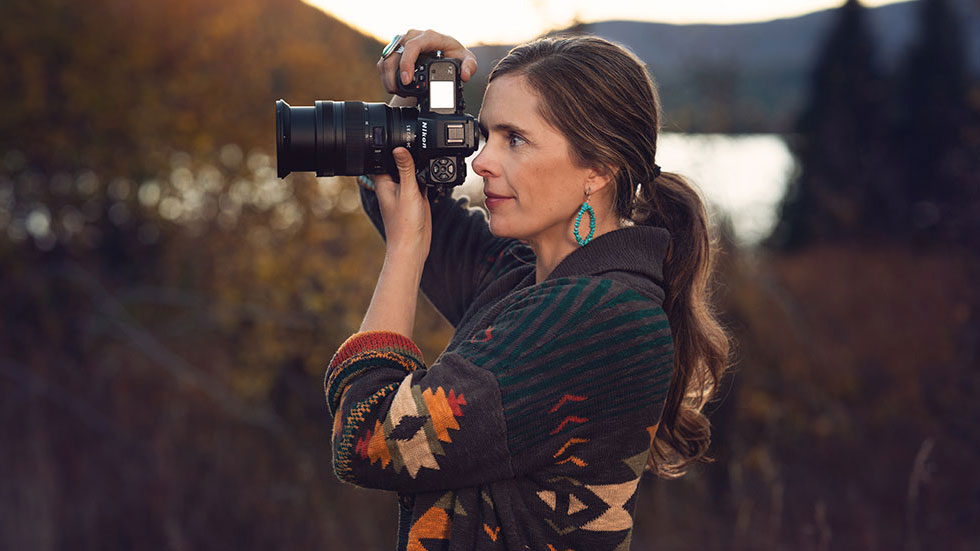
Not too long ago, a Nikon Ambassador emphatically told us that the Z6III was “the ideal wedding camera.” Our immediate reaction was, “Oh, that’s going to make a good story—tell us more.”
The Ambassador is Charmi Peña, and her specialty is traditional Indian weddings, which are incredible opportunities for photography—graphically spectacular, filled with bright color, intricate and expressive details, motion and emotion. They also present, as all weddings do, a burden of responsibility: get all of it on the card. To meet that challenge, Charmi relies on her skill and experience, and the reliability of her camera. Every wedding photographer knows the portraits can be guided, directed and, within limits, repeated, but the spontaneous actions and reactions that mark the reception are often a matter of one shot; you hit or you miss.
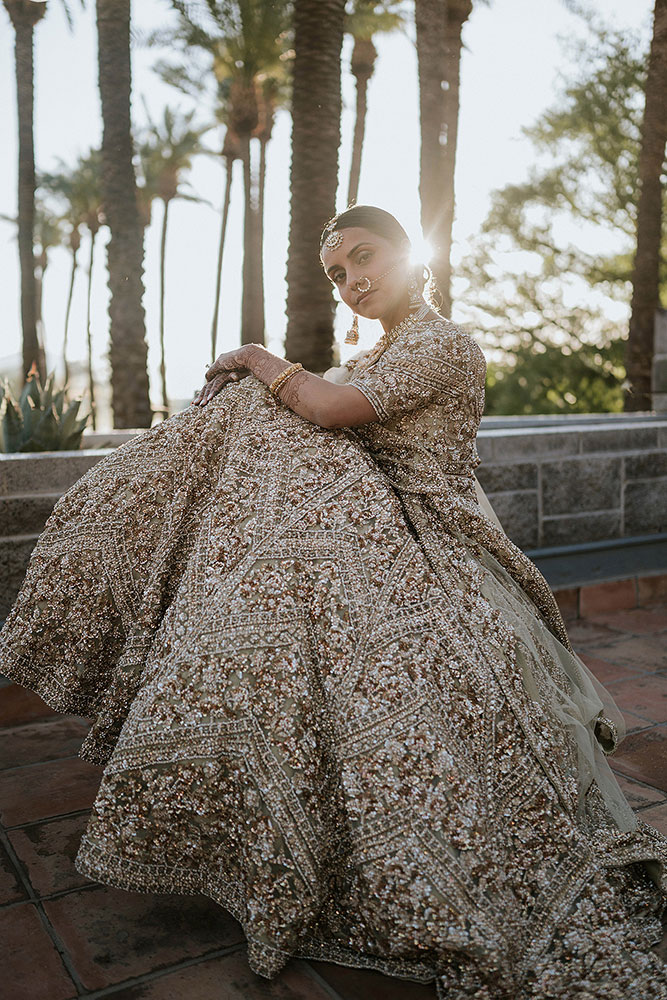
“Shooting directly into the sun is not entirely different than shooting in pitch-black darkness,” Charmi says, “because in both, the lack of contrast is potentially an issue. Now I don’t struggle with it—the Z6III makes this kind of picture eminently possible.” Z6III, NIKKOR Z 35mm f/1.8 S, 1/500 second, f/1.8, ISO 110, aperture-priority exposure.
So, why the Z6III for all the moments and situations of a wedding?
For Charmi, the number one reason is the camera’s “power over darkness.” The Z6III grabs focus in the lowest levels of light, and it will deliver low or no noticeable noise when she has to push the ISO settings. It’s a camera that solves problems—she calls it “slaying the dragons”—when she’s in motion and shooting motion, or in dimly-lit or downright dark areas.
Her choice of a camera is not a judgment made solely based on brand. She has said, "I'm always looking for new technology and the benefits it might have," but that statement is balanced by “I’m always weighing risk and benefit for any new technology or features.” Her reaction to a new version of a camera is to find the trade-off, if there is one. “With the Z6III, there’s none,” she says. “It’s everything I want mirrorless to be, especially with its focusing-in-the-dark factor.”
And that phrase—”everything I want mirrorless to be”—is significant because Charmi doesn’t make decisions without making practical evaluations. She took her time moving from her D750 to mirrorless, and the mirrorless she waited for had to have incredible low-light focus- and image-capture capability as well as the absolute, no-risk requirement of two card slots. Plus a rugged, reliable build. “I’m shooting weddings in the rain, on a beach, at night, in the dark,” Charmi says, “and the Z6III is amazing for situations like that. When that camera came along, it was like magic in a bottle.”
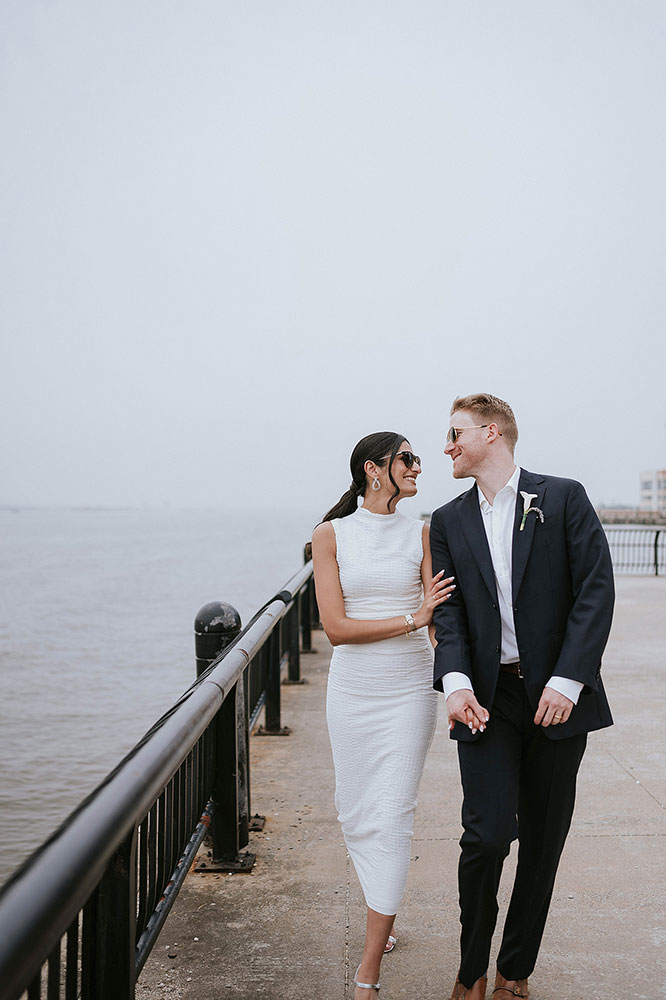
“It was raining, but I kept shooting because the weather-sealing on the Z6III is fabulous, and with Eye AF, which I use wherever possible, there was no concern about autofocus going after raindrops.” Z6III, NIKKOR Z 35mm f/1.8 S, 1/2500 second, f/2, ISO 100, aperture-priority exposure.
And since we’re on the subject of reasons beyond the primary ones of focus grabbing and light gathering, let’s keep going. “It’s super compact, and that’s super important. I’m traveling so much—I’m literally all over the world—and I need my gear to easily fit in the overhead or sometimes even under the seat. The Z6III is a beautifully compact camera that performs like it’s four times the size. For me, that’s priceless.” There’s also the weight factor, or, actually, the lack-of-weight factor. “I’m sometimes shooting for 30 hours in five days, and the light weight of the Z6III means less strain for me when I’m working that many hours.”
All these factors contribute to meeting the challenge her weddings present, and that achievement means business. “This is my 20th year shooting weddings,” Charmi says, “and close to one hundred percent of my bookings come from word-of-mouth recommendations.”
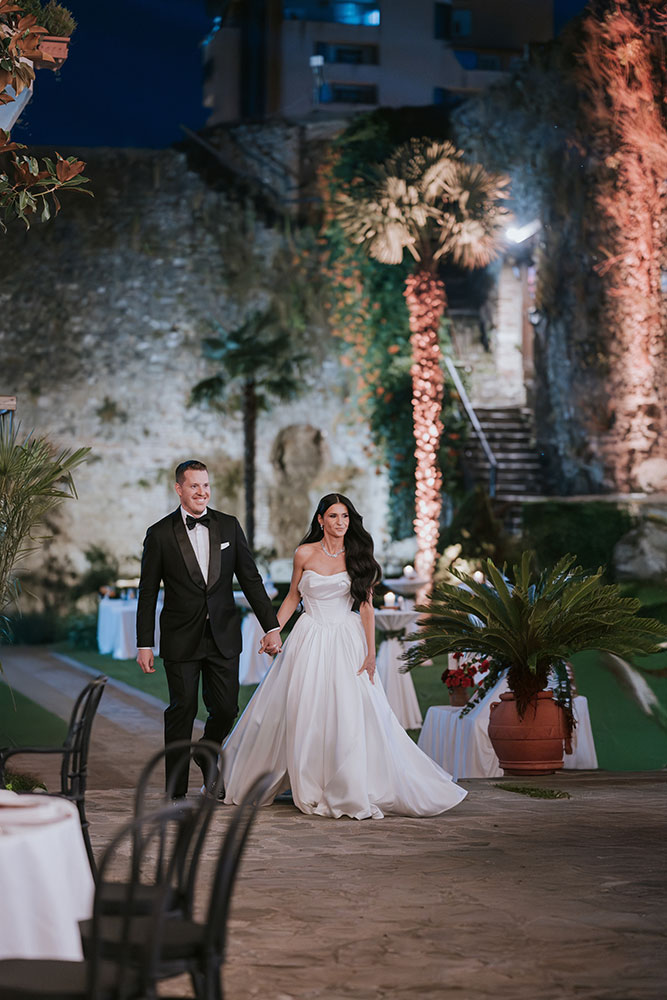
“There was light on the brick and the trees, and before they entered I thought about flash to give them their own light, but the quality of the light was good, and I just depended on the camera to handle the chaos and get them to stand out.” Z6III, NIKKOR Z 85mm f/1.8 S, 1/250 second, f/1.8, ISO 4500, aperture-priority exposure.
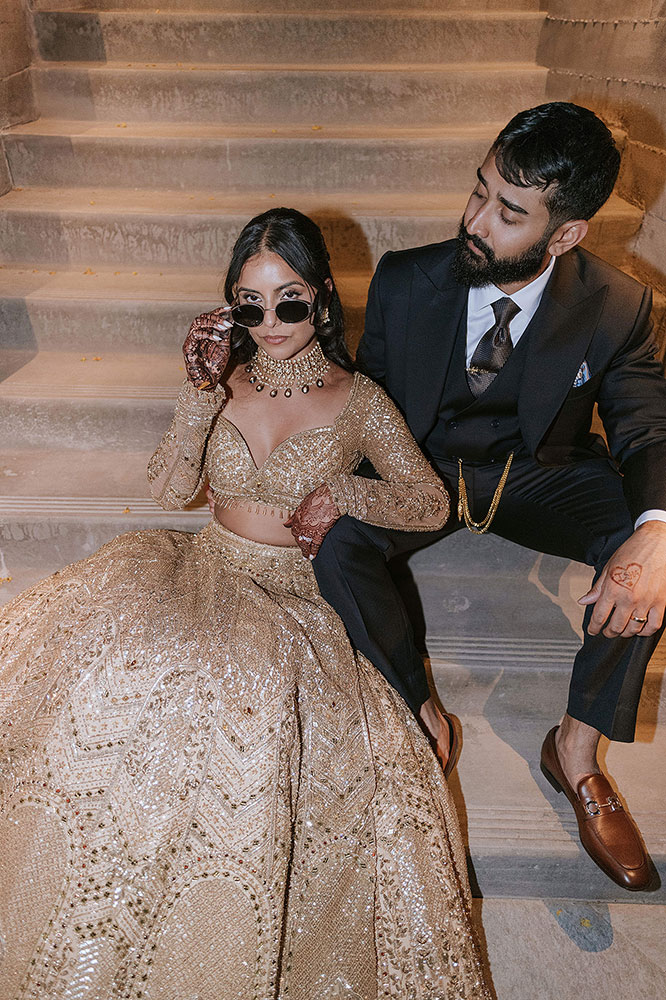
Charmi does end-of-night photos with her couples, and many of them are into a paparazzi-like feeling. Here she used on-camera flash to accentuate that attitude. “If clients are into the style, I can deliver what they want.” Z6III, NIKKOR Z 28mm f/2.8, 1/200 second, f/2.8, ISO 1600, manual exposure.
The Z6III works so well—I’m not missing shots, or moments, even on dark dance floors. That camera is the wedding photographer’s camera, and every wedding photographer should be shooting with it.
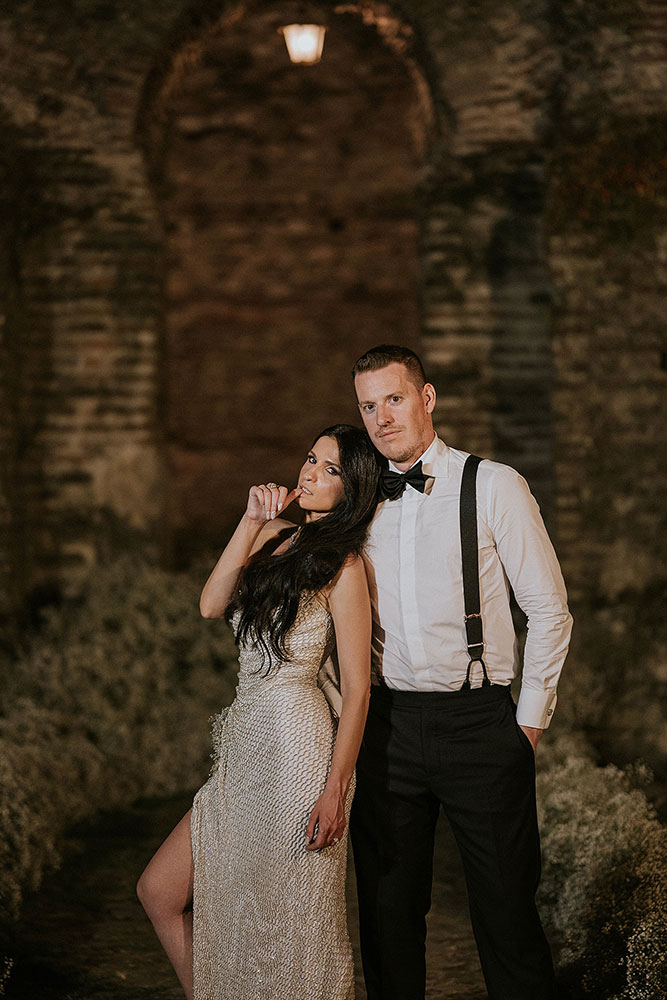
“Low light, but the quality of it was beautiful, so I just leaned into it, trusting the camera. I gave them a little bit of direction—they were comfortable in front of the camera, and when you get that, you take it.” Z6III, NIKKOR Z 85mm f/1.8 S, 1/400 second, f/1.8, ISO 1100, aperture-priority exposure.
Available Light
There are times when because of the light at a venue or what Charmi wants to emphasize or eliminate, that she’ll need flash for portrait and reception images. Maybe the overall quality of the light at the location, or just for a particular image, isn’t good enough. “Sometimes just having a large quantity of light is not going to cut it,” she says, and flash will best create the look she wants. Or she might want a portrait that highlights the contrast between the appearance of the couple and the background scene.
She shoots both on- and off-camera with her Profoto flash units. “At travel-friendly locations I’ll often use light stands, but if I have to fly to a venue, it’s nightmarish to carry light stands, so I’ll have my assistant hand-hold the flash if necessary. But how it’s been going is that I’m depending more and more on the camera to handle the light that’s there.”
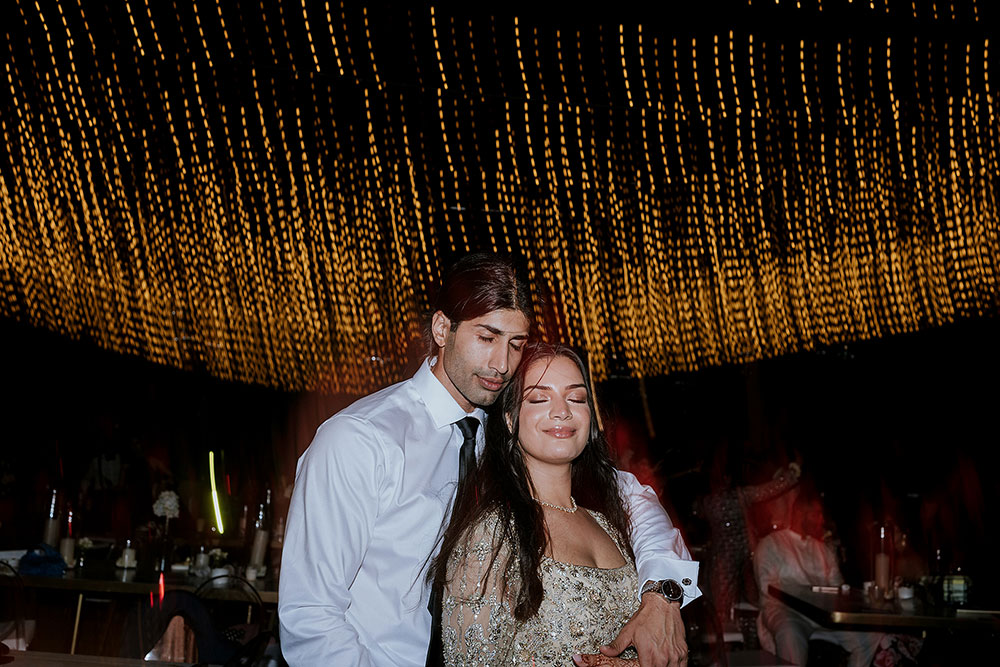
“They were having a very chaotic, fun reception, and I wanted to contrast their quiet moment with what was happening behind them. I needed movement, so I used rear-synch flash to get them and the background activity. It was pretty dark, and I was going to be moving the camera a lot, so I was really depending on the Z6III to grab focus.” Z6III, NIKKOR Z 35mm f/1.8 S, 1/15 second, f/5.6, ISO 100, manual exposure.
In the Balance
It turns out that the story we got to tell is pretty much about the balance of Charmi’s skill and hard work with the ability of her camera to meet her requirements, and about how she feels about that combination. “A lot of people say ‘It’s not the gear, it’s the person operating it,’” she says, “and I one-hundred-percent agree with that. But when I know I can depend on my gear, then it’s also the gear. The Z6III works so well—I’m not missing shots, or moments, even on dark dance floors. That camera is the wedding photographer’s camera, and every wedding photographer should be shooting with it.”
Visit Charmi Peña’s website for the big picture of her of wedding photography at charmipena.com/weddings.


Charmi Peña's success as a wedding photographer specializing in Indian and Southeast Asian weddings stems from her passion for preserving the intimacy of weddings and her desire to honor wedding traditions by capturing them with the respect they deserve. Charmi is also as well known for her advocacy for women’s equality and social justice as she is for her skill as a photographer and educator. Visit her Ambassador page and her website.
More articles by this contributor