Critters, Planes and Gorgeous Frames — The NIKKOR Z 180-600mm f/5.6-6.3 VR Lens Delivers!
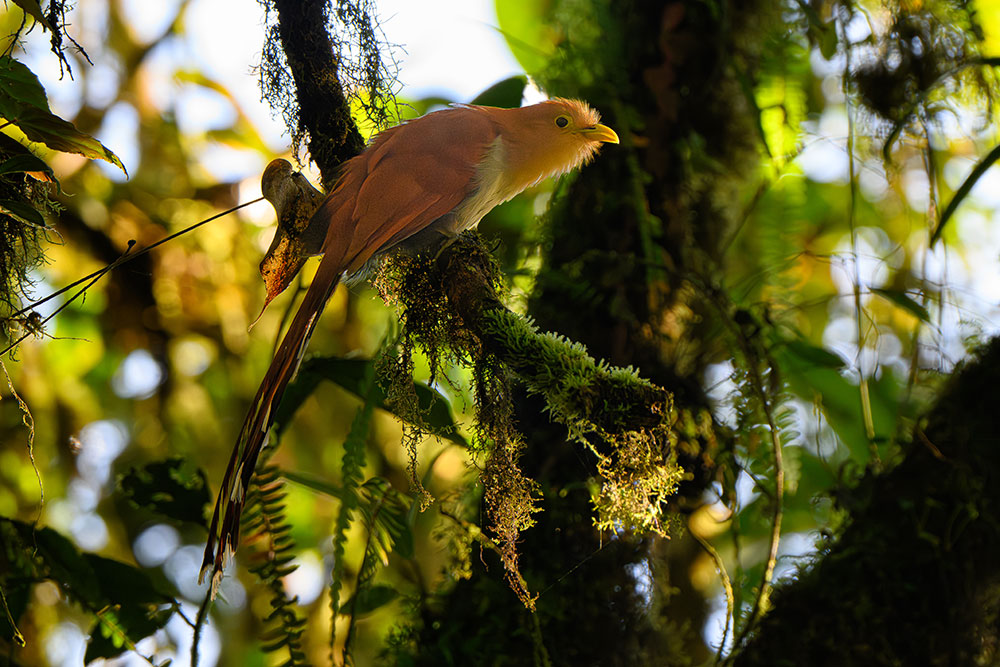
A very secretive member of the Ecuadorian Rainforest, the Common squirrel-Cuckoo appeared for just a moment. With Z Teleconverter TC-2.0x on the NIKKOR Z 180-600mm f/5.6-6.3 VR lens for a focal length of 1010mm and the Profoto A10 with a kiss of light, its visit was captured.
The voodoo that optical engineers perform to bring their concepts to life are amazing and this is especially true in the NIKKOR Z 180-600mm f/5.6-6.3 VR lens. As you read these important specs, keep in mind that the 180-600mm has internal zooming and internal focusing in its rather small package, is only about 12” in length and accepts a 95mm filter (I use the Arcrest II). Compare that to the NIKKOR Z 600mm f/6.3 VR S prime lens, which is 10.9”, making the 180-600mm lens small. Inside this small package are 25 lens elements in 17 groups (including 6 ED elements, one Aspherical element and a Fluorine-coated front lens element). This lens weighs in at the very easy handholdable weight of only 4lbs 11.5 oz (including tripod collar ring). It has a variable f/stop: 180-290mm at f/5.6, 300-480mm at f/6, and 490-600mm at f/6.3, which I’m sure greatly aids along with all these other numbers in its small, high-performance package. But wait, there’s more (you knew there would be).
The 180-600mm has 5.5 stops of Vibration Reduction (VR) image stabilization, thereby reducing image blur. Dang! That’s a lot of electronics working for us and as we all know, electricity and water don’t mix, but not to worry. The NIKKOR Z 180-600mm f/5.6-6.3 VR has weather sealing, which works really well, as I’ve field tested it on more than one occasion. It’s focusing speed is delightfully fast, perhaps a tad slower than the NIKKOR Z 600mm f/4 TC VR S but we need a machine to tell us that it’s slower—you won’t perceive it when shooting. You’ll find that the 180-600mm lens will retain focus as you zoom in or out with ease, which is great especially when shooting video. But wait, there’s even more.
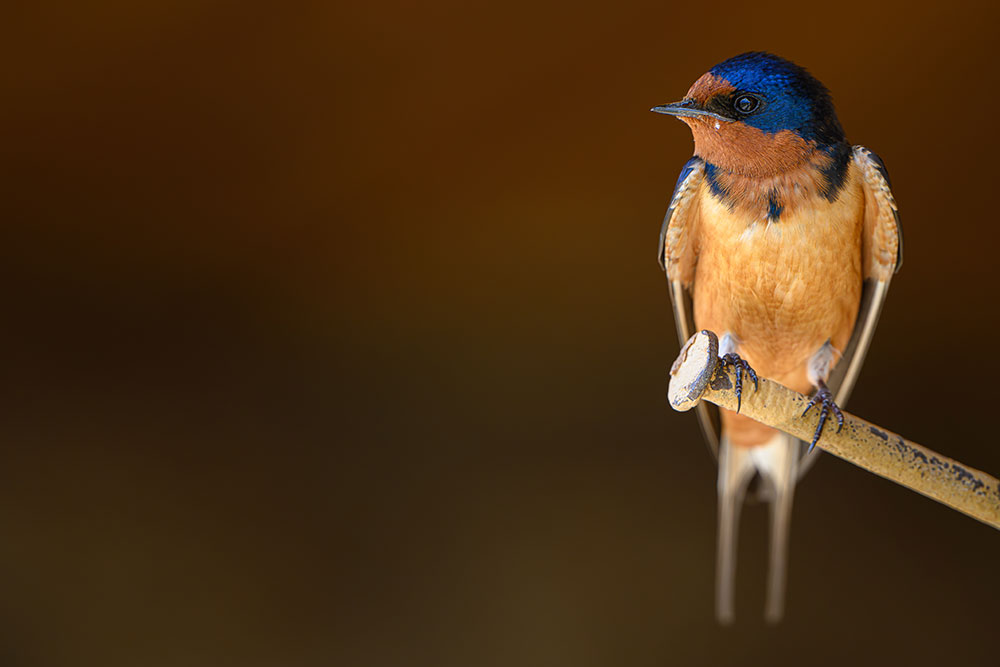
Normally a shy bird, this Barn Swallow used a nail as a perch outside its mud home. Leaning against the barn and shooting up into the shadow of the eaves, the NIKKOR Z 180-600mm f/5.6-6.3 VR at a focal length of 600mm permitted the capturing of an intimate portrait.
The operation of a lens is only important if it is backed by some great glass (and coatings like Nikon’s Fluorine coating). Of those 25 elements previously mentioned, six are ED; Nikon was the world's first camera maker to develop ED (Extra-low Dispersion) glass. It is essential in a telephoto lens, so that the blue and red bands of light meet at the film plane at the same time. Couple this with the first element in the optical design of this lens, the Aspherical element. Its original incorporation was in correcting distortion in wide-angle lenses (first seen in the awesome OP Fisheye-Nikkor 10mm f/5.6, made in 1968, a great lens!). These distortions can cause variations in the magnification of the image (like a telephoto zoom?), depending on its distance from the optical axis. Check that box off as being dealt with!
This great glass and optical design produce truly sweet images from the NIKKOR Z 180-600mm f/5.6-6.3 VR no matter the focal length! This is magnified by the giant, and I mean giant side effect of the lens’ minimum focusing distance. At 180mm, it is 4.27’, at 200mm it is 4.47’, at 400mm it is 6.37’, and at 600mm it is 7.88’. To put this into context, the simply gorgeous (and much more expensive) NIKKOR Z 600mm f/4 TC VR S has a minimum focusing distance of 14.11’. The NIKKOR Z 180-600mm f/5.6-6.3 VR produces almost double the image size. The beautiful part of the equation is that the 180-600mm lens accepts and works brilliantly with the two Z series teleconverters, the Z Teleconverter TC-1.4x and Z Teleconverter TC-2.0x. Yes, you see a change in effective f/stop because of the addition of the teleconverters, but in this day and age of cranking up the ISO with no ill effect, it makes no operational difference. You’ve got to admit, there’s a whole lot of goodness packed into this lens barrel.
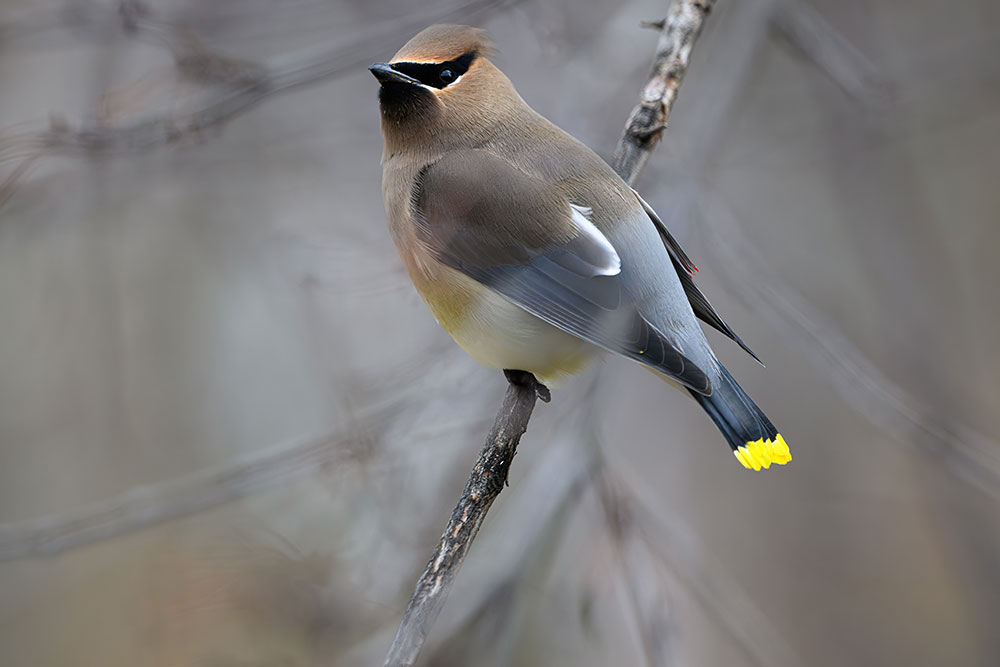
Feeding on the last berries of the season, this Bohemian Waxwing paused for a moment. Shooting out the window with the NIKKOR Z 180-600mm f/5.6-6.3 VR at a focal length of 600mm, it could be easily isolated from all the bare branches.
The NIKKOR Z 180-600mm f/5.6-6.3 VR zoom has got to be one of the finest all-around bird lenses out there!
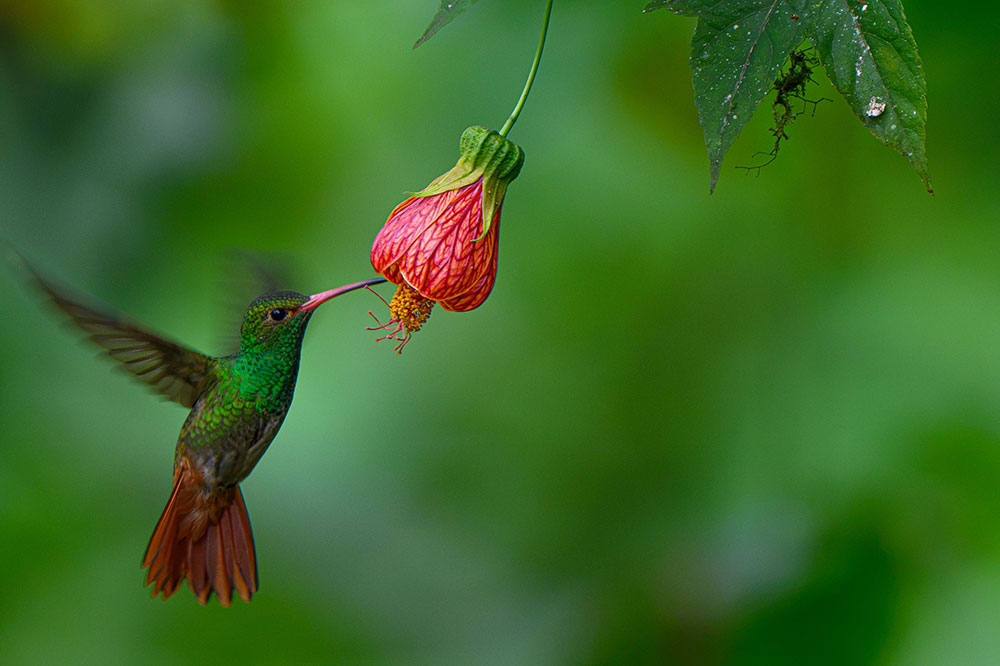
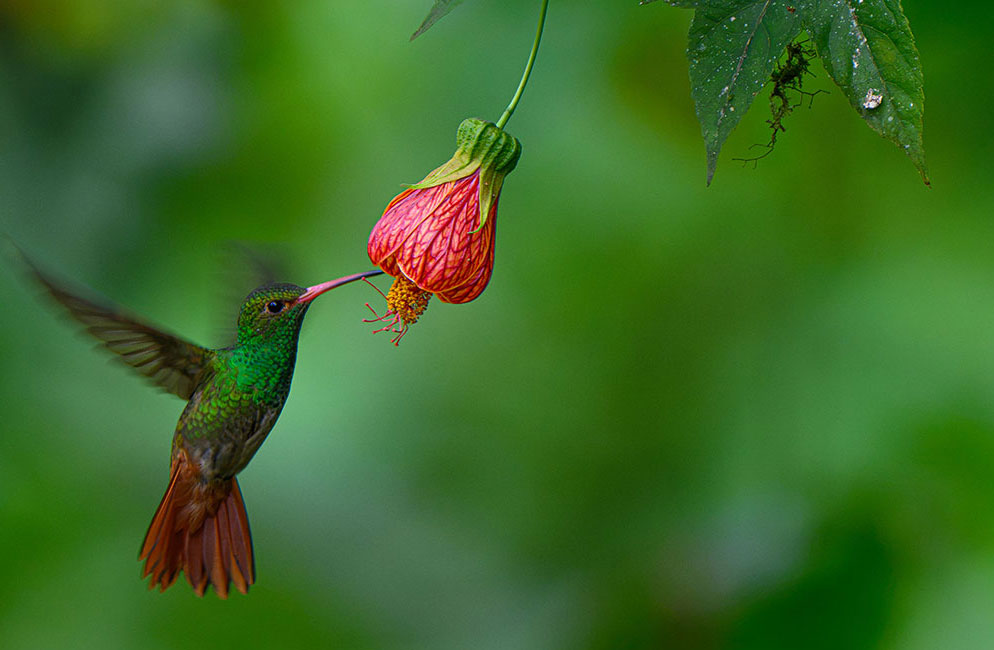
The single blossom caught the attention of the Rufous-tailed Hummingbird. With the Z Teleconverter TC-2.0x attached to the NIKKOR Z 180-600mm f/5.6-6.3 VR, providing 1200mm of focal length power, the sweet moment was captured.
Shooting with the 180-600mm for wildlife, aviation and landscapes
We all know that the specs only mean something if they translate into great results in the field. From capturing critters, aviation or landscapes, from 180mm to 600mm, this lens delivers. You can stop reading this article right here if you like—I can confirm beyond a shadow of a doubt that the NIKKOR Z 180-600mm f/5.6-6.3 VR with or without teleconverters attached (yeah, I shoot with a 2x teleconverter attached a lot) produces amazingly gorgeous files that can be enlarged to massive, beautiful prints! It can’t be overstated just how versatile a photographic, visual storytelling lens the NIKKOR Z 180-600mm f/5.6-6.3 VR is to have in one’s kit.
The 180-600mm zoom has got to be one of the finest all-around bird lenses out there! Its small, light package makes it an easy carry all day long whether handheld or on a tripod. This permits you the ability to first, zoom with your feet and then with the lens.
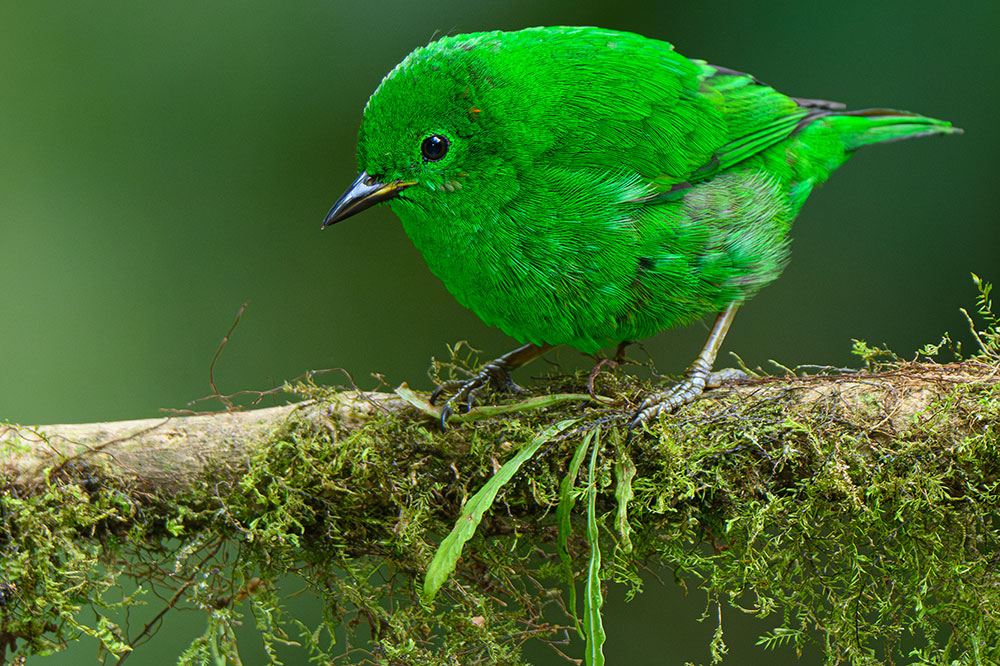
Smaller than your thumb and appearing like its covered in neon, the Glistening-green Tanager is an Ecuadorian Rainforest gem. With that size, the Z Teleconverter TC-2.0x was attached to the NIKKOR Z 180-600mm f/5.6-6.3 VR for a focal length of 1200mm and the Profoto A10 providing the kiss of light to make it glow.
There are some really small birds out in the world, smaller than your pinky. One must first get close physically, then possibly attach a teleconverter and then be at 600mm to capture the desired image size. Then the next second, a raptor flies overhead, a much larger bird. There is no time to move or remove the teleconverter, but you can zoom back to 180mm to make the shot. Brilliant! Working from a hide? The sharpness and flexibility of the lens make hide time very productive for the same reason. When you must keep movement to a minimal at most, the short throw of the zoom permits capturing the smallest to the biggest bird a simple click. At the same time, those focal lengths allow us to be selective on the background, an essential element in successful critter photos.
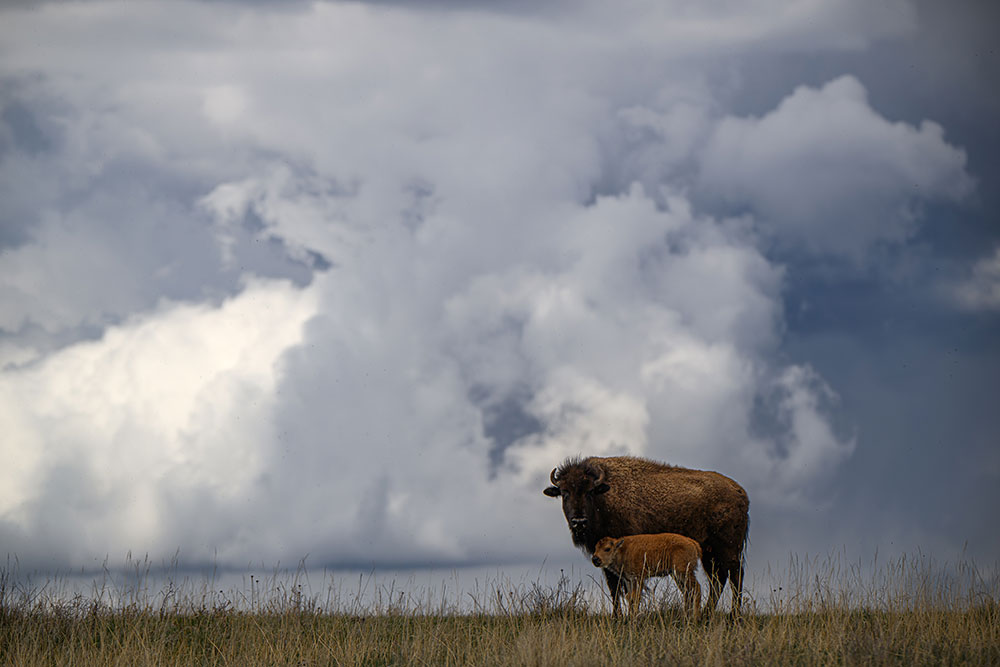
How to make the uncommon from the common? How about having the cow/calf American Bison on the top of a hill with summer thunderstorm building in the background. The NIKKOR Z 180-600mm f/5.6-6.3 VR at a focal length of 300mm brought that background right into the frame.
Big game photography is where you can also see the huge benefit of the 180 to 600 range. Generally, we need to stay physically further from big game, such as Bison (for many reasons). In some locales, this requires us to stay in our vehicle. With the NIKKOR Z 180-600mm f/5.6-6.3 VR you can zoom back to take in the entire world of the animal and then zoom in for that intimate portrait.
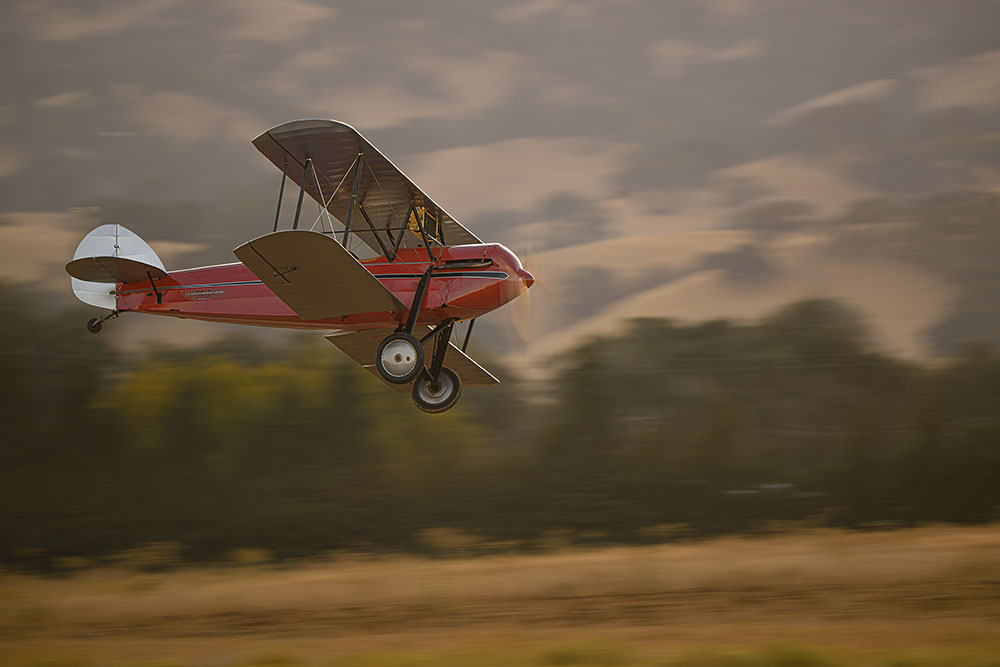
Capturing history, creating nostalgic romance for the nearly century-old Waco GXE was made simply with the NIKKOR Z 180-600mm f/5.6-6.3 VR at a focal length of 600mm. The late evening light skimming over the foothills did the rest.
Another genre of photography where the NIKKOR Z 180-600mm f/5.6-6.3 VR excels is aviation. Most folks get into aviation photography via their local airshows and the 180-600mm shines there, too. Often photographers get to the flight line early and with crowds present are stuck in that one spot for the day. The flexibility of the 180-600mm to zoom up to 600mm for small or far-away aircraft, then zoom out to 180mm for large or close aircraft (or anywhere in between as desired) makes being stuck in one location a non-issue. More importantly is the lens’ light weight. Nothing can wear you down like shooting all day, holding a big lens pointed up at the sky. You won’t experience that fatigue with this lens, which means you’ll have sharp images all day long. But like with critter photography, the variable focal lengths provide the ability to select the romantic and dramatic background required for successful aviation photography.
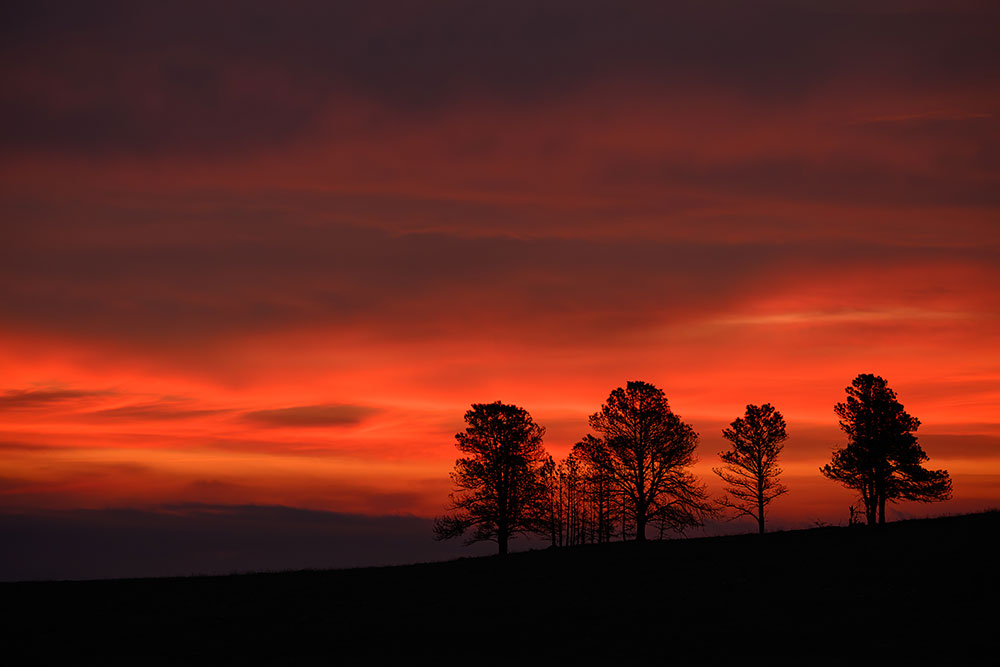
Sunrise on the Wildlife Loop, Custer State Park rarely disappoints. The NIKKOR Z 180-600mm f/5.6-6.3 VR incorporated the elements at a focal length of 200mm so the beauty can be shared with all.
And if landscape photography is more your style, the NIKKOR Z 180-600mm f/5.6-6.3 VR is superb. What, a telephoto zoom for landscape photography? Let’s start with the fact that you can add filters, like a polarizer. Yeah, a 600mm reach with the power of a polarizer. Chasing light on the landscape often doesn’t leave time to get closer or further away—the moment is now. You can see quickly how the 180-600 range (or longer with a teleconverter) permits you to effectively chase that light. We often have physical barriers like lakes and rivers where zooming with your feet isn’t an option. Or snow too deep to walk up to a subject. And that fence we can’t cross.
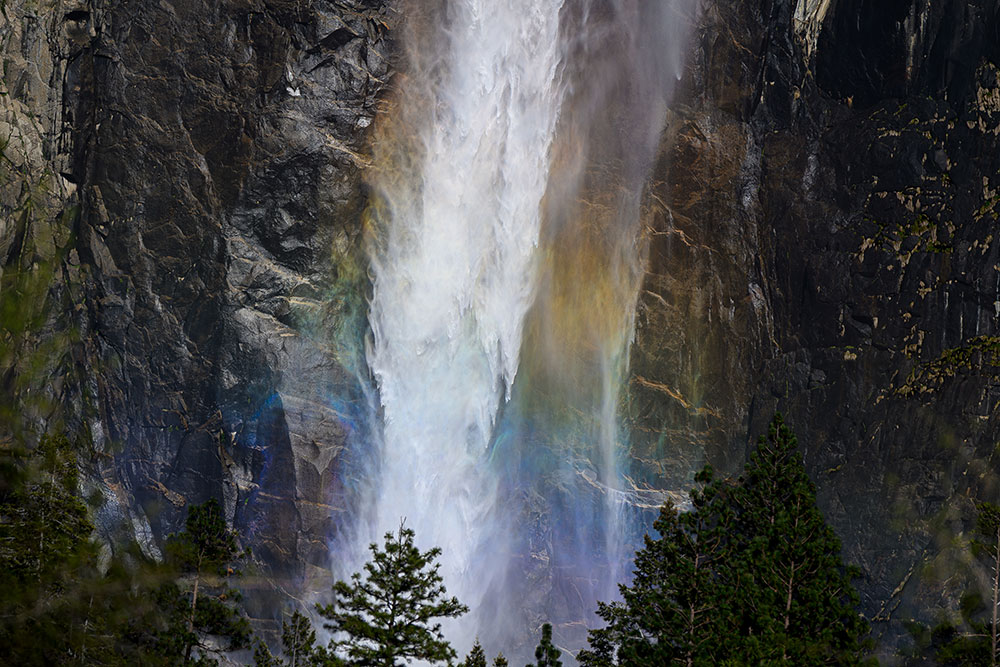
The angle of the sun striking the base of Bridalveil Falls in Yosemite creating the rainbow only left one location to make the shot, across the river. The NIKKOR Z 180-600mm f/5.6-6.3 VR at a focal length of 470mm brought it right in to take home the memory.
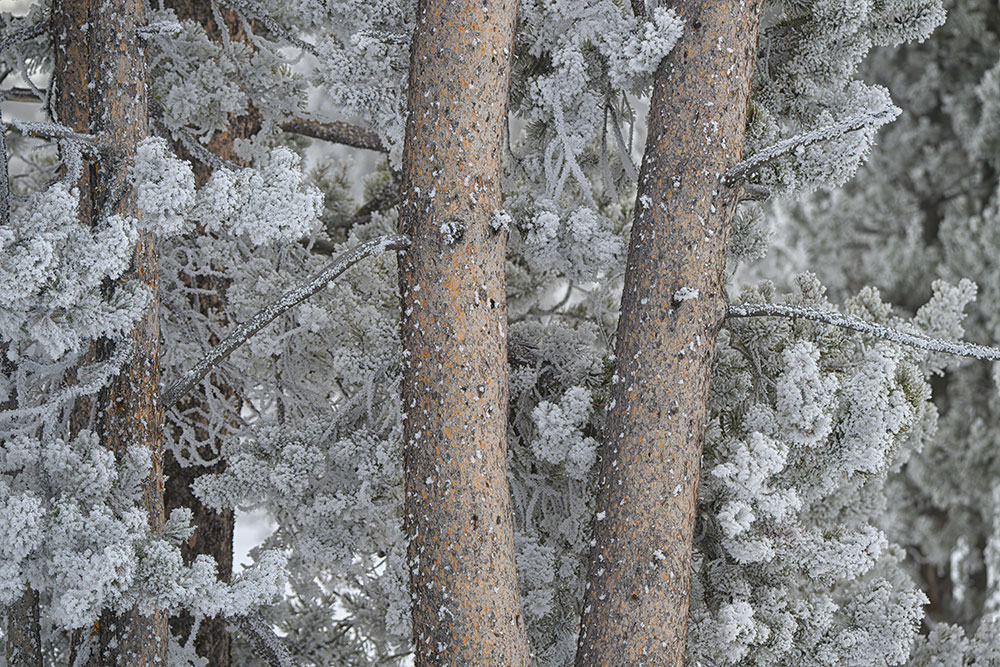
The light was magical that -15 degree morning in Yellowstone. The hoarfrost clung to everything, including these pines. The NIKKOR Z 180-600mm f/5.6-6.3 VR at a focal length of 180mm framed up the quiet beauty elegantly.
The reach of the NIKKOR Z 180-600mm f/5.6-6.3 VR along with its ability to eliminate unwanted elements while drawing in the elements that we do want, makes it a powerful lens for landscape photography. This is when the minimum focusing distance of the lens can truly work magic for your photography. You see that perfect blossom in the middle of a bush that you physically can’t get close to; not an issue with this lens. Remember, by adding a Z Teleconverter TC-2.0x to that focal length, it gives you 1200mm reach at just six feet away!
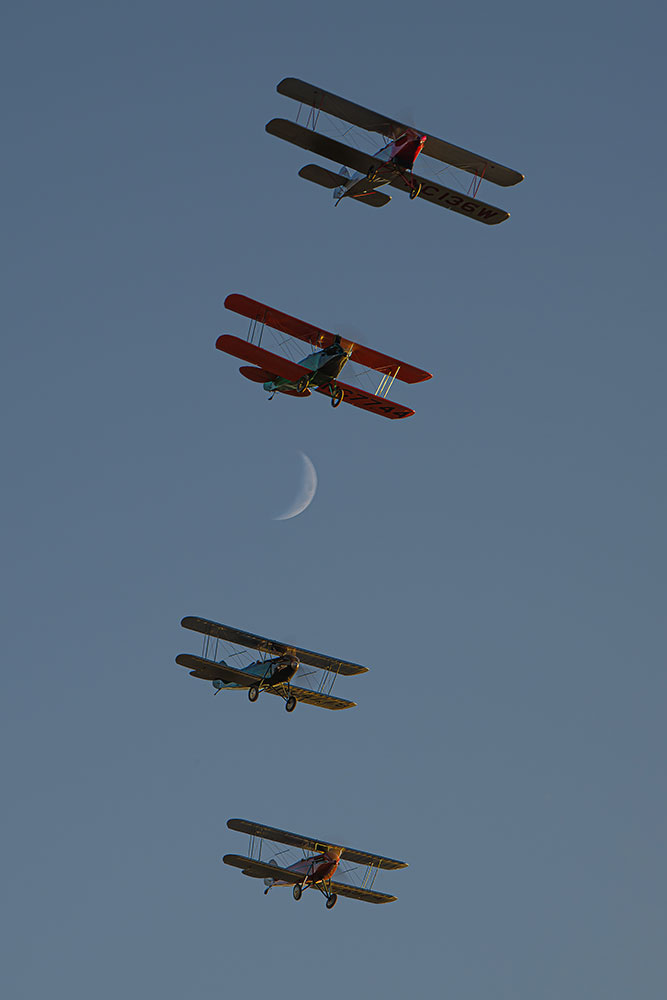
Flying up to salute the last rays of the day, A Fairchild KR-31 Lincoln Page OX-5 and two Waco GXE fly in front of the moon. These aircraft, all nearly one hundred years old, created a gorgeous formation that the NIKKOR Z 180-600mm f/5.6-6.3 VR at a focal length of 230mm easily captured.
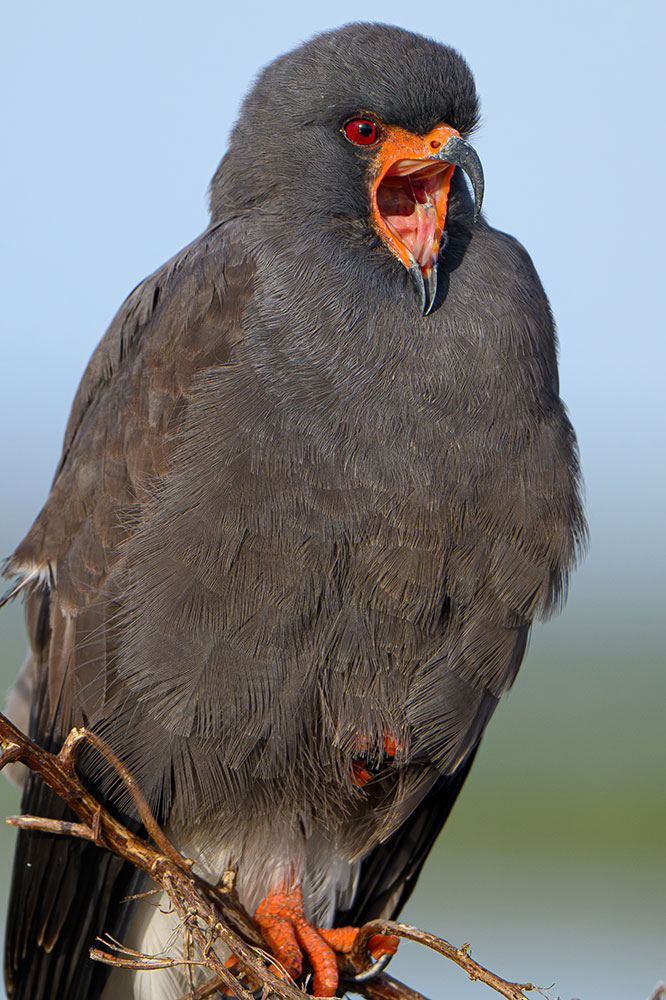
The highly endangered Snail Kite is an amazing bird that we use airboats to get up to. The flexibility of the NIKKOR Z 180-600mm f/5.6-6.3 VR with the Z Teleconverter TC-1.4x for a focal length of 840mm provides the needed reach to make the intimate portrait.
Why the 180-600mm is a mainstay in my photography kit
Great quality, super glass, and amazing flexibility, is there anything left to say? Now that you ask, a couple of things. There is the obvious, I love this lens, and it is a mainstay of my photography kit. Because of the considerable use of telephoto flash with the lens, I use the Really Right Stuff collar and foot as a substitute for the one that comes with the lens. To protect the lens around airplane fuselages and tree limbs, I added the security of the Chasing Birds lens wrap. Is the NIKKOR Z 180-600mm f/5.6-6.3 VR the perfect lens for critters, aviation, and landscape photography (and so much more)? The combination of range, price, and sharpness, it’s about as darn close as I’ve seen in my career. I am so impressed by the amazing reach and quality in this single lens—that’s the long and short of the gorgeous NIKKOR Z 180-600mm f/5.6-6.3 VR lens.
Moose Peterson’s true passion has always been and remains photographing the life history of our endangered wildlife and wild places. In recent years Moose has added aviation photography to his pursuits with the same goal of preserving our flying history, pictorially and orally for future generations. He has been published in over 133 magazines worldwide and authored 28 books. Moose also lectures across the country each year. Visit his website www.moosepeterson.com.
More articles by this contributor