Keeping the Wild Wild
Photographer Julia Cook on Letting Wildlife Tell the Story.
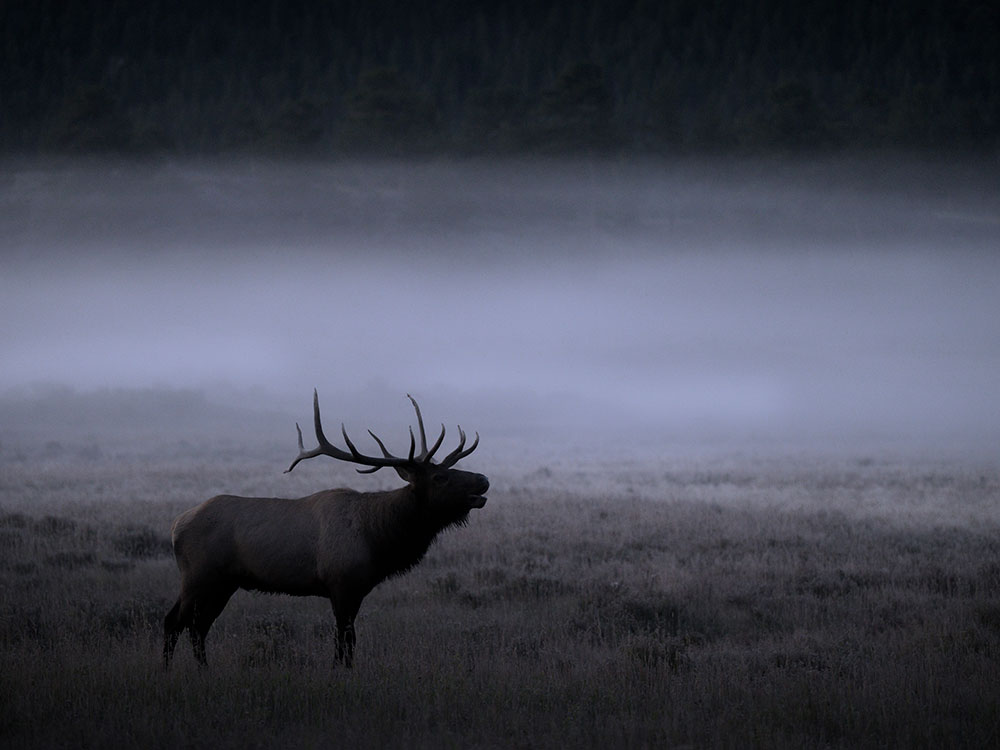
I love photographing elk in the fall, and I usually try to be in the field at first light to get in the right position for photography once there is enough light to shoot. On this particular morning, a bull was bugling in the pre-dawn light at the edge of a foggy meadow. I figured it was still too dark but took a few images with my 70-200mm anyway. I am really happy with how the image turned out, and I’m glad I didn’t underestimate the low-light performance on the Z 8. Z 8, NIKKOR Z 70-200mm f/2.8 VR S, 1/500sec, f/2.8, ISO 500.
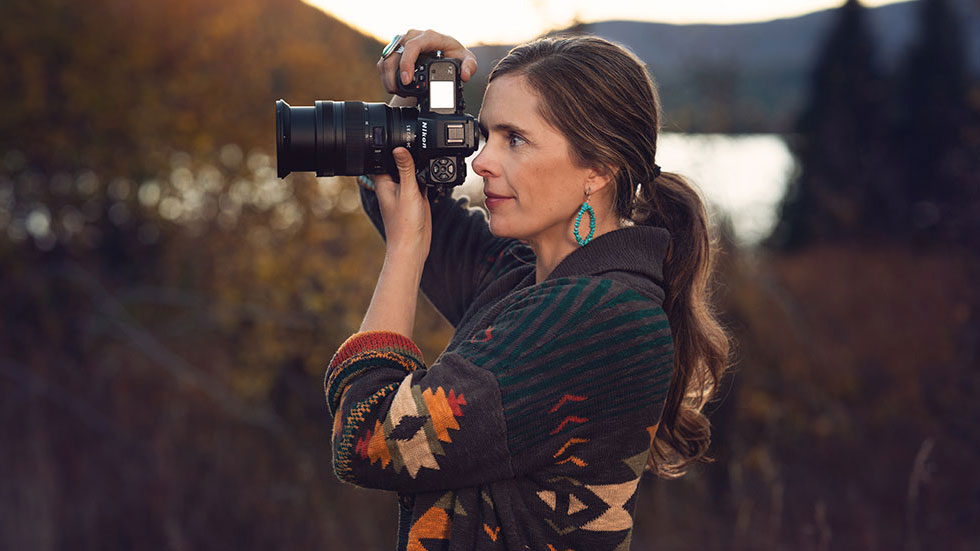
For Julia Cook, the impetus for her eventual career in wildlife photography came from an unexpected quarter—the Covid 19 pandemic. What began as a way to pass the time during the pandemic-imposed pause in her college studies turned into a lifelong pursuit—one rooted in a deep reverence for the natural world.
“I didn’t really start photography until the spring of 2020,” she explains. “I was a freshman at the University of Wyoming when the pandemic hit, and all my classes switched to online. I left campus and was back home just an hour outside of Yellowstone.”
With her schedule suddenly wide open, Cook turned to the landscape she had grown up alongside. “I made regular trips into Yellowstone with my new free time and bought a DSLR camera to start documenting the wildlife I was seeing. I was quickly hooked.”
"Living so close to Yellowstone gave me the chance to spend almost every day in the park, and over time photography became all I thought about. The rest of my time in college I worked with my professors […] to allow me to take online classes in the fall semesters, which allowed me to spend more time in Yellowstone photographing wildlife and improving my photography.”
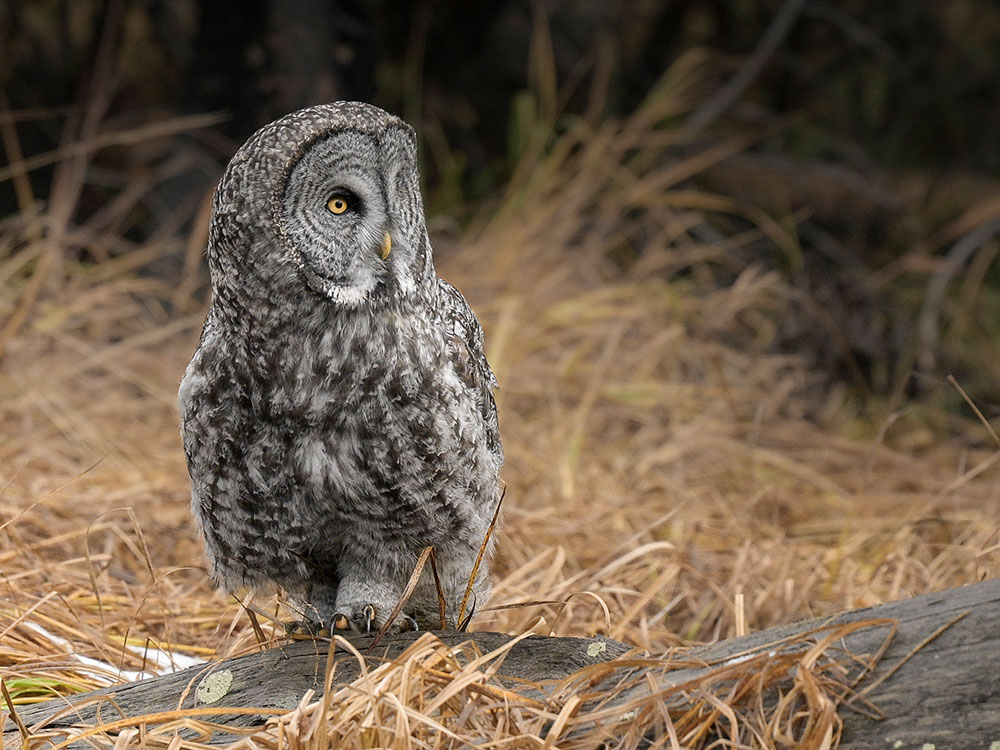
Great grey owls are such a fascinating bird to watch and photograph, though their camouflage makes them especially difficult to find. On a late fall evening, I found this owl hunting at the edge of a meadow. I hadn’t yet used Pre-Release Capture on my Z 8, so I took the opportunity to see what it was capable of. This photo is the last image before the owl bent to take off. It’s my favorite of the series due to the position of its talons on the log, prepping to take off. Z 8, NIKKOR Z 400mm f/2.8 TC VR S, 1/1250 sec, f/3.5, ISO 400.
A calling rooted in connection
At its core, Julia’s work is about more than capturing striking images, it’s about preserving the spirit of untamed places, and her photography is an expression of her deep passion for the natural world.
“I always say I’m a wildlife photographer not because I love photography but because I love wildlife,” she says. “I feel as though I can connect with the wildlife on a deeper level when photographing them, and I love using my images to advocate for conservation. I’ve always loved science and learning about the natural world, but I’ve also always been a very creative person,” she explains. “To me, wildlife photography is the perfect blend of art and science.”
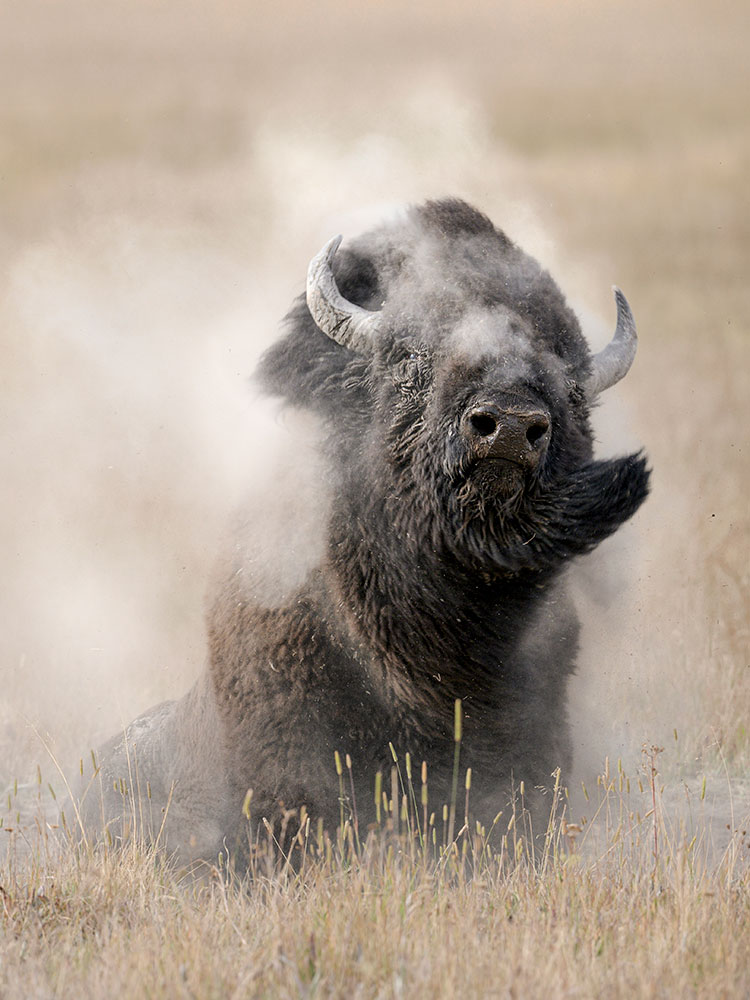
During the rut, bulls wallow to assert dominance. By coating themselves in dust and leaving scent in the soil, they signal strength and status to rival males. On the dry plains of late summer, this bull rose from his wallow and shook off the dust, reinforcing his presence and power on the landscape. I anticipated his shake and prepared by raising my shutter speed to capture the moment. Z 8, NIKKOR Z 400mm f/2.8 TC VR S, 1/1250 sec, f/4.5, ISO 125.
The enduring allure of the grizzly
Among Yellowstone’s iconic species, grizzly bears stand apart for Julia.
“Grizzly bears are definitely my favorite subject. I have always loved bears, even before I started photography, so any time I can spend in their presence feels so special, even if I don’t capture any images.”
Over time, familiarity has added another layer to her work. “There are several individual bears that I have come to recognize and photograph year after year, each with their own personality,” she explains. “I will never get tired of photographing grizzlies, because no two encounters are ever the same.”
While these days Julia’s work takes her around the country, Yellowstone, being so close to home, has a special place in her heart. “It is impossible to have a bad day in Yellowstone, even on the days I never even turn on my camera.” She explains. “You never know what you might see. I could see a grizzly bear, wolf, elk, bison, fox, or even a wolverine—or nothing at all.”
The right gear for the job
Julia’s gear collection is relatively small but perfectly meets her needs as a wildlife photographer in the field. After outgrowing her DSLR, she now shoots mirrorless, with a Z 8 camera, the NIKKOR Z 400mm f/2.8 TC VR S, and the NIKKOR Z 70–200 f/2.8 VR S lenses.
According to Julia, the 400mm prime gets the most use, “but I always have the 70–200mm with me for more environmental wildlife photos.” Asked why the 400mm is such an important tool, Julia explains that the built-in teleconverter makes all the difference, “Having the ability to quickly change from 400mm to 560mm is incredible and gives me more options when shooting in the field.” That flexibility often defines the difference between a missed shot and a compelling one. “For almost every wildlife encounter, I’ll shoot at both 400mm and 560mm […] especially since it is so easy to engage,” she says. “I don’t know how I ever used a prime lens without a built-in teleconverter.”
On the NIKKOR Z 400mm f/2.8 TC VR S … Having the ability to quickly change from 400mm to 560mm is incredible and gives me more options when shooting in the field.
The Z 8 has also redefined what’s possible in the field. “I love the Pre-Release Capture feature,” she says. “It has been so helpful for capturing those unexpected moments like a bird taking flight that otherwise would be difficult to capture.”
Ergonomics play a role, too. “I usually prioritize size, and I appreciate that the Z 8 is a smaller option […] It has all the features that I want but fits comfortably in my hand.”
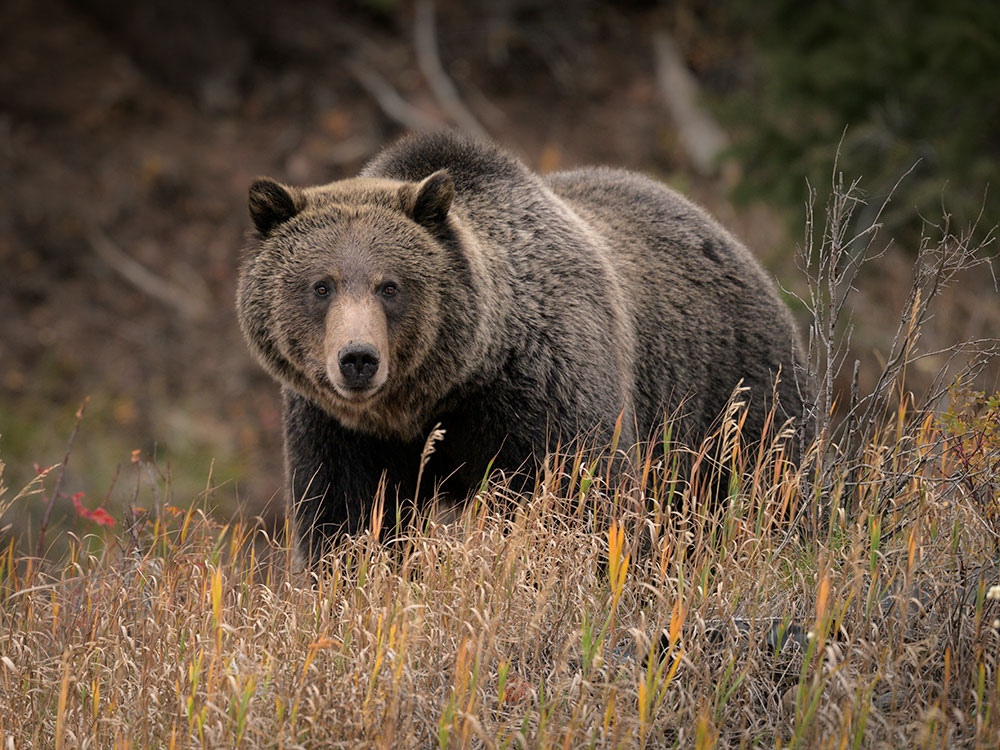
This is a young grizzly bear I’ve photographed on numerous occasions; in the fall, the bear is exceptionally beautiful with a full coat and subtle blonde coloration. On this particular day, the bear was weaving in and out of thick trees before pausing on an open hillside. My Z 8’s autofocus stayed on the bear’s eye without jumping to any grass or vegetation, giving me options to choose from. This image was my favorite from the encounter. Z 8, NIKKOR Z 400mm f/2.8 TC VR S, 1/640 sec, f/3.5, ISO 320.
Advice from the field
For those looking to follow a similar path, Julia emphasizes preparation and awareness over pure technical skill. “My biggest tip is to learn about the species you wish to photograph before heading into the field,” she says. “Do some research to learn when they’re most active, their diet, preferred habitat, temperament, and anything related to body language.”
Understanding your subject, she explains, shapes every decision in the field. “Knowing your subject will help inform your decisions and increase your chances of success.” Equally important is composition—often in subtle ways. “Pay attention to the background while shooting,” she advises. “I am rather picky about my backgrounds […] Sometimes even moving two steps to the left or right can make a huge difference.”
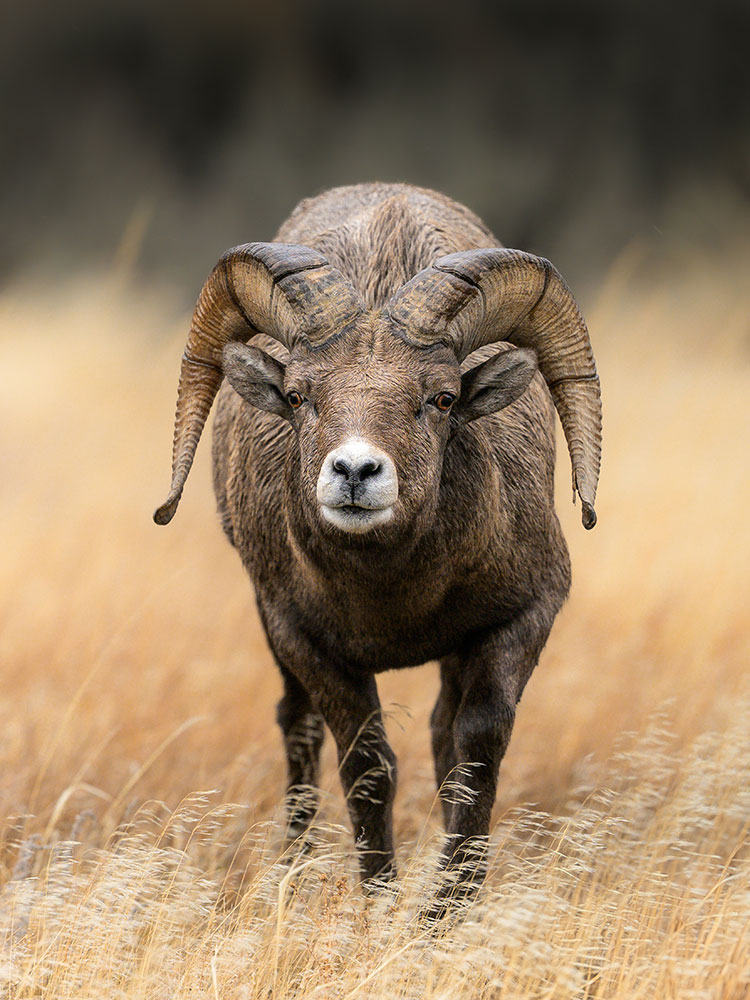
Bighorn sheep are the subject I usually spend the most time with. In the early winter, once their rutting season arrives rams become aggressive as they assert dominance over other rams in a variety of ways ranging from violent head-butting to subtle stare-downs. As this ram strutted around the meadow at varying distances, I went back and forth between using the built in teleconverter on my 400mm and just shooting at 400mm, giving me options for composition and the adaptability to match the unpredictable nature of wildlife. Z 8, NIKKOR Z 400mm f/2.8 TC VR S, 1/800 sec, f/3.5, ISO 400.
An ethical approach
If there is one principle that defines Julia’s work, it is her commitment to ethical wildlife photography.
“No image is worth jeopardizing an animal’s wellbeing. I never want my presence to disrupt or change an animal’s behavior, and learning and understanding wildlife body language and behavior helps me gauge how comfortable an animal is with my presence.”
That awareness helps with split-second decisions in the field. “Grizzly bears will stare or huff when stressed, while bison will raise their tail,” Julia explains. “If I notice signs of stress in any animal, I’ll either back away or leave the area completely.”
Far from limiting her work, this approach has deepened it. “I have also found that I’m able to capture more impactful and natural images by not changing an animal’s behavior,” she says. “I’ve been able to capture intimate moments like a mother grizzly nursing her cubs, wolves feeding on a carcass, and even mating grizzly bears.”
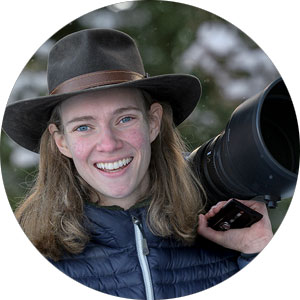
Julia Cook grew up in Cody, Wyoming less than an hour from Yellowstone National Park. A nature lover from an early age, these days Julia works as a photographic and wildlife guide, as well as a host for various photography workshops. When not out photographing, Julia enjoys fishing, drawing, writing, camping, and spending time with her labrador Sylvan. Her book, Wild Wonders: The Untamed and Enigmatic Animals That Inhabit Yellowstone National Park, is available now. Follow Julia on her website: juliacookwildlife.com and Instagram.
More articles by this contributor