Finding the Frame: How the NIKKOR Z 135mm Plena Changed the Way I See a Scene
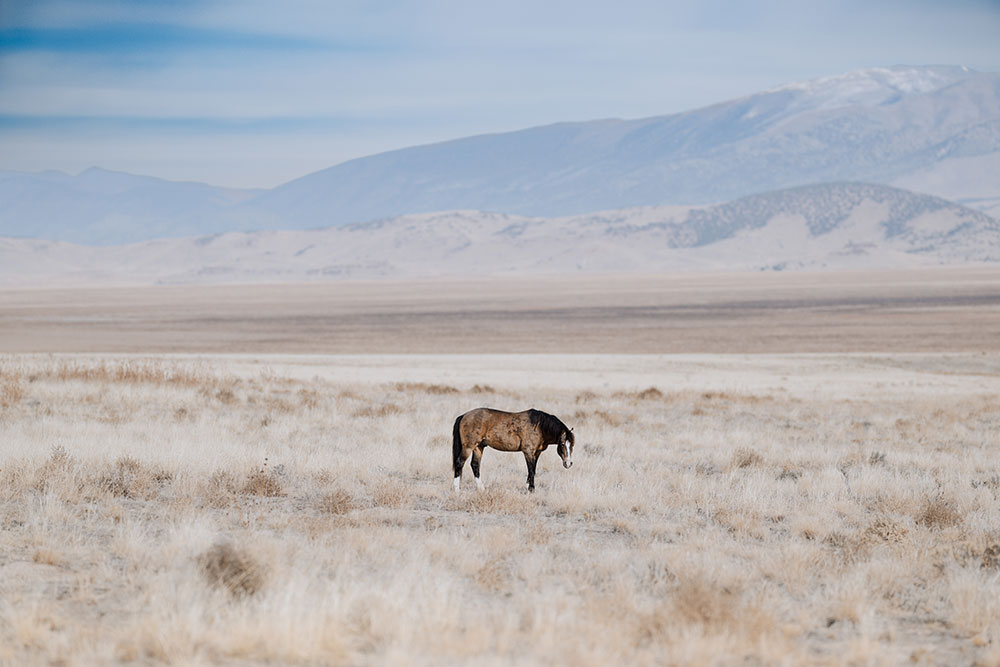
This mustang, part of the wild herd that still roam these flats in the Utah West Desert. Standing alone in the late fall light, unbothered and unhurried. At 135mm, the Plena let me stay far enough away to respect that wildness while still feeling close enough to feel it. Z8, NIKKOR Z 135mm f/1.8 S Plena, 1/3200 sec., f/1.8, ISO 32.
What drew me to the Plena
I’ll be honest, when I first heard about the Plena [NIKKOR Z 135mm f/1.8 S Plena], I wasn’t immediately thinking, “that’s my lens”. I’m a lifestyle outdoor photographer. I shoot trail light, wide open skies, and my very fast and very unpredictable Australian Shepherd, named Ember. A 135mm prime sounds like it belongs in a studio, not with me while scrambling up a ridgeline somewhere in Utah.
But the more I learned about what Nikon built into this lens, the more curious I became. There was a lot of thought put into the rendering, the way it handles light at the edges of the frame, and the optical intention behind it.
What drew me in, ultimately, was the promise of feeling in an image. Not just the sharpness or compression. But the quality of light it wraps around a subject. I wanted to see if it could translate the emotional experience of being out on the trail into something a viewer could feel from a screen.
What the Plena lets me do that other lenses can’t match
Every lens has a language. The Plena's language is light. At f/1.8, the way this lens separates a subject from its environment isn't just a technical achievement, it's a storytelling tool.
When I'm photographing Ember on the trail, I'm always trying to communicate a relationship: between her and the landscape, between the two of us, and between the viewer and the moment.
Other lenses can blur a background, but the Plena makes the background breathe. It wraps light around a subject so gently that the transition from sharp to soft feels like natural human perception, like the way your eye actually focuses on something you love.
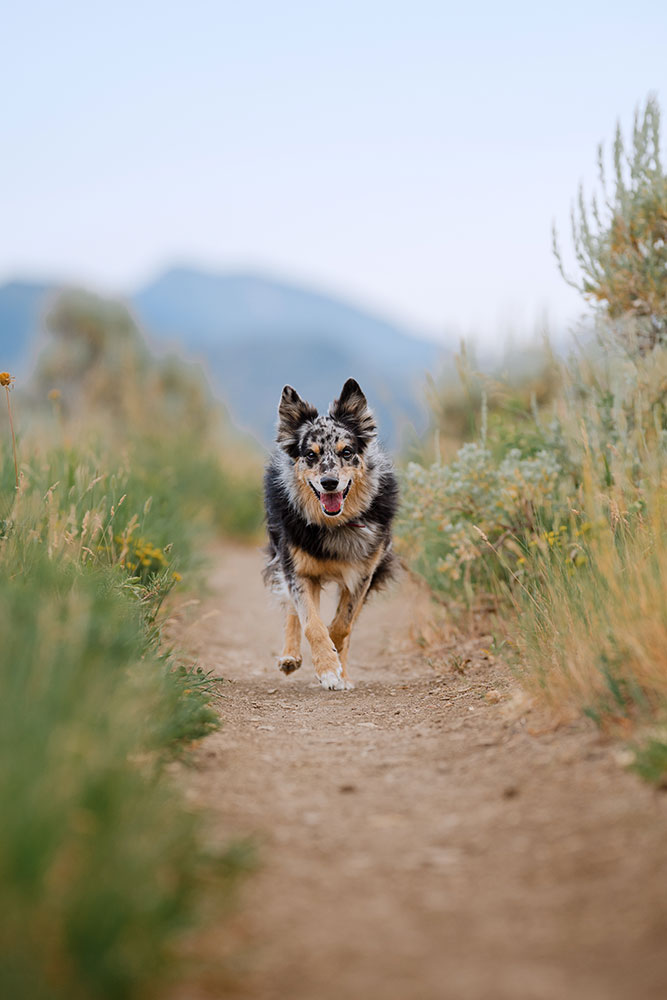
This is Ember in her element. Flying down one of our favorite spring trails in the Wasatch, the wildflowers just coming up along the edges of the dirt. She runs back and forth like she's trying to cover every inch of it before the season changes. Meanwhile, I just try to keep up. The autofocus on the Plena didn't miss her once. Z6III, NIKKOR Z 135mm f/1.8 S Plena, 1/1600 sec., f/1.8, ISO 320.
That quality matters enormously in lifestyle photography, where the goal is never "look at this technically impressive image" but always "feeling like you were there.”
Aperture range, am I shooting wide open all the time?
Not always, and that’s one of the things I came to appreciate most. Wide open at f/1.8, the Plena is doing something almost painterly. It’s rendering Ember’s eyes in razor-sharp focus while the landscape behind her falls into a warm, textured glow.
I found myself at f/2.8 and f/4 more than I expected, especially for wider environmental shots where I wanted Ember in context, sharp against a canyon wall or a field of wildflowers, rather than lifted out of it entirely.
The lens holds its character even as you stop down. The sweet spot for me ended up being f/2 to f/2.8 for most of my work: enough separation to draw the eye to Ember, enough depth to let the landscape carry its weight.
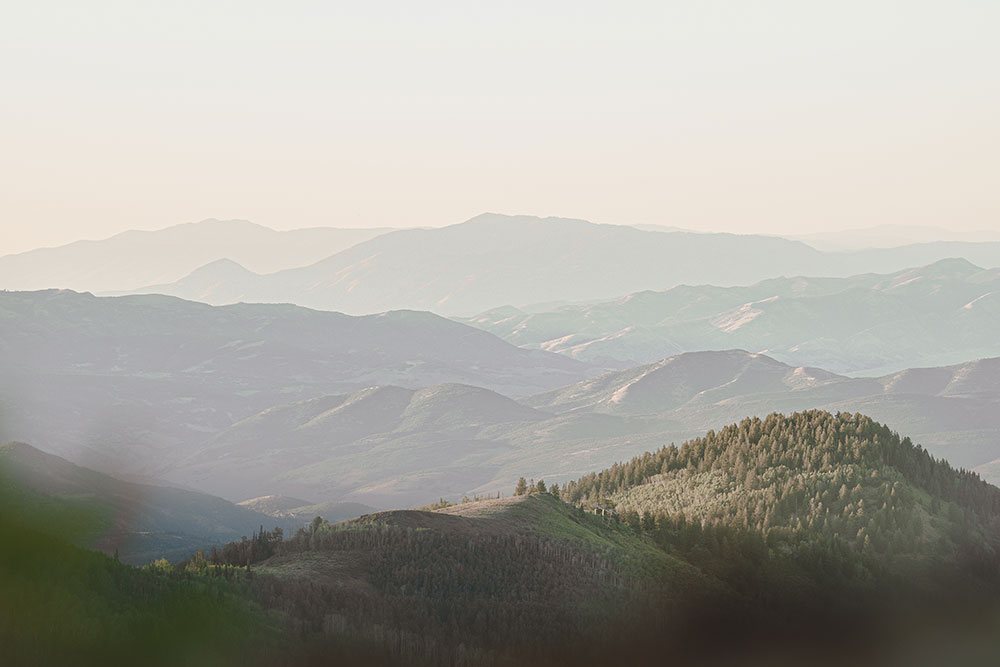
Looking east from a trail above Park City as the last light layered itself across the ridgelines. Dusk out here builds slowly, ridge by ridge, until the whole valley goes to blue. The Plena has the capability to hold every layer of it. Z6III, NIKKOR Z 135mm f/1.8 S Plena, 1/1000 sec., f/1.8, ISO 125.
The bokeh is soft and circular
If you’ve ever watched sunlight filter through aspen leaves in the late afternoon and thought, “I wish I could put that in a photograph,” the Plena understands that impulse. The bokeh this lens produces is circular even at the edges of the frame, and remarkably free of the busy quality you sometimes get with other primes. Highlights become soft spheres rather than harsh discs. The texture of an out-of-focus trail or a sun-dappled hillside doesn’t fight for attention; it frames it instead.
Coming in warm, soft, and dreamy, it feels like the background is resting rather than competing.
One of the things I got most excited about was using the Plena for foreground bokeh. Something people don’t immediately associate with a 135mm lens. Out on the trail, there’s texture everywhere at foot level: wildflowers, grasses, sage, the edge of a rock face. When I’d position myself low and place that texture just inside the near edge of the frame, the Plena would render it as a beautiful, hazy wash of color in the foreground.
Ember sharp in the middle, texture floating in front of her, landscape easing away behind, creating a three-dimensional, almost cinematic depth. I also found the 135mm compression incredibly useful for stacking landscape elements, making a distant ridgeline feel close and present behind a subject. Out west, with the scale of terrain we have, it has made for some of my favorite images.
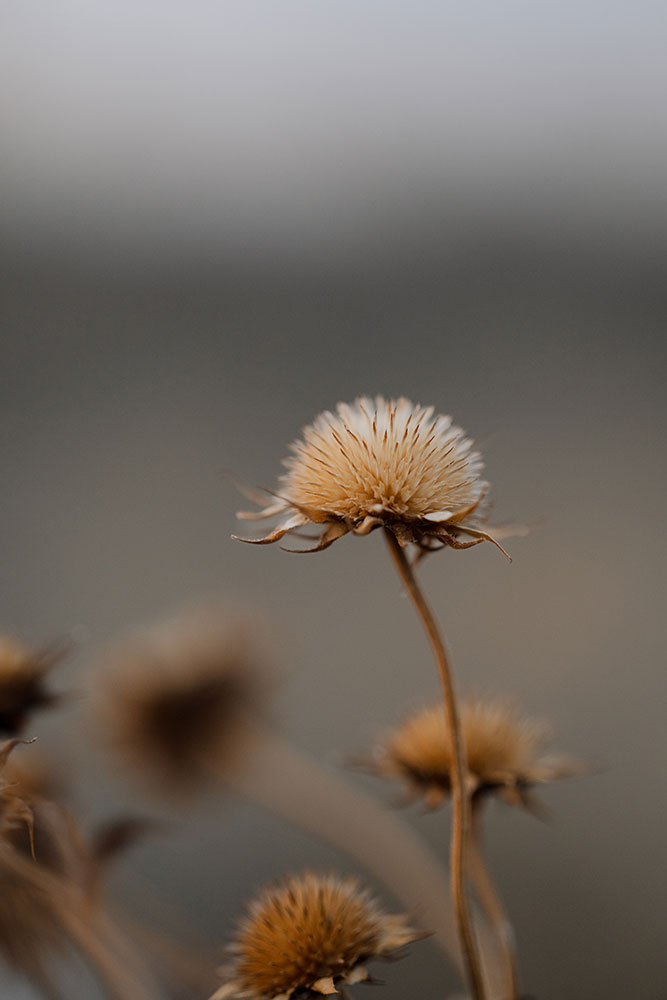
A dried thistle on a Wasatch trail, caught in that narrow window between golden hour and blue hour when the light goes soft and everything gets quiet. It's a mundane little dried plant, but the Plena wrapped it in such gentle bokeh that it became something worth stopping for. Z8, NIKKOR Z 135mm f/1.8 S Plena, 1/1600 sec., f/1.8, ISO 400.
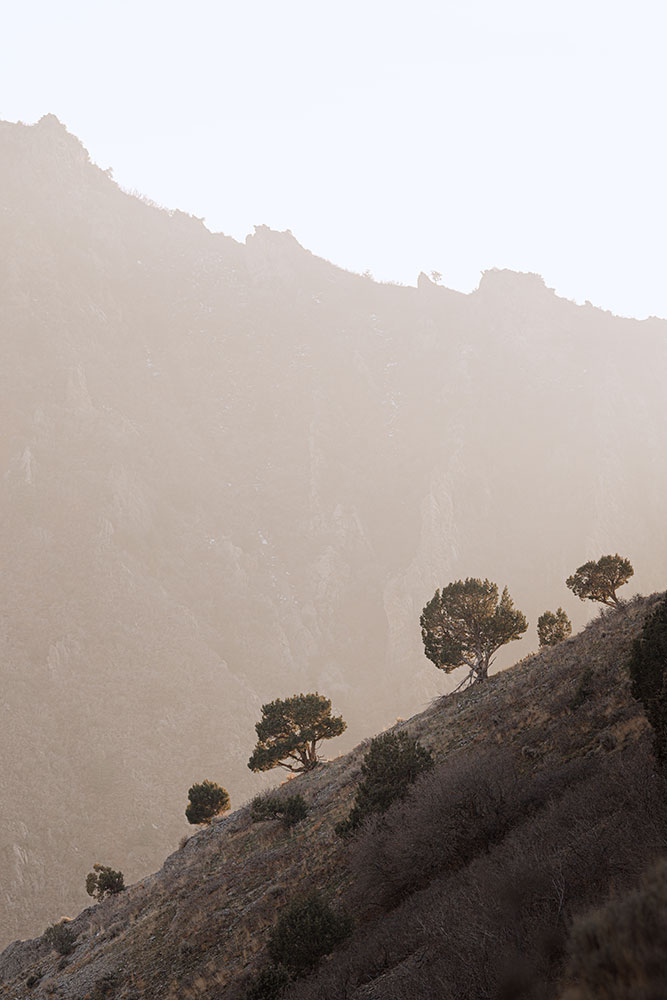
In northern Utah the canyons have a way of opening up just when you think you've seen everything they have to give. Like a ridge you haven't crested or a tree line that drops away into open sky. The Plena's compression made the layers of this hillside feel like they were stacked right on top of each other, feeling like they were close enough to hold. Z8, NIKKOR Z 135mm f/1.8 S Plena, 1/200 sec., f/4, ISO 125.
Size, portability, and trail kit
The Plena isn’t a light kit lens, but for what it delivers, it’s more packable than you’d expect. I was using the Z6III and Z8 bodies on different occasions, the Plena as my primary lens, and the NIKKOR Z 24-70mm f/4 as my versatile wide-to-short option. Between those two lenses, I had everything I needed for a full day on the trail. The Plena lives in my bag in a lens compartment between the body and other small gear. It’s dense but compact enough that it never felt like a burden on longer approaches. And when you’re reaching for it because the light just changed and Ember has found a perfect patch of sun on a granite slab, you stop thinking about weight entirely.
Autofocus speed and accuracy
Confidently, impressively fast. And more importantly, accurate in the conditions that I tend to find myself in.
Photographing Ember is not a controlled environment. She moves without warning, she turns her head at the exact wrong moment, or she finds things to chase. The Z6III’s subject tracking paired with the Plena’s autofocus meant I was keeping focus on her eyes even in situations where I’d historically accepted some soft frames as just part of shooting a dog at f/1.8 in motion.
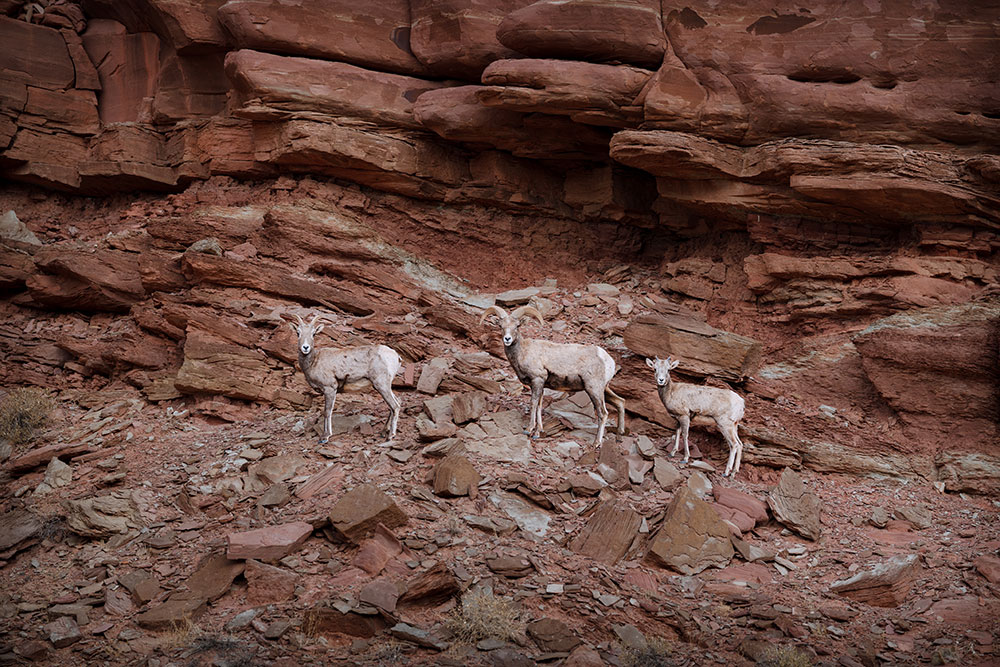
I almost drove right past them. A small herd of bighorn sheep tucked into the red rock, perfectly camouflaged against the canyon wall on an overcast morning in southern Utah. I stepped out of my car, didn't move, and let the Plena do the rest. They stayed long enough to remind me that the best wildlife encounters are always the unplanned ones. Z8, NIKKOR Z 135mm f/1.8 S Plena, 1/640 sec., f/2.8, ISO 200.
Ideal subjects and portrait work for the 135mm focal length
Ember is my primary subject, and the Plena treats her exactly as it would a human portrait subject, with tremendous care.
The rendering at f/1.8 through f/2.8 is as gorgeous on an Australian Shepherd’s face as on any person I’ve photographed. For wildlife and nature, the 135mm focal length is a genuine advantage; you’re not crowding your subject, and the compression does interesting things with background environments. I love this look for environmental shots.
I also used it for flora details and those trail landscapes where I wanted scale and intimacy in the same frame. As for human portraiture, yes, absolutely. Everything that makes this lens extraordinary for Ember works for people as well.
Lens weather sealing and durability
Utah weather is not polite and can be unforgiving. Dust storms, unexpected rain, dramatic temperature swings between morning and midday, the gear you take into the backcountry needs to handle whatever the environment decides to hand you. The Plena’s weather sealing meant I could keep working through dusty desert scenes, morning dew in alpine meadows, and the kind of light mist that comes before a real storm without any interruption.
I trust the lens the same way I trust my boots: completely, and without thinking about it. That trust is what lets you stay fully in a moment rather than worrying about your gear.
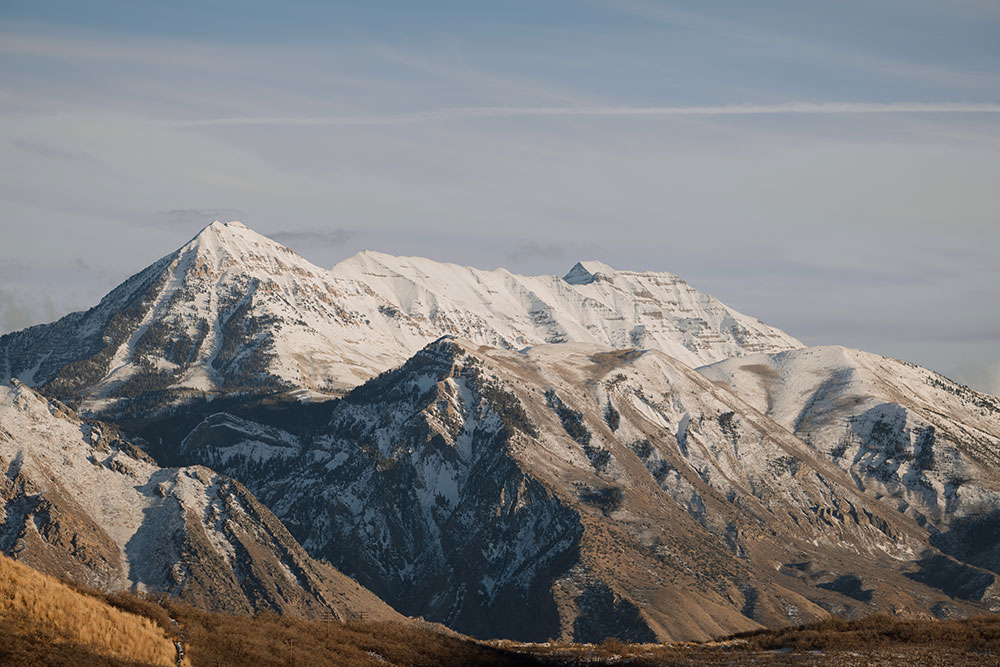
Blue hour over the Wasatch. There's a stillness that settles over the range at this hour, the last of the light catching the snow before the mountains disappear into the dark. Photographed from a neighboring peak, the Plena compressed the distance in a way that made it feel like you could reach out and touch it. Z8, NIKKOR Z 135mm f/1.8 S Plena, 1/2000 sec., f/1.8, ISO 32.
What I didn’t expect about the lens
The thing I didn’t expect about the Plena was how much it changed my relationship to slowing down. A 135mm prime requires commitment because you can’t zoom your way out of an uncomfortable composition. You have to move, physically and thoughtfully, to find the frame. That constraint turned out to be a gift. The best images from this season came from moments where I stopped trying to capture what I saw and started trying to feel what I wanted to say. The Plena gave me the optical tools to say it. The rest was just paying attention.
Follow Madison and her dog Ember’s adventures on Instagram and check out her website at embarkwithember.com.
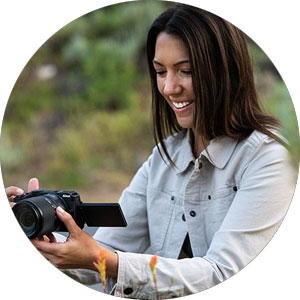
Madison Cherrington is a lifestyle and nature photographer based in Utah. She and her Australian Shepherd Ember can regularly be found trekking around the southwest in search of new sights and inspiring vistas.
Follow Madi and Ember’s adventures on Instagram and on Madi’s website .
More articles by this contributor