Story First, Always: Alli Forsythe on Filmmaking, Freedom, and the Nikon ZR
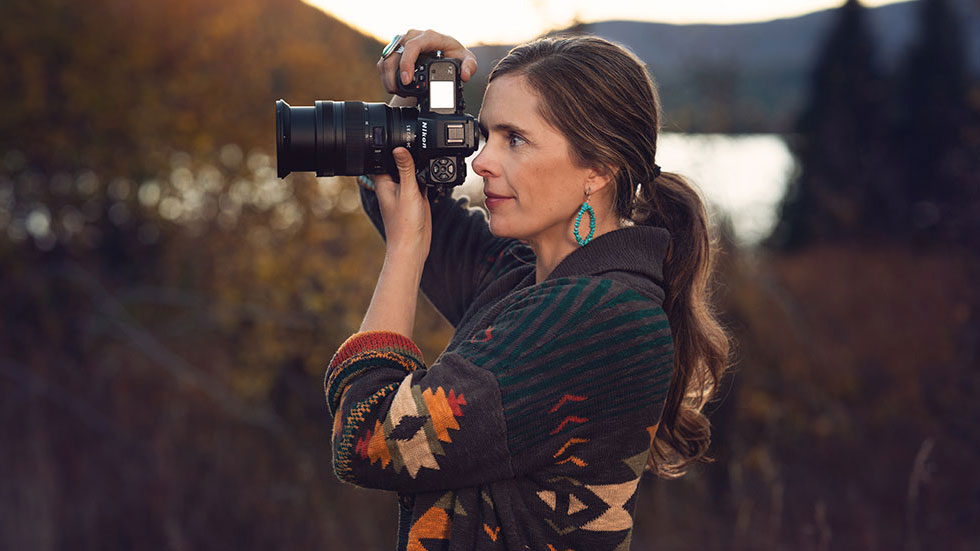
Alli Forsythe’s path to filmmaking was unconventional. “I was a musician first,” She explains. “I played seven instruments, I loved writing, and I was a competitive dancer. I was always in the arts, but I needed to find a way to make that sustainable.”
It was only in 2010 when Alli began to explore video capture. Seeing others publish and distribute their own work on YouTube reframed what was possible: “Once I realized that if I learned how to shoot and edit, I wouldn’t have to audition or wait for permission, everything changed,” she explains. “I could just create.”
For Alli, video offered a direct line between idea and audience—something that felt revolutionary at the time. “The growth of the internet and video platforms removed all the friction […] there was suddenly nothing between an idea and someone seeing it.”
That emphasis on immediacy still characterizes her work today, and it informs how she evaluates gear. For Alli, the best camera is one that supports a story without slowing it down.
Putting the ZR to the test
Right now, Alli’s main video camera is the 6K-capable Nikon ZR cinema camera, paired with NIKKOR Z prime lenses spanning 14mm to 85mm.
Compared to other video cameras she’s used, the compact ZR stands out for balancing image quality with portability, allowing her to stay lightweight without sacrificing flexibility or depth in post-production.
“The size for what you get out of it is amazing,” She says. “Having that much data and information in a body that small is kind of unmatched.”
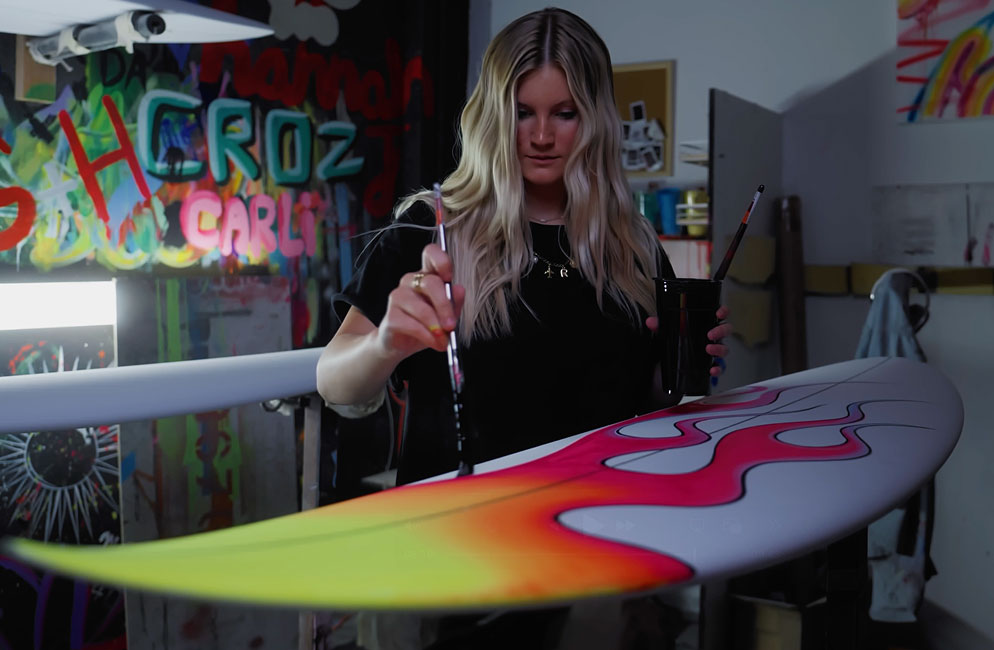
That balance was critical during production of the launch materials for the ZR. Alli was already developing a story with renowned surfboard artist Ryder Biolos when the opportunity to shoot the launch video came up, so integrating the ZR into her creative planning was a no-brainer and provided a great opportunity to see what it could do.“We had a very short amount of time,” she says. “But it ended up being the perfect opportunity to feature the camera in a lot of different environments—indoor, outdoor, and extreme low light.”
Features that matter
On a tight timeline, Alli focused on showing how the ZR performs in multiple real-world scenarios, letting the camera’s strengths reveal themselves through use.
Asked about which features of the ZR she found most valuable, Alli highlights the ultra-bright four-inch screen: “Once you use it, you can’t go back.” She explains: “normally, a small camera means adding a monitor because the screen isn’t big enough. With the ZR, I actually removed the external monitor entirely.”
That single change made her setup faster and more agile, especially when working solo and in the dynamic environment of the location.
Alli also singled out the quality of the ZR’s 32-bit float audio on a dynamic shoot: “There were run-and-gun situations where I was moving so fast I didn’t even look at the levels,” she admits. “It was way too loud—but I recovered everything in post like it had been recorded perfectly.”
From camera to edit
Alli approached the edit in exactly the same way as all her other projects. “Story first, then visuals.”
She shot in R3D NE format and edited the footage in DaVinci Resolve, via RedCine-X, saying “The ability to change everything as if you were still shooting was really cool. […] It gave me a ton of flexibility.”
Go where the story is
Despite working all over the world, Alli claims she doesn’t have a favorite place to film, or a bucket-list destination, saying simply, “I’ll go wherever there’s a good story.”
It’s a philosophy that distills her entire approach to filmmaking—and the advice she shares most often with others: “Story first. Always.”